Learn smarter with fresh insights from our tutors.
Practical study guides, course supplements, and learning resources curated to help you move faster through every subject.
16 Facts About Crocodiles
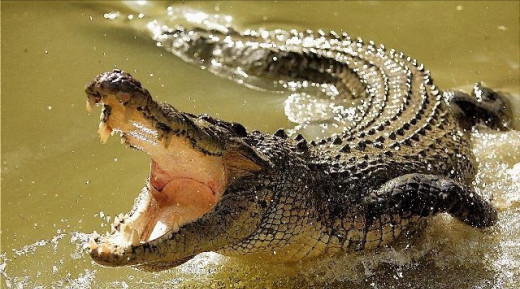
16 Facts About Crocodiles
Crocodiles are large sized reptiles that are found in the tropics of the Americas, Australia, Africa and Asia. Antarctica and Europe are the only continents that don't have Crocodiles because of its climatic conditions. They are cold-blooded animals and need to live in a climate that has warm conditions. The cooling planet caused a reptilian retreat to warmer climate.
Some people confuse Crocodiles with alligators. Although the two have many similarities, there are several ways to tell the difference between the two. One of the differences that separate the two is that Crocodiles what large body size than alligators.
Crocodiles habitat in water most of the times, while Alligators theoretically stays on land. Alligators breathe air, and unlike amphibians, they do not have to keep their skin wet. When an alligator enters into water, it will have to come up onto the banks of their body of water often, to bask in the sun because it is a reptile and reptiles cannot regulate their own body temperature.
Another notable differences separating the two is that, crocodiles have a V-shaped snout, and alligators have a U-shaped snout.
Another common difference is that, crocodiles are olive green or light brown with a mottled pattern, and alligators are dark gray or black with a cream underside.
Having seen the notable differences between an alligator and a crocodile, now let's have a look at the interesting facts about crocodiles, let us learn more about them.
16 Crocodile Facts
The following are the facts about Crocodiles.
1. Crocodiles are carnivores
The first known fact is that all Crocodiles you see on earth, are carnivores, which eat only meat. However, a recent study has shown that Crocodiles eat fruit, and they enjoy the fruits.
2. Crocodile's bite is very strong
Research has shown that a Crocodile bite is 10 times more powerful than a great white shark. A crocodile’s jaws is capable of applying 5,000 pounds of pressure per square inch, which is the strongest bite of any animal in the world. A human’s jaw can only produce 100 pounds of pressure per square inch in comparison to Crocodiles, which produces 5,000 pounds of pressure per square inch.
3. Crocodiles have an average of 4000 teeth
Research has shown that Crocodiles can go through to an average of 4,000 teeth over a lifetime. Unlike other animals, when a crocodile loses a tooth, there is a small replacement already on standby, which replaces it. Crocodiles are capable of replacing each of their 80 teeth up to 50 times over their lifespan. A crocodile's mouth is lined with 68 to 72 sharp teeth, which they use to clamp down on prey.
4. Baby Crocodiles make noises inside their eggs before they hatch
Another study has shown that young crocodiles signal to their moms when they are prepared to hatch properly. The Crocodile mother will likely hear the baby’s tiny noises coming from inside the eggshell, which is frequently covered in sand. The mother crocodile then remove the eggs from the sand, protect the young until they are born, and bring them to the river so they can feast on insects.
5. Crocodiles are the biggest reptilep
As of today Crocodiles are considered the biggest reptiles known on earth. Adults Crocodiles can grow to more than 23 feet, making them the world’s longest reptiles. They are capable of attaining weights of up to 5000 kilograms.
6. Crocodiles eat without chewing
Crocodiles eat their food without chewing because their jaw operates in such a way that it cannot move sideways, which make them unable to grind down on food in a traditional chewing motion. Crocodiles swallow stones to help them digest and break down the food in their stomach.
7. Weak jaw opening muscles
Crocodiles have relatively weak jaw opening muscles, which can be held shut with just a rubber band, or bare hands. This has enabled scientists to study them closer easily.
8. Crocodiles don’t sweat
Crocodiles open their mouths to cool themselves. When a crocodile open its mouth to cool itself is called “mouth gaping,” which is very similar to panting.
9. Crocodiles swimming fast in water
Crocodiles are the best swimmers, they are extremely fast in the water, swimming up to speeds of 35 kilometers per hour (22 mph). They use their powerful tails to propel themselves through water, and their feet as rudders to steer.
10. Acute senses
Crocodiles have acute senses that makes them highly successful predators on earth. They are mainly nocturnal hunters and have excellent night vision. Their sense of smell and hearing are also extremely well developed.
11. Crocodiles cannibalize smaller Crocodiles
A Study has shown that some Crocodiles occasionally cannibalize smaller crocodiles. There have been recorded cases of larger crocodiles eating smaller, or younger crocs. There have also been cases where crocs will likely bite off limbs of other crocs by instinct
12. Crocodiles have the most acidic stomach
Studies have shown that Crocodiles have the most acidic stomach of any vertebrate, which allow them to dissolve and digest bones, hooves and horns or shells from their prey.
13. Crocodiles vocalize to communicate
The young Crocodiles of some species squeak and grunt, while adult crocs can growl, hiss or roar at each other. Many Crocodile species will also respond to other noises, such as engine noise, gun shots or even people mimicking crocodiles.
14. Crocodiles can sleep with one eye wide open
Crocodiles can sleep with one eye wide open, which make them extremely dangerous animals. Just as some some other reptiles, birds and dolphins can do the same.
15. Capable of staying for a year without a meal
Research has shown that larger crocodiles can go for over a year without eating a meal. Crocodiles are able to shut down and live off their own tissue for a long period of time.
16. The Temperature of a Crocodile egg will likely determine the gender of the baby Crocodile
Studies have shown that the egg of a male crocodile hatches at a temperature of 88.8 ℉. If the temperature is either higher or lower than this threshold, the egg of a female crocodile will hatch!
Onion Farming Business
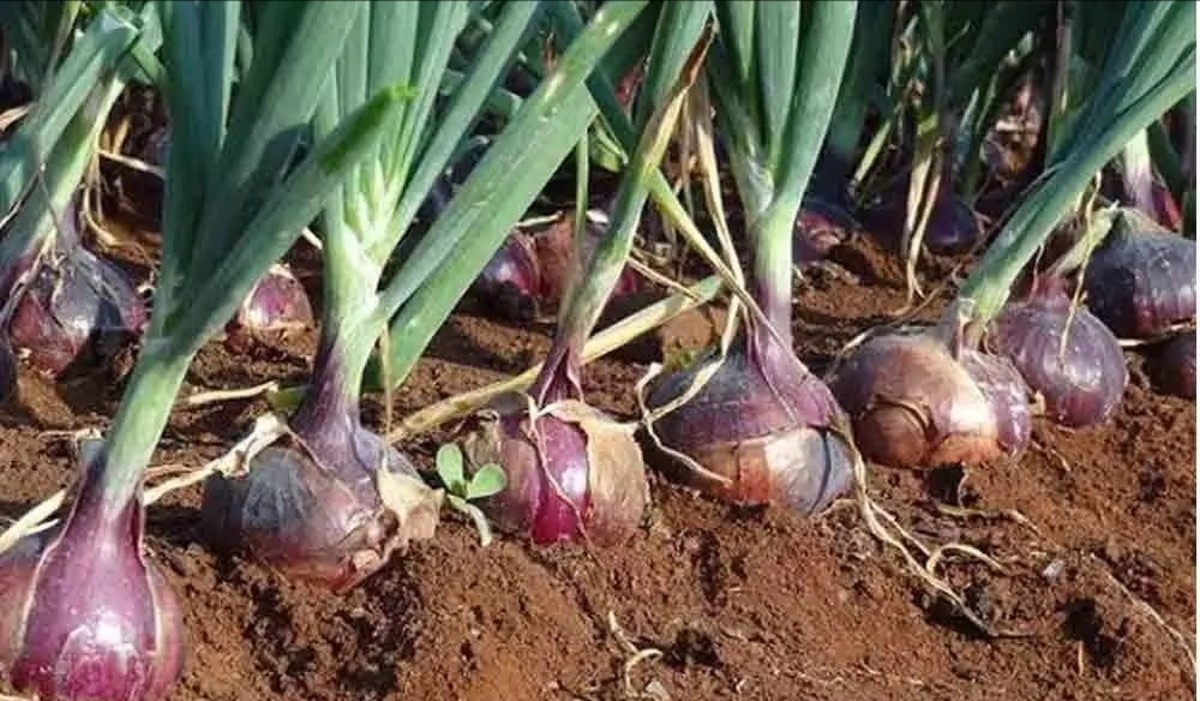
Onion Farming Business
Bulb Onion is one of the commonly grown vegetable which is consumed on a daily basis by people in different countries. The plant, may require a few labours during transplanting and weeding and it is one of the profitable commonly grown vegetables. Onion is used as spices in foods when cooked or served as raw and it is rich in the following nutritional elements; Calcium, Iron, Potassium, Vitamin B6 and B9 and Vitamin E.
What are the requirements for successful onion planting?
- Make sure the seeds are good and treated or coated with a combination of fungicide and insecticide.
- Make seedbeds on a fertile soil. The seedbed should be well prepared deep and smooth. Onion performs better on a light sandy loam soil.
- Make sure you apply a right fertilizer before planting and after planting which has all required major nutritional elements. The amount of fertilizers to be applied on the onion plant depend on several factors, which, among others, include the location of the farm or garden, soil fertility based on soil analysis and type of onion variety.
- Make sure enough soil moisture is available all the time and where possible supplement with irrigation when needed, but pay extra care during bulb maturation. Irrigations should be stopped in about 3 weeks before harvest the onion.
- The bulb onion requires a moderate temperature range of 20 to 30°C and good light and this act as bulbing initiator. Therefore, make sure the site where your onion will be has a good weather for vegetative growth and bulb formation which could increase profit.
Optimal conditions for growing onions or ecological requirements
- The onion does well on an altitude of 1,900 meters above the sea level.
- Onion plants need rainfall on a range of 500 to 700 mm during the growing season for best results. Make sure the area where you choose has a well distributed rainfall of that range. Dry spell is required at the maturity stage.
- Onion requires an optimum temperature of a range of 15 to 30 °C. Temperature above 30 °C may result in small bulb production.
- Onions need a good fertile soil, which is well drained. The optimum pH range from 6.0 to 6.8. Sandy to silty loams is required.
Cultivation Practices
Soil preparation
Make sure the soil is well prepared before the onion is planted or transplanted. It has to be loose having a depth of at least 75cm. Make sure the site is not waterlogged. Seeds are sown at a depth of 1 to 2 centimeters.
Date for sowing onion
Optimal sowing dates is not the same in all locations or countries as it varies with location, soil type and type of variety.
Plant population and spacing
One hectare can have an onion population of a range of 700-800,000 plants.
Raising seedlings
Onion is propagated by seed (fresh) and has a seed rate of a range of 0.8 to 1.2 kg per acre and the seed is sown in the nursery and later transplanted. It takes 7 to 10 days for the seeds to germinate. Take note that onion should be rotation for each and every 3 years.
Management in nursery field
- Make sure the seed bed is kept moist and this can be by means of irrigation among others.
- Make sure the mulch covers are removed when the seeds have germinated.
- Make sure you control the weeds, pests and diseases from developing which can damage the emerged onion plants.
Transplanting
Make sure you transplant the onion seedlings in 6 to 8 weeks after sowing. The onion seedlings should be transplanted at 2.5 to 3 cm deep trenches at a spacing of 30 cm between rows and 8 to 10 cm between plants (when using furrow irrigation). Make sure you irrigate the seedbed before transplanting is done. When planting onion, make sure the onion transplant or the onion set is not buried more than one inch under the soil.
Fertilizers
- Apply Calcium super-phosphate when you are preparing the land and before planting.
- Nitrogen and potassium fertilizers are applied in the field 2 to 3 times on a 3 week schedule.
Weeds Control
Make sure the weeds are kept on watch as well as pests and diseases. Nurseries must be free from grasses and weeds. Fungicides and insecticides may he needed during the period of transplanting.
Harvesting
Onion Harvesting is done in 90 to 150 days after transplanting and this depends on the type of variety. Harvest bulb Onions when its leaves collapse or when about 75 % of the tops of the onion have dried and fallen over. The harvesting is done by lifting the matured onion and left it in the sun to dry and this must be monitored.
Watermelon Cultivation Farming and Management
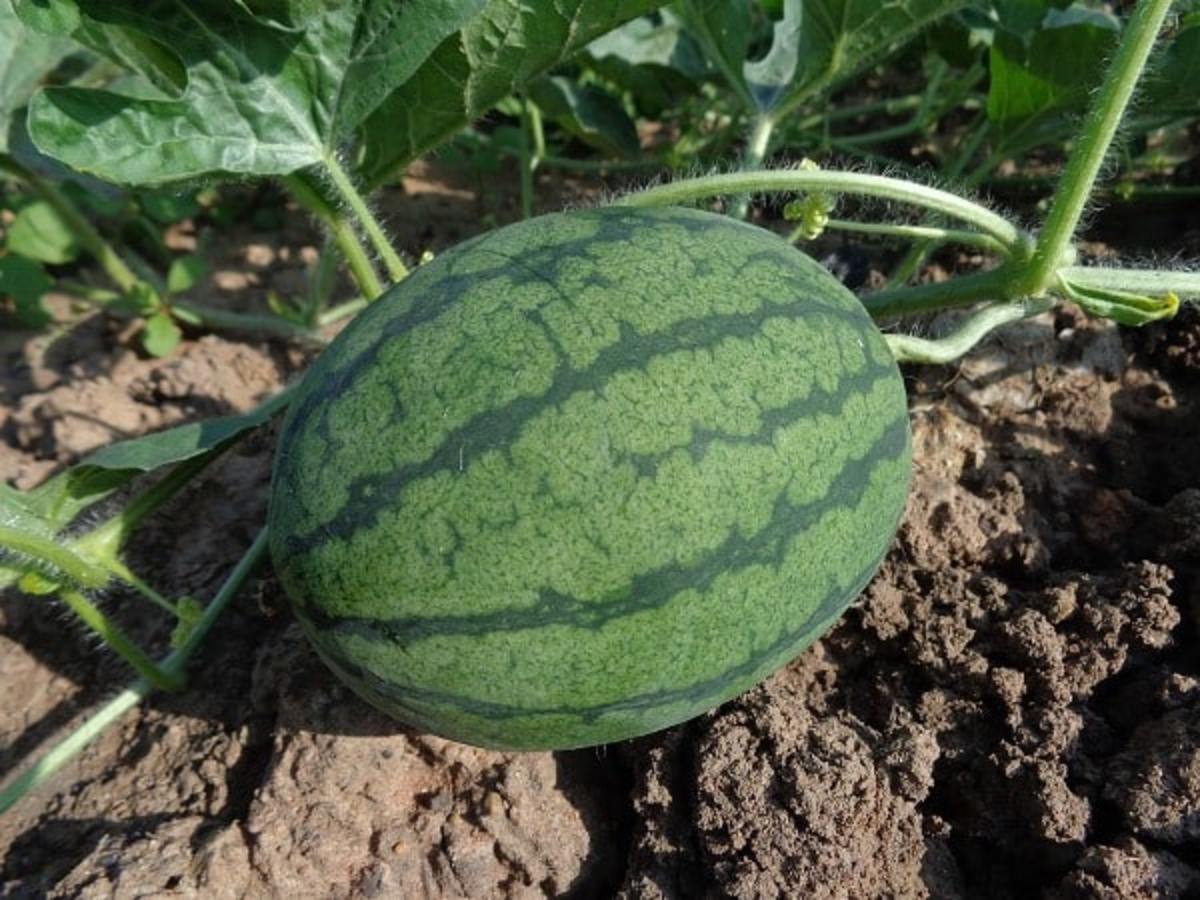
Watermelon Farming Management
Watermelon is one of the profitable crop which is grown by small, medium and large scale farmers and it's known to have originated in northeastern Africa.
Today, watermelon is cultivated in different countries on different scale. It is frost sensitive and are monoecious plant. Watermelons are consumed as as fruit, in fruit salads or as deserts and they contain the following nutritious ingredients; calories, vitamin C, vitamins A, B6, B1 and minerals such as potassium, magnesium, among others.
Adaptability
Optimal climatic conditions
- Watermelon germinate well at an optimal temperature of a range of 27-32°C, with night temperature not less than 24°C.
- During its growth, Watermelons require an optimal temperature of a range of 18-20°C at night, and a range of 24-30°C during the day, and for ripening it requires an optimal temperature of 15 to 25°C.
Watermelons are known to require long, warm growing periods. Watermelons do not do well in cooler temperature areas and areas having excessive rainfall as these have potential to slow growth, maturity and can even cause growth abnormalities among others. Make sure you avoid or prevent high humidity at the time of vegetative growth to avoid fungal diseases.
Soil requirements
Watermelons performs well in a sandy soil but it can be grown on a wide range of soils. For optimal yield make sure you grow Watermelons in a well-drained sandy-loam soil. Watermelons does well on a soil pH having a range of 5.8 to 6.2.
Seed requirements
One acre of land requires about 500 grams of Watermelon seed.
Cultivation Practices
Soil preparations
Make sure the soil is thoroughly cultivated for good root development. You can use a hoe to dig and make ridges where you will grow your Watermelons and you can as well prepared your land mechanically. When preparing your land, take note that Watermelons roots develop at a depth of 30-40cm.
Make sure the soil where you plan to grow your Watermelons does not drain easily to below 1.2 m. During field preparation, you can prepare raised beds of at least 10cm high. Make sure the beds have a range of 1.8m to 2m apart and as wide as possible on top.
Planting period
Make sure you plant your watermelons in the spring and through the summer months for optimal results.
Plant population and spacing
Make sure you observe spacing of a range of 4,000 to 8,000 plants per hectare.
Transplanting seedings
Make sure you transplant and water the transplanted plants while at the same time making sure that the field is not waterlogged. Make sure planting trays are kept cool and moist in the shade until used.
Intercultural Operations For Watermelons
1. Crop rotation
Make sure you rotate Watermelons with cereals, legumes at least 2-3 seasons to avoid depletion of soil nutritions.
2. Weeding
Make sure the field is clean to avoid build up of pests and diseases.
3. Pinching
It is known that pinching in watermelon results in increased yield, so make sure you pinch the apical shoots when the vines are 1.5 m while at the same time allowing the side shoots to grow.
Fertilization
Before you apply any fertilizer in Watermelon, make sure you first do a soil analysis to know the right amount of fertilizer to apply for best results. This pre-plant soil analysis can be done at least six months prior to planting. The following fertilizers are commonly applied; N: 90-170 kg/ha: 30% pre-plant and the balance as two side dressings, P: 15-180 kg/ha: applied as a pre-plant and work down to root depth and finally K: 40-250 kg/ha: 30% pre-plant and the balance as two side dressings.
Make sure that you conduct a water analysis too to know the quality of the water which you want to apply in your field.
Irrigation
Make sure you irrigate the field with the right amount of water to avoid waterlogging and also make sure the field is irrigated when soil moisture content is low. You can use any form of irrigation but surface irrigation is recommended.
Harvesting
Make sure you harvest your Watermelons on a range of 11-17 weeks after planting. Watermelon is harvested at full maturity, so make sure you are able to remove mature fruits only. Be able to check for skin colour to distinguish matured from immature fruits.
Make sure you go for harvesting Watermelons in the morning and cut the stem about 2 -4 cm long and make sure you avoid pulling fruit from vines.
Hot pepper Farming

Hot pepper Farming
The hot pepper is a herbaceous short life perennial plant which reaches the height of 0.5 to 1.5 m. They produce flowers which bear the fruits which is green when unripe and it turns red when ripe.
The fruit may go through an intermediary brown or purple stages in colour. Hot pepper fruits are used as raw in salads, food garnishes and marinades. The fruit may also be used in combination with other ingredients to make or produce a hot sauce. (Also called pepper sauce). The fruits may also be turned into relishes.
Hot peppers have the following ingredients; they contain water about 83%, they contain 3% protein, they contain 7% fibre, they have carbohydrates of 6%, they contain 0.6% fat and they have high vitamin C, vitamin A and B vitamin content. This article will give in detail on how to grow hot pepper.
Environmental Requirements
Peppers perform well in warm season and they require a similar growing conditions like other crops in Solanaceae family which among others include tomato and boulanger.
Climate
Peppers requires an average rainfall of 600 to 1250 mm per annum, which is well distributed, but the plant is also able to give better results in a wide range of altitudes. They do not do well in places having flood conditions. Optimal temperature range for germination is known to be in a range of 25 to 30 °C. The best yield is obtained at a temperature range of 18 to 30 °C.
Soil
Make sure you grow your peppers on a fertile loam soil or fertile medium loam and the soil has to be of drainage having a pH of a range of 5.5 to 6.8.
Recommended varieties
The following are commonly grown peppers; West Indies Red, Scotch Bonnet, Caribbean Green, Caribbean Red and Habanero.
Land Preparation
(a) Site Selection
Make sure you grow your hot pepper in an open area as they do not perform well in shade areas. Make sure the site you select has good soil and is not waterlogged or prone to flooding. Make sure the soil site which you are selecting has sandy loam soil or has silt loam soils to get better yields.
(b) Land Preparation
For the good plant establishment make sure the soil is tilled or plowed about 30 centimeters in depth. Adding manure or organic matter is recommended to improve your soil nutrition content and soil structure. Make sure your field is well drained. Making ridges and planting your hot pepper on ridges or raised beds results in better performance.
Seedling Production
When it comes to planting, make sure you plant healthy seeds which are free from pests and diseases for the proper establishment of plants. This ensures a high probability of good germination. 100 grams of seeds give about 20,000 hot pepper plants and this plant population can cover a two and half acre land. Hot pepper seeds have a germination range of 8 to 12 days.
You can raise your hot pepper seedlings in the following; Shaded Seed bed, Seedling Boxes under the covering, Seedling Trays among others.
(i) Shaded hot pepper seed bed
Make sure the seedbeds are prepared at a site having good soil content and is free from weeds. Make sure the prepared land has fine tilt.
(ii) Hot pepper seedling boxes
Make sure you use boxes having dimensions of 14" x 20". The hot pepper seeds are sown thinly ¼ inch in depth. Make sure you keep on watering for 1 to 2 weeks after hot pepper seeds has germinated. The seedlings are transplanted later.
(iii)Hot pepper seedling trays
This way is considered more efficient. Makes sure you sow your hot pepper seed a single seed per tray for better performance. Make sure trays have the right moisture content all the time.
Planting
Make sure you consider time go harvest before planting if you are growing hot pepper for commercial purposes. For the proper establishment ensure the site has good soil and water is available.
Transplanting
Transplanting should be done at 4 to 6 weeks when the seedlings are ready to be transplanted and and make sure you transplant the seedlings in the evening. Make sure you take care of the roots to avoid causing damage to them.
Apply water to the transplanted seedlings at the base. Make sure you apply fertilizers to the transplanted seedlings for good root development.
Spacing
Transplant seedling should have a space of 3ft between rows and 2ft within rows. Make sure the transplanted seedlings are not very close to each other as this will give fruiting difficulties and will result in low yield.
Water requirements
Make sure you apply 5 litters of water to your hot pepper plant everyday and this can easily be achieved through drip irrigation. Make sure the soil has right moisture all the time.
Fertilizers
Before you apply any fertilizer to your hot pepper plant, make sure you do a soil analysis to know the exact nutrition required by your soil.
The following fertilizers are recommended; Urea, which needs to be applied at a rate of 66 kg per hectare; Triple Super Phosphate (TSP) which needs to be applied at a rate of 75 kg per hectare; Muriate of Potash which needs to be applied at a rate of 80 kg per hectare.
Cultural Practices
(1) Weed Control
Manual weed control is recommended. Make sure the hot pepper field is kept free of weeds all the time. Herbicides may be applied, but a lot of care has to be taken when using it from stay drift.
(2) Irrigation
Make sure you irrigate your plant early in the morning or in the evening or late afternoon. The water has to be of good quality and always make sure your site is not waterlogged. Each hot pepper plant requires 5 litters of water every day.
Harvesting
Hot peppers are ready for harvesting two and a half to three months from the day of planting. Harvesting can be done on a weekly basis depending on market availability.
The harvesting can go up to 6 to 8 months. Make sure you harvest during cool days. Harvesting can be done by picking ripe pepper fruits by hands and putting them in a container.
Carrot Cultivation Farming

Carrot Cultivation Farming
Carrots are biennial plants which are commonly grown in the mid and the highlands. It has a height of 30 to 100 cm. Its edible part is tap root and is conical.
Its length has a range of 5 to 25 centimeters. Its roots can be yellow in colour or white or light purple among others and it is reach in vitamin A and vitamin B (thiamine and riboflavin).
Carrots can be consumed either fresh, as a salad crop, or cooked. This article will provide in detail on how to cultivate Carrot.
Climatic Requirements
Temperature
Carrots give best results on a temperature range of 15 to 20 °C. It does well in cool weather areas and gives a better yield in a warm weather as well. Carrots do not do well when the temperature falls below 10 °C or in hot weather areas.
Rainfall
Carrots require an average of 25 mm of water per week, but under warm, dry conditions 50 mm will be required. Carrots require an optimal annual rainfall of a range of 700 and 800 mm.
Soil requirement
Carrots performs well on deep, loose and well drained loam soils. Make sure the soil where you grow your Carrots has high organic matter content for better yields. The optimum soil pH for growing Carrots ranges from 6.0 to 7.5.
It is known that the temperature and soil moisture influence the shape, colour and quality of carrots so make sure your field has right moisture content and as well right temperature.
Cultivation Practices
Propagation
We use seeds to propagate Carrots
Soil preparation
The soil should be well tilled using a hoe or ploughed mechanically. It has to be deep ploughed and loosen at least 30 centimeters. Make sure the soil is fumigated for nematodes.
Seed sowing
Carrot seedlings are sown directly in the seedbed. Carrot is known to have a seed rate of 5kg per hectare. Make sure you sow your seedlings when soil has right moisture content. You may supplement the water through Irrigation but make sure the Carrot field is not waterlogged as this can be a source of diseases.
Spacing
Carrots requires a row spacing of a range of 200 to 400 mm apart. In double or triple rows, you can have the width between sets of rows range from 400 to 600 mm.
Thinning
Make sure you thin your Carrots which are densely sown to 5 cm spacing within the row. Thinning results in uniform and good sized roots and avoids Carrot plant from lodging. Thinning can be done from the third week.
Cultivation
Carrots are unable to compete with weeds as it grows slowly compared to the rate at which the weeds grows. Make sure your Carrots field is free from weeds as these could be the source of diseases. Make sure you use repeated shallow cultivation to keep down weeds, especially in the early stages of growth.
Fertilization
Before you apply any fertilizer, make sure you conduct a soil analysis to know the right type and amount of fertilizers to apply based on soil test report. It is recommended to apply nitrogen fertilizer.
Carrots have low nitrogen requirements and good yields can be obtained with the application of 80 kg/ha of nitrogen. You can also apply 40 kg of phosphorus per hectare for optimal yield.
Irrigation
Carrots which are grown during dry season should be supplied with enough water through Irrigation. Water can be applied every 5 to 7 days to field capacity depending on soil type and environment. Make sure you avoid your field from waterlogging.
Weed Control
Make sure any weed is removed as it could compete for soil nutrients with your Carrots plant and this can result in Inefficiencies. Weeds can be controlled manually or by using herbicides. When you use herbicides make sure you follow all the instructions.
Harvesting
Make sure you harvest your Carrot when it reaches a diameter of 20 mm and more. You can harvest your Carrots after 90 to 120 days from the day of sowing. Depending on the type of Variety, some may require longer days. Make sure you avoid harvesting immature and over-mature Carrot roots.
How to Win a Girl Who is Dating Someone Else

How to Win a Girl Who is Dating Someone Else
Nowadays it is very difficult to meet a girl, who is youth and single. Much as this is the case, this article will take a look at 8 ways that can be used to win a girl who is dating someone else.
8 Ways to Win a Girl Who is Dating Someone Else
The following are the 8 ways you can use to win a girl, who is dating someone else:
1. Be a man of vision
The majority of girls nowadays, are interested in dating a man who has vision, for the sake of their future kids and family. Therefore, you should remain focus on what you do, especially on things that built up your future and this will make them compare you and their current boyfriends. In their comparison, if they concludes that you are far better than their boyfriends, when it comes to visions, you will have higher chances of winning their souls.
2. Look descent and smart
The majority of girls are interested in dating men who look smart and decent, and this does not necessarily mean, buying new clothes. The less you have, you should make sure you iron them and keep yourself smart before meeting them and this will increase your chances of winning their hearts over her current boyfriends.
3. Always try to create time for her
The majority of girls nowadays are interested in dating men who give them time for chatting. They are interested in strolling around and long trips, which results in them knowing new places. Therefore, you should make sure as much as possible you give them enough time, just for leisure and fun.
4. Give her enough care and attention
Each and every girl needs care and attention. Even when her boyfriend has a lot of money, but if he lacks attention and care, can easily lose her or can be the second option to her. Always you should make sure you show care and attention to the girl, who you are interested with, despite her already been taken.
As time goes, the girl will start comparing you with her current boyfriend on who is giving her enough care and attention, and if you are able to give her full of these, you could easily win her soul.
5. Give her surprise
Make sure when two of you meet, you should make full use of it by giving her surprises and show that you love and care about her, and this will make her feel special and valuable. This will make you win her heart as she will be comparing her boyfriend with you and you will end up winning.
6. Create leisure time with her
When you are free especially during the weekends, you should try to ask her out, tell her that all the costs to incur will be under you. You could take a lake trip for a day or any other popular and good places worth for leisure. While you are at the lake with her, make sure you give her extra care and attention, which should make her forget about her boyfriend.
7. Be educated
Most girls are interested in dating men who are educated even when they don't have money. An educated lady, with a master's degree or first degree will likely go for the man who has at least a bachelor's degree even if he has no money or is financially broke.
8. Be responsible
Some girls are interested in dating men, who are responsible and independent. They are interested in dating men, who are able to pay bills themselves and are staying alone. This gives them confident that you could be able to support her and her kids in the near future and this gives you higher chances of winning her heart.
In conclusion, this article has taken a look at 8 ways which can help you win a girl's heart who is already in love with someone else. Among others, the article has uncovered that enough care and attention, education and responsibility are some of the points which you must consider to win a girl's heart.
Nature and Scope of Macroeconomics
Nature and Scope of Macroeconomics
Economics is the science that deals with production, exchange and consumption of various commodities in economic systems. It shows how scarce resources can be used to increase wealth and human welfare.
The central focus of economics is on scarcity of resources and choices among their alternative uses. Macroeconomics is a branch of economics dealing with the performance, structure, behaviour and decision making of an economy as a whole. This include regional, national, and global economics.
Macro economics is the study of aggregates or averages covering the entire economy, such as total employment, National income, national output, total investment, total consumption, total savings, aggregate supply, aggregate demand, and general a price level, wage level and cost structure.
Macro economics uses aggregates which relate them to the “economy wide total”. Macroeconomics studies economic problems from the point of view of entire economy.
Nature of Macroeconomics
Macroeconomics is basically known as theory of income. It is concerned with the problems of economic fluctuations, unemployment, inflation or deflation and economic growth. It deals with the aggregates of all quantities not with individual price levels or outputs but with national output.
Scope of macro economics
The study of macro economics is crucial to understand the working of and economy. Economic Problems are mainly related to the employment, behaviour of total income and general price in the economy. Macro economics help in making the elimination process more understandable.
What is macroeconomics?
As you have already observed macroeconomics deals with aggregates. Therefore, by definition "macroeconomics is the branch of economics concerned with aggregates, such as national income, consumption, and investment".
Macroeconomics examines the economy as a whole and answers questions such as: What causes the economy to grow over time? What causes short-run fluctuations in the economy?, and many such questions. Thus, macroeconomics is concerned with the behaviour of the economy as a whole.
In macroeconomics we examine booms and recessions, the economys total output of goods and services and the growth of output, the rates of inflation and unemployment, the balance of payments, and exchange rates.
Macroeconomics deals with the increase in the output and employment over long periods of time that is, economic growth and with the short-run fluctuations that constitute the business cycle.
Macroeconomics focuses on the economic behaviour and policies that affect consumption and investment, the money and the trade balance, the determinants of changes in wages and prices, monetary and fiscal policies, the money stock, the national budget, interest rates, as well as the national debt.
Features of macroeconomics
Study of aggregate: macro economics deals with the study of entire economy. It studies the overall conditions in the economy, such as national income, national output, total employment, general price level etc.
Main macroeconomic policy objectives
Broadly, the objective of macroeconomic policies is to maximize the level of national income, providing economic growth to raise the utility and standard of living of participants in the economy.
There are also a number of secondary objectives, which are held to lead to the maximization of income over the long run. While there are variations between the objectives of different national and international entities, most economies follow the main macroeconomic policy objectives detailed below:
(1) Sustainability in economic growth this. This refers to a rate of economic growth, which allows an increase in living standards without undue structural and environmental difficulties. In development terms, sustainable economic development is the economic development that meets the needs of the present generation without compromising the ability of the future generations to meet their own needs.
(2) Full employment. As a macroeconomic policy objective, ensures that where those who are able and willing to have a job can get one, given that there will be a certain amount of frictional, seasonal and structural unemployment (referred to as the natural rate of unemployment).
(3) Price stability. Making sure that prices remain largely stable, and there is no rapid inflation or deflation. Please, note that price stability is not necessarily the same as zero inflation, but instead steady levels of low-moderate inflation is often regarded as ideal. It is also worth noting that prices of some goods and services often fall as a result of productivity improvements during periods of inflation, as inflation is only a measure of general price levels. However, inflation is a good measure of price stability. Zero inflation is often undesirable in an economy, as it tends to weaken incentives to businesses to invest and expand production.
(4) External Balance of trade. Making sure that there is equilibrium in the balance of payments without the use of artificial constraints. That is, exports should roughly be equal to imports over the long run.
(5) Equitable distribution of income and wealth. This means achieving a fair share of the national 'cake', more equitable than would be in the case of an entirely free market. It involves ensuring that no sector of society gets extremely high levels of income and wealth while others live in abject poverty.
(6) Increasing Productivity. It is every governments mandate to ensure that productivity of resources is increased over time. For example, increased productivity translates to more output per unit of labour per hour.
Also, since labor is but one of many inputs to produce goods and services, it could also be described as output per unit of factor inputs per hour. As you will recall, high productivity reduces overall cost of production, which eventually leads to increased production of goods and services.
When productivity-induced output growth outpaces demand for goods and services, commodity prices generally decline and more consumers manage to access the national output, leading to improvements in national welfare.
Importance of macroeconomics
The study of macroeconomics is very important for evaluating the overall performance of the economy in terms of national income. The level of fiscal activity and understanding the distribution of income among different groups of people in the economy.
Major macroeconomic issues
The major macroeconomic issues include economic growth, full employment, inflation, balance of payment (this entails managing deficits and surpluses), and exchange rate (managing exchange rate movement). Lets now examine these macroeconomic issues in detail.
Economic Growth
Economic growth involves a change in gross national product with or without change in the structure of society. Economic growth is calculated as a percentage rate of growth of the national economy per year. The achievement of substantial levels of economic growth is an aspiration of most policy options. Economists define economic growth as either of the following:
(1) An increase in real GDP occurring over some time period. This is useful for measuring growth in military potential or political pre-eminence or superiority.
(2) An increase in real GDP per capita occurring over some time period. This definition is useful for comparing living standards and it relates to economic development.
Growth as a goal
Growth is widely held economic goal. The expansion of total output relative to population results in rising real wages and incomes and thus higher standards of living thus economic development. As you can see from explanation, an economy that is experiencing economic growth is better able to meet peoples wants and resolve socioeconomic problems. A growing economy can undertake new programs to alleviate poverty and protect the environment without impairing existing levels of consumption, investment, and public goods production. In short, growth lessens the burden of scarcity.
Positive features (benefits) of economic growth.
The following are some of the notable benefits or positive features of economic growth.
- Increase in employment.
- The standard of living of the people will be improved.
- There will be an expansion and improvement in the infrastructure.
- Increased investment will be encouraged.
- Improved technology from the increased investment will stimulate production.
Negative features of economic growth
Aside from the benefits, economic growth also involves some costs or negative effects to society as listed below:
- The environment is threatened by factors such as building, chemicals and motorways.
- There may be waste of resources which are very finite
There is a probability that the increased wealth will not be equitably distributed
With urban expansion, not enough care may be taken to safeguard the community against urban problems such as intensive housing without green space and other facilities leading to crime and vandalism.
Arithmetic of Growth
Economists pay so much attention to small changes in the rate of economic growth because those changes really matter to society. For a poor country, a difference 1 percentage point, for example, from 6% to 5% in the rate of economic growth may mean the difference between starvation and mere hunger. You can estimate economic growth using a simple formula called the Rule of 70, which is illustrated below.
The Rule of 70
The mathematical approximation called the rule of 70 provides a quantitative grasp of the effect of economic growth. The Rule of 70 gives an approximate number of years that will take to double an economic indicator.
For instance, you can estimate time taken for a countrys real gross domestic product (GDP) to double by dividing 70 by the countrys annual percentage. Thus, time taken to double real GDP = (70 ÷ annual percentage rate of growth). If the economy registers a 4% annual rate of growth, real GDP will double after 17.5 (= 70 ÷ 4). The rule of 70 is also used to estimate how long it will take the price level or the amount of money in your savings account to double at various percentage rates of inflation or interest rates.
Main Sources of Economic Growth
Society can increase its real output and income in two fundamental ways as follows:
(i) By increasing its inputs of resources. You will agree that, all other things equal, framers with big farms tend to produce more than those with small farms. An increase in resource package increases the production possibilities frontier.
(ii) By increasing the productivity of those inputs. Productivity is broadly measured as real output per unit of input. Higher productivity means more output per unit of input used in production. In terms of labour, productivity tends to rise when a number of factors are met; some of these factors include the following:
- Improvements in health, training, education, and motivation of workers;
- Provision of more and better machinery and natural resources to workers with which to work; and
- Labor is reallocated from less efficient industries to more efficient industries.
The Business Cycle
Sometimes growth gives way to recession and depression that is, to declines in real GDP and significant increases in unemployment. At other times rapid inflation impairs rapid economic growth. Both unemployment and inflation often are associated with business cycles. The term business cycle refers to alternating rises and declines in the level of economic activity, which sometimes extends over several years.
Phases of the Business Cycle (Explained)
There are four main phases of the business cycle and these include the peak, the recession, the trough and the recovery. As you will see, each phase has its own characteristics with regards to the status of the economy. Lets examine the phases of the business cycle in a detailed manner presented below:
(1) Peak At a peak, business activity has reached a temporary maximum. The economy is at full employment and the level of real output is at or very close to the economys production capacity. The price level is likely to rise during peak in other words there will be inflation mainly because full employment of resources, including labour means that a large number of households will have money leading to an increase in effective demand for goods and services. Therefore, if demand exceeds the economys capacity to produce, inflation will be likely outcome.
(2) Recession A peak is followed by recession a period of decline in real output, income, employment, and trade. This downturn, which lasts 6 months or more, is marked by the widespread contraction (reduction) of business activity in many sectors of the economy. But because many prices are downwardly inflexible, the price level is likely to fall only if the recession is severe and prolonged that is, only if a depression occurs. You can imagine that as business activity falls, the recession phase will be characterized by job losses leading to an increase in levels of unemployment.
Thus, both increasing levels of inflation and unemployment characterize the recession phase. Inflation occurs during recession because households tend to use their assets including savings for financing their daily needs. This creates a situation in which effective aggregate demand is relatively larger than the available aggregate supply produced from the declining economic activities.
(3) Trough In the trough of the recession or depression, output and employment “bottom out” at their lowest levels. In other words, at the trough, the economys output reaches its lowest level while unemployment registers its highest level indicating greatest loss of employment opportunities by the labour force.
The trough phase may be either short-lived or quite long. If the economy stays in the trough with lowest levels of output over a long period of time, prices may go down as households tend to spend all their assets which can be liquidated into cash for survival leading to a decline in the effective aggregate demand even for the little aggregate supply of goods and services on the market. During this time, the available goods tend to be those from previous production; and with declining effective aggregate demand producers are forced to reduce the selling prices just to clear the inventory in an effort to reduce storage cost.
(4) Recovery In the expansion or recovery phase, output and employment rise toward full employment. As recovery intensifies, the price level may begin to rise before full employment and full-capacity production returns. This happens because effective aggregate demand may increase faster than aggregate supply, as previously retrenched workers are re-called to get back to their jobs. You can agree that it is easier to re-call the work force to get back to work but a bit difficult for producing companies to produce to their capacity within a short time. While the producers are reorganizing their production lines to desired levels, the re-called workers will be receiving their salaries at the recommended wage rates. So, in the recovery phase of the business cycle, unemployment declines (or employment increases) while inflation rises.
Note: Although business cycles all pass through the same phases, they vary greatly in duration and intensity. Many economists prefer to talk of business fluctuations rather than cycles because cycles imply regularity of occurrence a good example of cycle is occurrence of seasons; this does not happen in the performance of the economy. Thus, the term business cycle is borrowed and used in this discussion loosely.
Causation of the Business Cycle
There are a number of factors that cause the economy to experience upward and/or downward swings over time. The following are some of the main cases of the business cycle.
- Momentous innovations such as the railroad, the automobile, synthetic fibers, and microchips, have great impact on investment and consumption spending and therefore on output, employment, and the price level. Such major innovations occur irregularly and thus contribute to the variability of economic activity.
- Major changes in productivity When productivity expands, the economy booms; when productivity falls, the economy recedes.
- Monetary phenomenon When the government creates too much money, an inflationary boom occurs. Too little money triggers a decline in output and employment and, eventually, the price level (deflation).
- Changes in the level of spending In a market economy, investment takes place only if the goods and services produced can be sold at a profit.
Cyclical Impact of the Business Cycle
The extent and severity of the impact of the business cycle may vary depending on whether the economic sector produces durable or non-durable goods. Now, lets discuss how the business cycle affects durable goods industry and then later we will examine how the non-durable goods sector get affected.
Impact of Business Cycle on Durables
Firms and industries producing capital goods (such as housing, commercial buildings, heavy equipment) and consumer durables (such as cars, personal computers, refrigerators) are affected most by the business cycle. This is so because purchase of new items tends to be postponed during economic hard times. This is true for every human being when the economy is going through hardships such as during recession, consumers change their spending behaviour and postponement of durable goods tends to be common.
Impact of Business Cycle on Non-Durables
In contrast, service industries (such as health, legal) and industries that produce nondurable consumer goods are somewhat insulated from the most severe effects of recession. Imagine, falling sick when the economy is not going well leaving you with some financial hardships in your household. Would you say you wont go to hospital to medical attention? Surely, you would dare do that. Instead, you would go the next mile looking for some money by whatever possible means for either transport to a public health facility or to pay medical bills at a private clinic. In doing so, owners of such health facilities do not suffer much when the economy is facing some challenges. People find it difficult to cut back on needed medical and legal services. Similarly, it would be very hard for you to stop or postpone the purchase of basic non-durable goods such as food and clothing during economic hardships. Of course, the quantity and quality of nondurables will decline, but not so much as will purchases of capital goods and consumer durables.
Full Employment
The dominant economic and social objective of government is to achieve full employment. Full employment has been defined as a situation where work is available for all those willing and able to work at the going wage rate. To achieve this objective then the problem of unemployment must be tackled.
Inflation Control
Keeping prices under control is a major concern in any economy. Some governments consider achievement of low levels of inflation as the prime macroeconomic target. There are two main forms of Inflation (details will be discussed in Unit 3 of this module).
- Demand Pull inflation Demand Pull arises where aggregate demand is greater than aggregate supply
- Cost Push inflation Cost push inflation is a consequence of increasing costs such as wages and taxes pushing prices or cost of production up.
Balance of Payments
In an open economy where there is a high level of dependency on foreign trade the authorities must maintain vigilance or attention over their foreign trade because of the consequences in other areas. One important point for observation is the annual Balance of Payments statistics. The balance of payments is a record of a countrys financial transactions with the rest of the world. In the current account it records the movements of exports and imports of both visible and invisible goods while the capital account records movements of capital in and out of the country.
Balance of trade deficit
If a deficit on current account is recorded it is evidence that there has been an excess of imports over exports of goods and services. The prime consequence of this is that there will be a fall in demand for the national currency. If there is a decline in demand for the currency the value could fall and this could lead to increases in interest rates to protect the outflow of capital, which will follow. You will study issues of interest rates and capital flight in higher classes of your study programme especially if agricultural economics is your major field of study.
Limitations of Macro Economics
- Fallacy of composition (savings are a private virtue but a public vice)
- Dependence on individual units
- Heterogeneous units (average wage in a nation)
- Aggregate variables may not importantly necessary. (A hike in national income does not mean that individual incomes have risen)
- Different effects of aggregates (Different units Ap)
- Limited application
- It ignores the contribution of individual units
- Danger of excessive generalisation from individual experience (Ex. Bank cash withdrawal)
- Statistical and conceptual difficulties
10 Secrets You Must Know When Dating a Married Man to Win Him

Secrets You Need to Know When Dating a Married Man
As of today, the world has registered more males than females, which makes the ratio of males to females not to equal as such, it is very difficult for each and every woman to have his own man.
Despite some males, especially those whose religion is Muslim, being allowed to marry more than one woman provided they are able to provide their personal needs, still the world has more women who could not be able to secure their own loved one, who could tie a knot with them brightening their future.
This article will take a look at 10 ways which could help you win a married man and also the article will explain some secrets which you must know and follow when dating a married man.
10 Secrets You Must Know When Dating a Married Man to Win Him
The following are the useful secrets which you must follow carefully to succeed in dating a married man.
1. Let him call or text you
When you are dating a married man, always make sure that it's him who calls and text you. Make sure you avoid making mistakes of calling him or texting him as you never know who could be with his phone and who could be responding your messages.
When he calls you, you will be too sure that it's him who is calling and you cannot be under pressure when answering his call and you can even respond with sweet loving words.
Similarly, make sure it's him who text you first and when you are talking to him through messages, make sure you are brief and to the point and always avoid using sweet loving words as you never know who next could read your messages.
When you are chatting with him through WhatsApp messages always turn on disappearing messages on, so that your conversations should be automatically cleared after 24 hours, this will help put you in a safe place.
2. Always make a good use of meeting time
When you have agreed to meet up with a married man, make sure you make a full use of your available time you have met. If you want to ask him any help, make sure you make a full use of this time. Similarly, if you want to show him something great or present a gift to him this is the right time too.
When you realize that you have forgotten to tell him something during your meeting time, make sure you avoid making unnecessary call or text until your next meeting as you never know who could be with his phone at that time.
3. Avoid taking and posting pictures
When you are dating a married man, make sure you avoid as much as possible taking pictures with him, especially those pictures which show a strong connection between you.
Keeping pictures which shows two of you making love or those showing a great connection, it's a great mistake which you should always avoid as you never know who could be touching his phone apart from him.
4. Give him extra love and care
Nowadays a lot of men are married, but very few are happily married. Some men do not get enough care and attention from their wives despite getting married.
Some women are not good in bed and do not want to make improvements on it. So when you give him extra satisfaction in bed and extra care and attention, this makes him to start loving you even more and you could easily win his heart.
Some women are not good at cooking too, make sure you utilize your opportunity by being good in most things which could make him know that you are not just a woman, but a self contained one.
5. When you meet him, always ask him about his family
When you meet a married man at your agreed places, try as much as possible to find out or acquire more information about his family and utilize his family challenges as your opportunity by offering what the other woman is not good at, and this makes the man, even to love you more and you could easily win him.
When you meet up, try also to ask him when two of you are getting married and always keep on asking him to make him remember his promises.
6. Get him pregnant
Getting a pregnant and giving birth to his child is considered another strong way of winning a married man, as it makes him remember that it's not only you, but you do have his seed too and this could make you easily win, someone's heart.
7. Avoid giving him a love potion
Giving him a love potion is not a way of winning a married man, as it could just drive him crazy to the extent that he could stop doing everything, including his work and business, just to focus on you and this would result in you getting even bored, therefore, make sure you avoid considering this as a way to win a married man.
8. Always look smart and sexy
When meeting a married man, make sure you look very smart and sexy which could make him automatically develop sexual feelings and when you noticed that the married man has been seduced make sure you offer him great love which could make him fully satisfied and this would make him compare you to his wife and in this comparison you will always win, giving him more chances of choosing you over his wife.
9. Be a woman of vision
The majority of men go for women who have great visions. When dating a married man, always make sure that what you speak should make him realize that you are not just a mere woman, but the one with vision too and this could make him consider you over his home wife, as he could see potential in you.
10. Be industrious
On top of receiving some assistance from him, make sure you are able to start a small scale business which could help you able to solve a few problems own your own without necessarily depending on your married man.
Your industrious character, could make him even to love you more as he could start seeing some potential of doing well with you compared to his wife and this could make you easily win his soul.
In conclusion, this article has taken a look at 10 secrets, which you must know when dating a married man, which could make your relationship to last longer and also could make you win him as your everlasting soulmate. Among others, the article had uncovered that making good use of meeting time, avoiding unnecessary calls and showing him that you are a woman of vision, are some of the key points which you must consider when you are dating a married man to win him.
Introduction to Materials Control
Introduction to Materials Control
Materials are one of the elements of cost. Materials control involves taking consideration of the aspects of ordering and purchasing; receiving of goods into store; storing and issuing materials; and controlling the levels of materials
Ordering, Receipt and Issue of Materials
It is important that every movement of materials is recorded. The documents are used to record materials movement.
Purchase requisition
This is a document prepared by the stores department and sent to the purchasing department authorizing the purchase of materials. It is prepared when a level which needs materials to be replenished is reached.
Purchase order
This is a document prepared by the purchasing department and is sent to a supplier. Copies must be sent to the accounts department and storekeeper.
Quotations
These are documents obtained by the purchasing department for various reasons including supplier becoming expensive such that there is need for a new supplier.
Delivery note
This is the document that accompanies the materials delivered by the supplier and must be signed by the storekeeper.
Goods received note (GRN)
This is a document signed by the storekeeper after checking that the materials conform with those ordered.
Materials Requisition Note
Materials can only be issued when a materials requisition note is raised. It must show the quantity of materials and the cost centre or job to which the materials are issued.
Materials Transfer Note
If materials are transferred to another department or job before being returned to the stores then the stores will issue a materials transfer note. Whereas if materials are returned back to the stores the stores issues a materials returned note.
The Storage of Raw Materials
Objectives of storing materials
- To ensure that materials are received and issued with speed;
- To ensure that materials are fully identified at all times;
- Ensuring that materials are protected from damage and deterioration
- To ensure that correct inventory levels are maintained.
Recording Materials Levels
There are two systems that are used to record inventory levels namely bin cards and stores ledger accounts.
The Materials Count
The physical materials count involves counting the physical materials that the firm has on hand and then checking the results against balance reflected in the inventory records. The count can be some using any of the following methods:
- Periodic inventory count. This is where all items are counted and there value ascertained at a set point in time, for example, at the end of a financial year.
- Continuous inventory count. This is where selected items are counted and valued at different times and this is done on a rotating basis.
Materials Control Levels
1. Materials costs
The costs associated with materials include purchase costs, holding costs, ordering costs and costs of running out of materials.
Reasons for holding materials
The reasons for holding materials include:
- Meeting any future shortages;
- Taking advantage of any bulk purchase discounts;
- Ensuring sufficient materials are available to meet anticipated demand
2. Holding costs
These are costs associated with holding (keeping) materials and they include:
- Storage costs, for example staff and equipment to handle the materials, space, etc;
- Insurance costs. More inventory of materials means large premiums likely to be paid;
- Risk of obsolescence. This risk increases with the time materials are held.
3. Ordering costs
Ordering or procurement costs will be increased if low levels of materials are held since orders will have to be made frequently. Ordering costs include:
- Transportation costs
- Clerical and administrative costs such as telephone calls and stationery required to make
4. Stockout costs
These include:
- Low morale among labourers due to production stoppages;
- Loss of contribution due to loss of sales;
- Small but expensive replenishments just to keep production running;
- Lost customer goodwill
The Objectives of Materials Control
The objective of materials control is therefore to minimise the total of ordering costs, holding costs and stockout costs.
Materials Control Levels
Calculating materials control levels will help the firm to hold optimum levels of materials. The levels are calculated based on an analysis of past usage and times of delivery. These levels will help to establish ‘how much to order’ and ‘when to order’. There are three critical materials control levels.
- Re-order level. This is the level which when reached an order should be placed to replenish the inventory of materials. It is calculated by taking into account the maximum usage of materials and the maximum lead time. Lead time is the period of time that elapses between placing an order and receiving the materials from a supplier. Re-order level is equal to Maximum usage times Maximum lead time.
- Minimum level. This is a level set to act as a warning to management that materials are approaching a low level that is dangerous and stockout may occur. Minimum level is equal to Re-order level minus (average usage times average lead time).
- Maximum level. This is a level set to act as a warning to management indicating that materials may reach a potentially wasteful level. Maximum level is equal to Re-order level plus Re-order quantity minus (minimum usage times minimum lead time).
Apart from the three critical inventory levels explained above it is also important to determine the quantity that must be ordered (re-order quantity). A firm can decide to order any quantity (in which case you know it may end up holding too much or too little materials), however, a special type of re-order quantity is the economic order quantity discussed below.
The Economic Order Quantity (EOQ)
The economic order quantity is the re-order quantity which when ordered puts the combined costs at a minimum. Materials holding costs, materials purchase costs and materials runout costs together are also called combined costs.
The following are the assumptions made in the calculation of the EOQ:
- The materials holding cost is constant and is known;
- The ordering cot is constant and is known;
- The rate of demand (usage) is constant and is known;
- The price per unit is constant and is known.
The EOQ can be calculated using a table, graph of formula.
EOQ is equal to square root of 2CoD divide by Ch.
- Where Ch is equal to cost of holding one unit of inventory for one time period.
- Co is equal to cost of ordering a consignment for a supplier
- D is equal to demand during the time period.
Valuation of Materials
The materials in store will usually not comprise one uniform price but rather different prices. Several methods can be used to value materials issued from stores. The following are the methods used:
1. The first -In, First -out (FIFO) method
This is where the price of the materials that were first to be bought is used to value issues from the stores.
Advantages of FiFO include:
- It is logical as it probably presents what is physically happening – practically old materials are likely to be issued (used) first.
- The valuation of the materials can be nearer to a valuation based on replacement cost.
Disadvantages of FIFO include:
- Materials valuation is cumbersome using FIFO since each batch of materials has to be identified separately.
- The prices of remaining materials may be far behind the current market prices in times of high inflation.
2. The Last -In, First -Out (LIFO) method
This is where the price of the materials that were last to be bought is used to value issues from the stores.
Advantages of LIFO include:
- Materials issue price is close to market value.
- Managers are made to be continually aware of recent costs because their departments are charged with current costs.
Disadvantages of LIFO include:
- Materials valuation is cumbersome using FIFO since each batch of materials has to be identified separately.
- LIFO, unlike FIFO, represents the opposite of what is physically happening and so difficult to explain to managers.
3. The Weighted Average Cost (AVCO) method
This is where the materials are issued at a weighted average cost.
Weighted average cost is equal to Total cost of materials in store divide by Total number of units (quantity) of materials in store. Each time a new batch is received a new weighted average cost has to be calculated.
Advantages of AVCO method include:
Unlike with FIFO and LIFO, there is no need to identify each batch separately and so AVCO is easier to use.
Disadvantages of AVCO method include:
- The issue price will rarely be the same as the price that was paid
- The issue price can run into several decimals
Chemical Bonding and Intermolecular Forces
Chemical Bonding and Intermolecular Forces
Under conditions prevailing on earth, most atoms do not exist as individual atoms but they combine with each other to form molecules or unite with other atoms to form compounds.
Let us take oxygen as an example. An oxygen atom can combine with another oxygen atom to form diatomic molecule O2 and it can also combine with hydrogen atoms to form water, H2O.
If we are to understand the chemistry of everyday matter, we need to understand the nature of chemical bonds that hold atoms together.
In this article, you will learn about the forces that hold atoms together to form molecules or compounds.You will also learn about forces that keep molecules together.
To understand organic chemistry, it is necessary to have some understanding of the chemical bond (the forces that hold atoms together within molecules).
Review of Chemical Bonding Bonding is the joining of two atoms in a stable arrangement. Bonding may occur between atoms of the same or different elements.Bonding is a favorable process because it always leads to lowered energy and increased stability.
What is a chemical bond?
Only the noble gases exist as single atoms in nature while most of the other elements are linked together by an attractive force to form molecules or compounds.
For example one hydrogen atom can link with another H atom to form H-H (H2) molecule. H can also link with a different type of atom such as carbon (C) to form a compound like CH4. The attractive force that hold atoms together in a molecule or compound is referred to as chemical bond.
One general rule governs the bonding process: Through bonding, atoms attain a complete outer shell of valence electrons.
Alternatively, because the noble gases in column 8A of the periodic table are especially stable as atoms having a filled shell of valence electrons, the general rule can be restated as: Through bonding, atoms attain a stable noble gas configuration of electrons.
Noble gases have outer shells filled with electrons and this configuration makes the noble gases stable. Bonding occurs in an attempt to acquire the inert gas configuration so that the atoms are stable.
Bonding, therefore, involves shells of atoms that are not completely filled - the outermost shells. The outermost shells are called valence shells and electrons in these shells are called valence electrons.
The electrons involved in bonding are called bonding electrons while the valence electrons not involved in bonding are called non-bonding electrons.
During bonding, atoms can acquire inert gas configuration by either losing, gaining or sharing of electrons.
Electronegativity and bonding
Bonding can involve atoms of the same type as in hydrogen (H-H) or it can involve two different atoms like hydrogen fluoride (H-F).
Molecules formed from bonding of the same atoms are called homonuclear diatomic molecules while those formed from different atoms are called heteronucleardiatomic molecules.
The nature of chemical bond is determined by the power with which each participating atom will attract electrons to itself in a molecule. We called this attracting power as electronegativity.
If two atoms have the same electronegativity values it is possible for the two atoms to share pairs of electrons equally in the region of space between their nuclei.
On the other hand, if the two uniting atoms have different electronegativity values the two atoms will still share the electrons but unequally or there could be complete transfer of electron(s) from one atom to another.
Different types of bonds are possible depending on the electronegativity of the uniting atoms.
Elements that behave in this manner are said to follow the octet rule. There are two different kinds of bonding:
- Ionic bonding and
- Covalent bonding.
Ionic bonds result from the transfer of electrons from one element to another. Elements that behave in this manner are said to follow the octet rule. Covalent bonds result from the sharing of electrons between two nuclei.
A chemical bond is the net result of attractive and repulsive electrostatic forces. When bringing together two atoms that are initially very far apart.
Three types of interaction occur, one attractive and two repulsive force. The nucleus-electron attractions are greater than the nucleus-nucleus and electron-electron repulsions, resulting in a net attractive force that holds the atoms together in a molecule. The type of bonding is determined by the location of an element in the periodic table.
An ionic bond generally occurs when elements on the far left side of the periodic table combine with elements on the far right side, ignoring the noble gases, which form bonds only rarely. The resulting ions are held together by extremely strong electrostatic interactions.
A positively charged cation formed from the element on the left side attracts a negatively charged anion formed from the element on the right side.
Types of Chemical Bonds
There are two major classes of chemical bonds:
- Ionic bond
- Covalent bond
The Two Extremes
IONIC BOND results from the transfer of electrons from a metal to a nonmetal.
COVALENT BOND results from the sharing of electrons between the atoms. Usually found between nonmetals.
1. Ionic bond
The ionic bond involves atoms that have different electronegativities. The bond forms between two atoms when one or more electrons are transferred from the valence shell of one atom (usually a metal) to the valence shell of the other (usually a non-metal).
The two atoms become charged and are called ions. The atom that loses electrons becomes positively charged and is called a cation, and the atom that gains electrons becomes negatively charged and is called an anion.Since the two ions are oppositely charged they attract each other. The electrostatic attraction which hold two ions together is called the ionic bond.
2. Covalent bonding
For elements that have the same or near the same electronegativity values they can bond by sharing the electrons. A covalent bond results from sharing one or more electron pairs between two atoms. In sharing of the electrons, an orbital of one atomoverlaps with the orbital of the other from a different atom. Each orbital contains one electron and so, each atom contributes one electron to a bond. Covalent bonds are formed between non-metal atoms.
Polar covalent bond
So far we have looked at two extremes of bonding where electron completely transfers from one atom to another (ionic bonding) and where the sharing is equal due to same or nearly same electronegativity values of the uniting atoms.
Between these extremes are intermediate cases in which the atoms are not so different that electrons are completely transferred but are different enough that unequal sharing results, forming what is called a polar covalent bond.
An example of this type of bond occurs in the hydrogen fluoride (HF) molecule. Recall that F is more ele ctronegative than H and so the shared electrons spend more time closer to F than to H. This makes F to acquire a partial negative charge (δ-)and the H to acquire a partial positive charge (δ+). The representation of HF bonding is shown below:
H + F→ Hδ+Fδ-
Such a molecule with partial charges is said to be polarised. In a polarised molecule such as HF, the electrons are still shared as in H2, but unequally.
Coordinate or dative bond
Coordinate or dative bond is similar to covalent bond. However, in a dative bond, both shared electrons come from same atom termed the donor. The other atom with which they share the electrons is termed acceptor. This type of bond is sometimes called donor-acceptor bond. Usually the donor atom is a very electronegative atom such as oxygen and nitrogen.
Intermolecular Forces
Intermolecular forces (in order of decreasing strength) are: ion-ion, metallic, dipole- dipole and London dispersion (or induced dipole) forces. (Strictly speaking, covalent bonding, present in covalent network solids, is not an inter-molecular force since the solid in this case is a single giant molecule).
‘Hydrogen bonding’ is a special case of a dipole-dipole force, where an extra large dipole exists between the hydrogen covalently bonded to a small electronegative atom, such as N, O or F. Hydrogen bonding is an inter-molecular force between the hydrogen of one molecule and the lone pair of electrons on the nitrogen, oxygen or fluorine of a neighboring molecule.
For molecules with a net dipole moment (or large individual bond dipole), the dominant interaction will be dipole-dipole interactions (such liquids are said to be polar). If the molecules have only weak dipoles (e.g., C-H bonds) then London dispersion (induced dipole) forces become important. If the molecules have no dipole moment, (e.g., H2, noble gases etc.) then the only interaction between them will be the weak London dispersion (induced dipole) force.
Large atoms (or non-polar molecules) have larger London dispersion forces as there larger electron clouds are farther away from the nuclei and are therefore more polarizable. For liquids, stronger intermolecular forces result in higher viscosity, surface tension, boiling point and melting point and lower vapour pressure.
Major concepts
- The attractions that molecules have for each other are based on their charge distributions, which can be determined from their structures.
- Some intermolecular forces are stronger and some are weaker.
- A compound is water soluble if its IMFs allow it to effectively be surrounded by water molecules. “Like dissolves like”
- Enzymes recognize molecules by their unique shape and IMF profile
The two types of bonds discussed above involved forces between atoms – interatomic. Now we turn our focus on forces that keep molecules together -Intermolecular forces. Intermolecular forces are forces of attraction that hold molecules together.
Note that heteronuclear molecules are either gases, liquids or solids at room temperature but almost all homonuclearmolecules are gases under the same conditions.
The nature of intermolecular forces is therefore different in different molecules. One reason for the different sizes of intermolecular forces is the electronegativity of the atoms joined together.
Types of Intermolecular Forces
1. Dipole-dipole
These forces occur between 2 polar covalent molecules. Shape determines polarity. These forces are weaker than H-bonding but stronger than London Dispersion Forces. So they tend to be very weakly held together solids, and liquids. Hence they tend to evaporate more readily with lower boiling/melting pts. we gave an example of HF molecule as a polar molecule.
Polar molecules are called dipoles. The dipole moment in a molecule like HF is along the direction of the most electronegative atom, fluorine. Since the molecules are charged, they attract each other.
The partially positively charged H in one HF will be attracted to the partially negatively charged F of the other HF molecule. These forces of attraction are called dipole-dipole attractions since they take place between two dipoles.
Dipoles can be permanent or temporal. Polar molecules have permanent dipoles and always exhibit dipole-dipole interactions.
Hydrogen bonding
This type of IF only occurs if H is bonded to N,O, F (highly electronegative elements). When bonded the shared electrons are pulled so close to the N, O, or F atoms that it exposes Hydrogen's proton creating a very strong force between that proton and any non-bonded electron pairs occurring on another molecule. These forces are not as strong as ionic bonds and more of these tend to be liquids at room temperature, like H2O, HF, NH3 (ammonia), C2H5OH (ethanol).
When a hydrogen atom is attached to a very electronegative atom such as oxygen, nitrogen or fluorine, a highly polarised molecule is formed. Examples of such molecules or compounds are ammonia (NH3), water (H2O) or HF. The partially positively charged hydrogen in one water molecule is attracted to a partially negatively charged oxygen atom in another water molecule. This electrostatic attraction is the hydrogen bond, a type of dipole-dipole attraction.
Effects of hydrogen bonding on boiling points and melting points of compounds
When a substance melts or boils, intermolecular forces are broken and a high boiling or melting point indicates strong attractive forces. Hydrogen bonding always increases boiling points and melting points of compounds. For example, ethanol (CH3CH2OH) which exhibit hydrogen bonding has a boiling point of 78 °C while ethane (CH3CH3) which has same number of carbon atoms as ethanol has a much lower boiling point of -88.6 °C.
Dispersion (London) forces
This type of IF occurs in all cpds but are the primary IF in non polar covalent cpds such as the diatomic elements (O2 , N2 , Cl2 ) as well as any non polar cpds like CH4 , or BCl3 .
These extremely weak forces are created two ways: by mass and by temporary induced dipoles. The more massive these element/cpds, the more London Dispersion Forces will be present.
These are the weakest of the intermolecular forces and therefore they have very low melting/boiling pts, low surface tension for liquids, high viscosity, high vapor pressure, high rates of evaporation, and volatility. Many of these because of their low forces are gases at room temperature, but some will be liquids and solids.
Polar molecules attract each other to form intermolecular forces. Non polar molecules do not have dipole and you may think that they have no attraction to each other. They do attract each other. We know this because all gases such as N2, O2 and even the noble gases can be liquefied or solidified under certain conditions. Liquefaction is brought about by some attractive forces between molecules.
To understand the origin of these forces let us imagine two non polar N2, molecules next to each other As the electrons move about in one molecule, a momentary non-symmetrical electron distribution can develop that produces a temporary dipole arrangement of charge. The formation of this temporary dipole can, in turn, affect the electron distribution of a neighbouring molecule.
That is, this instantaneous dipole that occurs accidentally in a given atom can then induce a similar dipole in a neighbouring atom.This kind of interaction produces dispersion forces, attractive forces that arise as a result of temporary dipoles induced in atoms or molecules. At very low temperatures, dispersion forces are strong enough to hold the N2 molecules together, causing the gas to condense. N2 gas liquefies at -200 °C.
Dipole-dipole forces and dispersion forces are commonly referred to as van der Waals forces, named after a Danish physicist Johannes van der Waals.
Effect of dispersion forces on melting point and boiling point of molecules and compounds
Dispersion forces also called London forces are very weak forces and all molecules have them. These dispersion forces usually increase with molar mass because molecules with larger molar mass tend to have more electrons,and dispersion forces increase in strength with the number of electrons. Increase in dispersion forces increases boiling points of molecules.
Ion-Dipole
These are the forces of attraction between ionic cpds and a polar covalent cpds (like water).These forces are strong enough to break apart the ions and suspend them in the polar solvent (usually water). (KCl (aq), CaCO3 (aq) , RbF (aq) HC2H3O2 (aq) ).
Ionic Bonds
The electrostatic forces between ions are greatest type of intermolecular forces. This only occurs between metal and nonmetallic atoms. Strong forces mean higher melting &boiling pts, higher viscosity and surface tension(if liquids), but very low rates of evaporation, vapor pressure, and volatility. Because of the high forces of attraction, the majority of these cpds will be solids at room temperature (KCl (s), CaCO3 (s) , RbF (s) HC2H3O2 (l)).
Nature and Scope of Managerial Accounting
Nature and Scope of Managerial Accounting
Managerial accounting involves the provision of information to people within the organisation (mainly managers) to help them in better decision making and improvement of the efficiency and effectiveness of the existing operations. It is for this reason that we can call managerial accounting internal reporting whereas financial accounting can be referred to as external reporting. In short managerial accounting helps managers to help them perform their functions of planning, controlling and decision making.
Function of Managers
1. Planning
Planning involves setting objectives, identifying alternative courses of action to achieve the objectives and choosing the best course(s) of action to achieve the objective(s).
2. Controlling
Controlling involves comparing actual results with planned results and taking corrective action to put the plans back on track.
3. Decision making
Decision making involves making various decisions. You must note that when managers are planning and controlling they are also making decisions. Examples of decisions that managers can make include shutting down a department, stopping production of a product, adding a new product line, etc.
Features of Good Management Information
The information that must be provided to managers need to have some features for it to be deemed essential. The following are some of the features/characteristics:
1. Accurate
The information must be free from error e.g. mathematical and grammatical errors.
2. Complete
All facts and figures must be made available and not be missing or concealed.
3. Cost Beneficial
This means that the cost of obtaining the information must not outweigh the benefits of using the information.
4. User targeted
The format, style and detail in which the information is communicated must suit the needs of the user. Some users like senior management need summarized information whereas others like operational management need information which is detailed to enable them make day to day decisions.
5. Relevant
The recipient of the information must be the right person. The right person is the one who has control over the decisions to be made from using the information.
6. Authoritative
Reliability of the source of the information makes it authoritative. Factors such as the qualifications, experience and past performance of the person providing the information must be borne in mind.
7. Timely
The information must be provided in time such that it provides the basis on which the decision(s) is (are) made. The channel of communication may affect the time in which the intended user receives the information.
8. Easy to use
The ability of the user to understand the information must be considered when communicating information. It is important to explain the technical jargon if the intended user is new to the field.
Sources of Managerial Accounting Information
The sources from which managerial accounting information can be obtained can either be within or outside the organisation.
1. Internal source
These include:
The underlying accounting records e.g. ledgers. These are the prime source of information. They contain the details about the entity’s past transactions which can be used as a basis for planning for the future.
- Employee suggestions, reports, etc
- Reports from the production department.
2.External sources
These include:
- Customers and suppliers suggestions, comments, etc
- Items in newspapers, journals, etc
- Financial statements of other businesses
- Government publications e.g. on monetary and fiscal policies.
Differences between financial accounting and management (managerial) accounting
Financial accounting must be distinguished from a branch of accounting called management or managerial accounting. The differences between the two branches are summarized below:
- Financial accounting focuses on the past while Management accounting Focuses on the future and past.
- Financial accounting Usually the reporting period is annually while Managerial accounting Reporting can be done daily, weekly, monthly, quarterly or annually depending on how management see it fit.
- Financial accounting reports monetary information while reports both monetary and non-monetary information.
- Financial accounting focuses on the entity as a whole while Managerial accounting It also looks at parts of the entity, for example, profitability of individual products.
Maize Cultivation Farming and Management
Maize Cultivation Farming
Maize is one of the food crops which is commonly grown by different people in different countries and it is one of the main food crops just like Rice in some countries.
It can be grown both under rain fed and Irrigation. It requires a well distributed annual rainfall of 600 to 1000 mm and an optimum soil pH of 5.5 to 8 to give optimum yield under good agronomic practices.
Maize is able to tolerate to drought and some acidic soils unlike other crops.
This article will provide you in detail on how to grow maize with all the required agronomic activities.
Choice of Varieties
The choice of variety depends on several factors, which among others include the following:
- Yield potential
- Season length
- Anticipated disease
As a farmer it is recommended to choose and use a variety which is well adapted to your area. The variety which matches climatic conditions of your area.
Nowadays, it is advisable to grow hybrid maize variety which has potential to give high yields over local varieties. It is also recommended to purchase a certified seed for optimal yields. For the guidance on the choice of varieties, consult your local agriculture extension officer.
Key points to consider when choosing hybrid varieties
- Amount of rainfall which your area receives, as this can make you buy early maturity hybrid variety if your area does not receive full rainfall required for maize cultivation.
- Time taken for a growing season to come to an end.
- Air temperature and altitude.
- Soil fertility and fertilizer to be applied based on soil analysis sample report.
- Date to plant your maize seeds.
- Plant density.
- Suspectability to pests and diseases
- Agronomic management.
Key points to consider
It takes a range of 120 to 140 days for the early maturity maize seed to be ready for harvesting from the day of planting and it takes a range of 141 to 155 days for the medium variety maize seed to mature.
However, even though this is the case, it also depends on several factors, i.e., air temperature, agronomic practices among others.
It is recommended not to put all eggs in one basket, make sure you grow at least one variety on your farm. An altitude can also affect the time taken for a maize variety to mature.
Adaptability
Climatic requirements
The maize crop performs well in warm temperate areas having an optimal temperature range of 21 to 27 °C. In areas whose daily temperature falls as low as 19 °C and night temperature falls below 14 °C, maize does not perform well. Such areas, maize can be grown in dry season under Irrigation.
Maize can be grown up to a temperature of 35 °C, however, any temperature from 28 to 35 °C, maize crop does not give optimal yield.
The optimal germination temperature for maize is known to between 17 to 19 °C. The chances of germination are lowered when temperature falls below 14 °C.
Rainfall requirements
Maize crop requires well distributed annual rainfall of a range of 600 mm to 1000 mm, however, it can also be grown in areas which receives annual rainfall as low as 480 mm, but it has to be evenly distributed.
When growing maize, it is recommended to keep on monitoring soil moisture content to avoid the moisture content shortfalls as maize crop respond negatively to any moisture stress.
Similarly, monitor your maize field to make sure it does not turn waterlogged.
Soil requirement
Maize produces an optimal yield in a well drained loam soils having good soil fertility, however, maize crop can be grown in a wide range of soils. The optimum soil pH for growing maize is known to be in a range of 5.5 to 8.
Cultivation Practices
Land preparation
Make sure you prepare your site in preparation for maize cultivation. You need to remove all the tree stumps, bush and then plough or till, and make field ridges in preparation for planting. You can also add manure to improve soil fertility for optimal yields.
Seed treatment
It is recommended to treat your maize seeds with chemicals which will protect it against soil pests, diseases, and birds attack. The following chemicals are recommended and can be applied; marshal 2% dust and Apron Star. One packet weighing 10g can be used to treat 5 kg maize seeds.
Planting date
It is recommended to plant maize seeds with the first rain if the amount of rain water is sufficient for planting. Plating date will depend with ecological zone, however, make sure you plant your seeds at the beginning of rainy season.
Plant population and spacing
It is recommended to have 36,000 to 60,000 maize plants per hectare depending on type of variety and environmental yield potential. High maize population can be established using early rain so that the maize plant can make full use of rain water in the season.
High plant population can also be established using Irrigation water as management becomes easier. In dry land conditions, make sure you lower the maize population to a range of 37,000 to 40,000 per hectare.
The recommended Seed rate per hectare is 25 kg per hectare. 10 kg of maize seeds is enough to plant 1 acre, similarly, 5kg can be planted on a half acre.
When planting maize seeds, make sure the seeds are not placed as deep as above 5 cm. The recommended spacing for maize planting is known to be 75 × 50 cm, where each stand can have 2 plants.
Methods of planting
Maize can be planted manually using hands or mechanically.
Fertilization
Before any application of fertilizer is done in your maize plant, make sure you conduct a soil analysis to know the right type and quantity of fertilizer to apply based on the soil test results.
The recommended nutrients per hectare is ; 50 kg of muriate of potash, 50 kg of single super phosphate and 50 kg Nitrogen fertilizer.
You can apply 6 bags of N-P-K 15-15-15 per hectare to your maize field for optimal yields and this should act as the first dose. The second dose should be 2 bags of Urea weighing 50kg each applied to one hectare of maize field.
The first dose can be applied during planting or during the first week after planting while the second dose can be applied in 4 to 5 weeks after planting. Before a second fertilizer application is done, make sure the maize field is free from weeds.
Weed Control
After planting make sure you remove weeds in your field as soon as they emerge and this can be done in 2 weeks for the first weeding and in 4 to 5 weeks for the second weeding. This will make your field to be free from weeds. You can remove these weeds manually using a hoe.
Weeding can also be achieved through herbicides and if you want to use this method, make sure you follow the given instructions.
Harvesting
From the day of planting, maize harvesting can be done in a range of 80 to 110 days depending on type of variety and other ecological factors. During harvesting, maize cob is removed from maize stalk and this can be done by hands.
Understanding Artificial Intelligence: The Key Concepts

Understanding Artificial Intelligence: The Key Concepts
Artificial Intelligence is no longer a concept confined to science fiction. It has woven itself into the fabric of our daily lives, influencing everything from how we shop to how we communicate. As AI technology evolves at an unprecedented pace, understanding its fundamentals becomes essential for everyone. Whether you're a tech enthusiast or just curious about what makes AI tick, this exploration will shed light on key concepts and applications that shape our world today. Let's dive into the fascinating realm of Artificial Intelligence and uncover the secrets behind its transformative power.
Understanding Artificial Intelligence
Artificial Intelligence refers to the simulation of human intelligence processes by machines, especially computer systems. It encompasses a range of technologies designed to perform tasks that typically require human cognition.
At its core, AI aims to enable machines to learn from experience, adapt to new inputs, and execute complex functions. This involves creating algorithms that can analyze vast amounts of data and derive insights.
The appeal of AI lies in its ability to automate mundane tasks, enhance decision-making capabilities, and improve efficiency across multiple sectors. From healthcare diagnostics to personalized marketing strategies, its applications are diverse and far-reaching.
As we navigate this technological landscape, understanding the basics of AI becomes crucial for leveraging its benefits while addressing potential challenges ahead.
Types of Artificial Intelligence
Artificial Intelligence can be categorized into three main types: narrow AI, general AI, and superintelligent AI.
Narrow AI is designed to perform specific tasks. Think of virtual assistants like Siri or Alexa. They excel at particular functions but lack broader understanding or abilities.
General AI represents a level where machines possess the ability to understand, learn, and apply knowledge in various contexts—much like humans do. This type remains largely theoretical for now.
Then there's superintelligent AI. This refers to an intelligence that surpasses human capability across all areas—from creativity to problem-solving. While it sounds intriguing, we are far from achieving this milestone.
Each of these types reflects different stages and potentials of artificial intelligence development. The implications of each vary significantly, shaping our interactions with technology as we move forward.
Key Concepts in AI: Machine Learning, Natural Language Processing, Robotics, and Neural Networks
Machine learning is a cornerstone of artificial intelligence. It enables systems to learn from data and improve over time without explicit programming. By recognizing patterns, algorithms can make predictions or decisions based on new inputs.
Natural language processing (NLP) bridges the gap between humans and machines. It's how computers understand, interpret, and respond to human language. From chatbots to voice-activated assistants, NLP makes interactions more intuitive.
Robotics combines AI with physical machines. Robots equipped with AI can perform tasks autonomously or assist humans in various industries. Their capabilities are expanding rapidly, transforming sectors like manufacturing and healthcare.
Neural networks draw inspiration from the human brain's architecture. These interconnected layers of nodes process information similarly to neurons, enabling complex problem-solving tasks such as image recognition and speech synthesis.
Together, these concepts drive innovation across multiple fields, reshaping our interaction with technology daily.
Real-World Applications of AI
Artificial Intelligence is transforming various sectors, showcasing its versatility and power. In healthcare, AI algorithms analyze medical images faster than radiologists, aiding in early diagnosis. This can lead to better patient outcomes.
In finance, AI-driven systems detect fraudulent transactions by identifying unusual patterns in data. These tools protect consumers and streamline operations for banks.
Retail businesses use AI for personalized shopping experiences. By analyzing customer behavior, they recommend products tailored to individual preferences.
Manufacturing has also embraced AI through automation robotics. Machines perform repetitive tasks with precision, increasing efficiency while reducing human error.
Transportation benefits from autonomous vehicles powered by sophisticated AI algorithms that navigate roads safely and efficiently.
Education leverages AI to create customized learning experiences for students based on their unique needs and progress.
These applications reflect just a slice of what’s possible as technology evolves rapidly.
The Impact of AI on Society and the Workforce
Artificial Intelligence is reshaping our world in profound ways. Its influence extends beyond technology, weaving into the fabric of everyday life. From enhancing productivity to redefining job roles, AI is a double-edged sword.
On one side, it automates mundane tasks. This can free up human workers for more creative endeavors. Companies are seeing increased efficiency and innovation as a result.
However, there’s also concern about displacement. Many fear that robots will take over jobs traditionally held by people. Industries like manufacturing and customer service are particularly vulnerable.
The workforce must adapt to these changes. Upskilling becomes essential as new technologies emerge. Education systems may need revamping to prepare future generations for an AI-driven landscape.
Society's relationship with work is evolving too. The gig economy flourishes alongside automation, offering flexibility but often at the expense of job security and benefits.
Ethical Considerations in AI Development
The rapid evolution of artificial intelligence brings with it a host of ethical dilemmas. As AI systems become more integrated into daily life, questions about transparency and accountability emerge.
Bias in algorithms is a pressing concern. If data used to train these systems reflect societal prejudices, the outputs can perpetuate discrimination. Developers must prioritize fairness from the ground up.
Privacy issues are another critical aspect. With AI processing vast amounts of personal information, ensuring data protection is paramount. Users need assurance that their data is handled responsibly.
Moreover, there’s the question of job displacement. As machines take over tasks traditionally performed by humans, society must address the economic implications and invest in reskilling programs.
As we advance towards more autonomous systems, establishing guidelines for decision-making becomes essential. These considerations will shape how technology serves humanity in an increasingly automated world.
The Future of Artificial Intelligence
The future of artificial intelligence holds immense potential. As we advance, AI will evolve into more sophisticated systems capable of human-like reasoning and creativity.
Imagine personalized learning experiences tailored to individual needs, transforming education as we know it. Healthcare could see revolutionary changes with AI-driven diagnostics that predict diseases before symptoms arise.
Cities may become smarter through integrated AI that optimizes traffic flow and energy consumption. This technology could lead to a more sustainable urban environment.
However, the path forward is not without challenges. Ensuring transparency in AI decision-making processes is crucial for public trust. Developing regulations will be essential to balance innovation with ethical considerations.
As researchers explore new frontiers like quantum computing, the capabilities of AI might surpass our current understanding. The landscape is ever-changing, suggesting an exciting yet uncertain journey ahead in this dynamic field.
Conclusion
Artificial Intelligence is reshaping our world in profound ways. As we navigate through its complexities, understanding the core concepts and applications becomes essential. From machine learning to natural language processing, these technologies are not just trends; they are powerful tools that drive innovation.
The real-world implications of AI stretch across industries, enhancing efficiency and creating new opportunities. However, with great power comes responsibility. Ethical considerations must guide the development of AI to ensure it benefits society as a whole.
As we look toward the future, it's clear that Artificial Intelligence will continue to evolve. Embracing this change while addressing the challenges it presents is vital for fostering a balanced relationship between technology and humanity. The journey has just begun, and staying informed will be key in navigating what lies ahead in the realm of AI.
Small Scale Business Ideas in Colorado

Small Scale Business Ideas in Colorado
Nestled in the heart of the Rocky Mountains, Colorado is more than just stunning landscapes and adventure sports. It's a bustling hub for entrepreneurs eager to carve out their niche. With a vibrant economy and an ever-growing population, the state presents incredible opportunities for small-scale businesses. Whether you're inspired by local culture or driven by innovative ideas, starting your own venture here can be both rewarding and fulfilling.
Imagine waking up to breathtaking mountain views while running a business that aligns with your passion. The possibilities are endless! From eco-friendly startups to artisanal goods, Colorado's diverse market welcomes fresh concepts that cater to both locals and tourists alike. If you've been considering taking that leap into entrepreneurship, this might just be the perfect moment to explore small scale business ideas in this beautiful state. Let's dive deeper into what makes Colorado such an attractive place for budding business owners like you!
Understanding Colorado's business landscape
Colorado boasts a dynamic and diverse business landscape, driven by innovation and entrepreneurial spirit. The state has become a hotspot for startups, particularly in technology, renewable energy, and outdoor recreation sectors.
A mix of urban centers like Denver and Boulder fosters collaboration among like-minded individuals. These cities host numerous networking events and incubators that nurture budding entrepreneurs.
The state's strong emphasis on sustainability also influences consumer preferences. Eco-conscious businesses thrive here as residents increasingly seek products that align with their values.
Additionally, the robust tourism industry provides unique opportunities for small-scale ventures catering to visitors seeking local experiences. Whether it’s food trucks or guided tours through national parks, there’s room for creativity.
Regulatory support from the state government creates an encouraging environment for new businesses. This proactive approach enhances access to funding options while streamlining startup processes across various industries.
Benefits of starting a small scale business in Colorado
Starting a small-scale business in Colorado comes with numerous advantages. The state’s robust economy offers a fertile ground for new ventures, attracting diverse clientele and investors alike.
The picturesque landscapes and thriving tourism industry create opportunities for businesses catering to adventure seekers, foodies, and outdoor enthusiasts. This unique environment fosters creativity and innovation among entrepreneurs.
Colorado also boasts a supportive community of small business resources. Organizations provide guidance on regulations, funding options, and networking events that can help you connect with like-minded individuals.
Moreover, the relatively low cost of living compared to other major states enables entrepreneurs to minimize their initial expenses while accessing a talented workforce drawn by the state's vibrant lifestyle.
With its strong emphasis on sustainability and local products, consumers are eager to support small businesses that align with their values. This trend enhances your chances of building lasting customer relationships right from the start.
Top 5 small scale business ideas in Colorado
Craft breweries have taken Colorado by storm. With a rich culture of craft beer, starting your brewery or taproom can be both fun and profitable.
Outdoor adventure services cater to the state's thrill-seekers. Consider offering guided hikes, rock climbing lessons, or even mountain biking tours. Nature enthusiasts flock to these experiences year-round.
Another option is launching a farm-to-table catering service. Coloradans appreciate fresh ingredients and local flavors. Bringing these directly to events can carve out a niche in this growing market.
Pet care services are thriving as more people adopt pets for companionship. From dog walking to pet grooming, there's significant demand among busy professionals who cherish their furry friends.
Consider eco-friendly products like reusable bags or biodegradable utensils. As sustainability grows in importance, so does the market for innovative green solutions that resonate with environmentally conscious consumers in Colorado.
How to get started: Steps to launching your small business
Starting a small business requires careful planning and execution. Begin by identifying your niche. Research market demand and competition to ensure there’s room for your idea.
Next, create a solid business plan. This document will serve as your roadmap, outlining goals, strategies, and financial projections. It helps clarify your vision and attracts potential investors.
After that, consider the legal aspects of starting a business. Choose an appropriate structure—LLC or sole proprietorship—and register it with the state of Colorado. Don’t forget about obtaining necessary licenses or permits specific to your industry.
Financing is another crucial step. Explore options like personal savings, bank loans, or even crowdfunding platforms to gather the needed capital.
Set up essential operational systems such as accounting software and inventory management tools to streamline processes from day one.
Marketing strategies for small businesses in Colorado
Marketing your small business in Colorado can be both exciting and challenging. The state is known for its diverse population, outdoor lifestyle, and vibrant culture. Tailoring your marketing strategies to resonate with local communities is key.
Utilize social media platforms to connect with customers. Share stunning images of Colorado landscapes alongside your products or services. Engaging content will help build brand loyalty.
Local SEO should not be overlooked either. Optimize your website for search terms that reflect the uniqueness of Colorado's market. This ensures potential customers find you when searching online.
Participating in community events can enhance visibility too. Set up a booth at farmers' markets or festivals and engage directly with locals. Building relationships fosters trust and opens doors to word-of-mouth referrals.
Collaborate with other local businesses as well; cross-promotions can expand reach significantly while supporting fellow entrepreneurs in the area.
Challenges and solutions for small businesses in Colorado
Small businesses in Colorado face several challenges that can hinder growth. One significant issue is competition. With a vibrant startup culture, standing out from the crowd can be tough.
Access to funding is another hurdle. Many entrepreneurs struggle to secure loans or investors willing to back their ideas. This lack of capital can stall innovation and expansion plans.
Regulatory hurdles also pose difficulties. Navigating local laws and permits may confuse new business owners, leading to delays and frustration.
However, solutions exist for these problems. Networking events and community resources provide support for entrepreneurs seeking guidance on funding options or navigating regulations.
Moreover, leveraging digital marketing strategies can help small businesses gain visibility against competitors. By establishing a unique online presence, they can attract more customers without breaking the bank. Embracing collaboration with other local businesses fosters mutual growth while creating a supportive environment within the community.
The potential for success in starting a small business in Colorado
Colorado offers a vibrant ecosystem for entrepreneurs. The state’s robust economy is bolstered by various industries, from tech to outdoor recreation. This diversity creates ample opportunities for small businesses.
The local population is known for its support of community-driven initiatives. Coloradans often prioritize shopping local, which can give new ventures a competitive edge right from the start.
Moreover, the entrepreneurial spirit thrives here, fueled by resources such as startup incubators and co-working spaces. Networking with like-minded individuals can lead to valuable partnerships and mentorships that pave the way for success.
Access to funding has also improved over recent years, thanks in part to an increasing number of angel investors focusing on Colorado-based startups. With determination and creativity, aspiring business owners can find pathways toward growth that may not be available elsewhere.
Conclusion
Starting a small-scale business in Colorado presents numerous opportunities for aspiring entrepreneurs. The state's vibrant economy, coupled with its stunning natural beauty and supportive community, creates an ideal environment for growth. Whether you're drawn to the thriving tourism sector or eager to tap into the local craft market, there’s a niche waiting for you.
While challenges are inevitable, they can often be overcome with proper planning and strategies. From understanding your target audience to utilizing effective marketing tactics, every step taken is part of your journey toward success.
So if you're looking to make an impact while enjoying all that Colorado has to offer, don’t wait any longer. Take that first step today—your future as a successful small business owner could be just around the corner!
How to Start a Business in Colorado: A Step-by-Step Guide

How to Start a Business in Colorado: A Step-by-Step Guide
Starting a business is an exciting journey, filled with opportunities and challenges. If you're considering launching your venture in the beautiful state of Colorado, you’re in for a treat. With its stunning landscapes and vibrant economy, Colorado offers a unique environment for entrepreneurs. Whether you have a brilliant idea or are looking to build on an existing passion, understanding the steps necessary to establish your business is crucial.
From choosing the right structure that suits your goals to navigating the maze of permits and licenses, each step takes you closer to making your dream a reality. This guide will walk you through everything from legal requirements to financing options and marketing strategies tailored specifically for Colorado’s dynamic market. Ready to turn that dream into action? Let’s dive into how you can successfully start your own business in this incredible state!
Understanding Starting a Business in Colorado
Starting a business in Colorado begins with understanding the local landscape. The state is known for its entrepreneurial spirit, attracting diverse industries from tech and tourism to agriculture and renewable energy.
Familiarize yourself with Colorado’s economic environment. The growth rate here has been impressive, making it an ideal location for startups. Researching your target market can provide insights into what consumers are looking for.
Networking plays a pivotal role too. Engage with local chambers of commerce or industry groups to connect with other entrepreneurs who share similar goals.
Additionally, consider the resources available through state programs designed to support new businesses. These initiatives often offer guidance on best practices and funding opportunities that can ease your startup journey.
Being aware of these elements will help you navigate the initial stages more smoothly as you embark on this exciting path toward entrepreneurship in Colorado.
Choosing the Right Business Structure
Choosing the right business structure is crucial. It impacts everything from taxes to liability.
There are several options available. Sole proprietorships, partnerships, LLCs, and corporations each have their own advantages. Understanding these can help you make an informed decision.
Sole proprietorships are straightforward but expose your personal assets to risk. Partnerships allow for shared responsibilities but require trust between partners.
Limited Liability Companies (LLCs) provide personal asset protection while offering flexible tax treatment. Corporations tend to be more complex but can attract investors easily.
Consider your goals and resources when selecting a structure. Speak with a legal expert or accountant if you're unsure. They can offer valuable insights tailored to your specific situation.
Taking time now will save headaches later as you launch your venture in Colorado’s vibrant marketplace.
Registering Your Business with the State of Colorado
Registering your business in Colorado is an essential step in bringing your entrepreneurial dreams to life. Start by choosing a unique name for your business that reflects its identity and isn’t already claimed by another entity.
Next, navigate over to the Colorado Secretary of State's website. It provides user-friendly tools for checking name availability and filing necessary paperwork online.
You’ll need to decide on a legal structure—be it an LLC, corporation, or sole proprietorship—and complete the registration forms accordingly. This process typically requires minimal fees and can often be done within minutes.
Don’t forget about obtaining an Employer Identification Number (EIN) from the IRS if you plan to hire employees or open a bank account under your business’s name. Having everything officially registered opens doors to credibility with customers and partners alike.
Obtaining Required Licenses and Permits
When starting a business in Colorado, it's crucial to understand the licenses and permits required for your specific industry. Each sector may have unique regulations, so research is key.
Begin by visiting the Colorado Secretary of State's website. This resource provides essential information on state-level licensing requirements. Local municipalities often have their own rules too. Don't overlook city or county-specific permits that might apply.
Consider whether you need professional licenses as well. Professions such as healthcare or real estate typically require additional credentials before operating legally.
Staying compliant not only protects your business but also builds credibility with clients and customers. Ensure all paperwork is filed correctly and promptly to avoid any penalties down the line.
Remember, this process can vary significantly based on location and type of business, so take your time to gather all relevant information beforehand.
Understanding Tax Obligations for Businesses in Colorado
Understanding tax obligations is essential when starting a business in Colorado. The state has specific requirements you must meet to stay compliant.
First, businesses are subject to state income tax. This rate varies based on your business structure and revenue. It’s crucial to determine if you’ll be operating as a sole proprietorship, partnership, or corporation.
Sales tax is another consideration. If you're selling products or certain services, you'll need to collect sales tax from customers and remit it regularly to the state.
Don't forget about payroll taxes if you plan on hiring employees. These include federal withholding taxes alongside state unemployment insurance contributions.
Consulting with a local accountant can help navigate these complexities effectively. Keeping accurate records will also aid in managing your obligations smoothly throughout the year.
Financing Your Business in Colorado
Finding the right financing for your business in Colorado can set the foundation for success. Start by evaluating all available options. Traditional bank loans are a common choice, but explore alternative lenders and credit unions as well.
Consider tapping into state-specific programs or grants designed to support local entrepreneurs. The Colorado Office of Economic Development offers numerous resources that can help you understand what’s out there.
Crowdfunding has gained popularity in recent years, allowing you to raise capital directly from individuals who believe in your vision. Platforms like Kickstarter or Indiegogo could be great avenues to consider.
Don’t forget about venture capital firms and angel investors who specifically target startups within Colorado's thriving ecosystems. Building connections through networking events may lead you to potential investors eager to support innovative ideas.
Always create a solid business plan before seeking funds; this will instill confidence in potential financiers about your goals and strategies.
Marketing and Networking Strategies for Colorado Businesses
Marketing your business in Colorado requires a tailored approach. Start by embracing the state's vibrant outdoor culture and community spirit. Utilize local events to showcase your products or services.
Social media is essential. Platforms like Instagram and Facebook can help you connect with potential customers while sharing stunning imagery of Colorado's landscapes, making your brand relatable.
Networking is equally critical. Join local chambers of commerce or industry associations to meet fellow entrepreneurs and share insights. Attend workshops and seminars for professional growth.
Consider collaborating with other businesses. Partnering on events or promotions can expand your reach significantly without stretching budgets too thin.
Leverage online resources such as Meetup.com to find networking opportunities that align with your interests, fostering genuine relationships within the community while growing your business network effectively.
Navigating Employment Laws and Hiring Employees
Hiring employees in Colorado involves understanding various employment laws. It’s essential to familiarize yourself with both federal and state regulations. This includes wage standards, overtime pay, and worker classification.
Know the minimum wage requirements as they can differ by city. For instance, cities like Denver have set higher wages than the statewide minimum.
When creating job descriptions, ensure clarity on roles and responsibilities to avoid misclassification issues later on. Clear communication helps prevent misunderstandings about employee rights.
Additionally, consider implementing a comprehensive onboarding process that covers workplace policies, safety protocols, and anti-discrimination training.
Be aware of benefits too; some employers offer health insurance or retirement plans which can attract quality talent.
Keeping up to date with changing laws is crucial for compliance. Consulting an HR professional or legal advisor can save you time and headaches down the line.
Resources for Small Businesses in Colorado
Colorado offers a wealth of resources for budding entrepreneurs. The Colorado Small Business Development Center (SBDC) network provides invaluable assistance, from free consulting to affordable workshops. This is a great starting point for any business owner.
Additionally, the state has numerous grants and funding opportunities tailored specifically for small businesses. Websites like GoCode Colorado can help you find diverse financial options suited to your needs.
Networking is crucial in building connections. Organizations such as the Denver Metro Chamber of Commerce offer events and meetups that foster collaboration among local businesses.
Don’t overlook online platforms like SCORE, where experienced mentors provide guidance at no cost. Engaging with these resources can lay a strong foundation for your entrepreneurial journey in the Centennial State.
Taking the First Steps towards Starting a
Taking the first steps toward starting a business in Colorado can be both exhilarating and daunting. Your journey begins with an idea, but it doesn’t stop there.
Research is essential. Understand your market and identify who your competitors are. This knowledge will shape your business strategy and guide you through the initial phases.
Next, create a detailed business plan. Outline your goals, target audience, financial projections, and marketing strategies. A solid plan acts as a roadmap for your enterprise.
Networking also plays a crucial role at this stage. Attend local events or workshops to meet other entrepreneurs and potential mentors who can offer invaluable advice.
Consider joining online forums focused on Colorado businesses to gain insights into regional trends and challenges. Each step taken brings clarity to your vision as you prepare to bring that vision to life in the vibrant Colorado landscape.