Learn smarter with fresh insights from our tutors.
Practical study guides, course supplements, and learning resources curated to help you move faster through every subject.
The Best Engineering Project Management Techniques

The Best Engineering Project Management Techniques
Engineering projects can be complex beasts. Balancing timelines, resources, and stakeholder expectations often feels like walking a tightrope. Effective project management becomes the safety net that keeps everything from crashing down. With the right techniques in place, engineering teams can navigate challenges smoothly and deliver outstanding results.
Whether you're a seasoned project manager or just stepping into this role, understanding effective methodologies is crucial. These techniques not only streamline processes but also foster collaboration among team members. Dive in as we explore some of the best engineering project management techniques that can transform your projects from chaotic to cohesive.
Understanding Engineering Project Management
Engineering project management is the art of guiding complex projects from inception to completion. It integrates technical skills with managerial expertise, ensuring that every phase aligns with broader organizational goals.
At its core, this discipline involves careful planning, execution, and monitoring of engineering tasks. Project managers must balance quality, cost, and time while adapting to unforeseen challenges.
The landscape is dynamic. As technology evolves, so do methodologies and tools available for project managers. This requires a continuous learning mindset to stay ahead in the game.
Moreover, effective communication plays a pivotal role in bridging gaps between diverse teams—engineers, designers, stakeholders—and clients. Each voice matters in shaping successful outcomes.
Understanding engineering project management means embracing flexibility and adopting best practices tailored to specific projects or industries. Through this lens, teamwork thrives and innovations emerge as possibilities turn into realities.
The Importance of Effective Project Management in Engineering
Effective project management is crucial in engineering. It ensures that projects are completed on time and within budget. This balance directly impacts the overall success of any engineering endeavor.
When engineers manage projects well, they can allocate resources efficiently. Teams work cohesively towards common goals, minimizing delays and misunderstandings. Clear communication becomes essential, fostering collaboration among diverse stakeholders.
Quality control also benefits from strong project management practices. By setting clear benchmarks and maintaining oversight throughout the process, teams can identify issues early on. This proactive approach leads to fewer costly mistakes.
Moreover, effective project management enhances risk management strategies. Identifying potential challenges before they arise allows teams to develop contingency plans swiftly.
A solid framework for managing engineering projects leads to innovation and improved outcomes while ensuring client satisfaction remains high.
The Top 5 Techniques for Successful Engineering Project Management
Successful engineering project management hinges on effective techniques that streamline processes and enhance collaboration.
Agile methodology stands out for its flexibility, allowing teams to adapt swiftly to changing requirements while maintaining a focus on customer satisfaction. This iterative approach fosters continuous improvement.
Lean Six Sigma combines efficiency with quality control, targeting waste reduction and process optimization. It empowers teams to deliver projects faster without compromising standards.
The Critical Path Method (CPM) proves invaluable when managing complex timelines. By identifying essential tasks and their dependencies, engineers can prioritize activities that directly impact project completion.
Implementing the Kanban system introduces visual workflow management. This technique enhances transparency by displaying task progress on boards, helping teams identify bottlenecks promptly.
Adopting these techniques not only boosts productivity but also cultivates a culture of accountability within engineering teams. Each method offers unique advantages tailored to different project needs and challenges faced in the industry.
- Agile Methodology
Agile methodology reshapes how engineering projects are approached. It emphasizes flexibility and collaboration, enabling teams to adapt swiftly to changes.
At its core, Agile revolves around iterative progress. Small, incremental improvements allow for frequent reassessments of project direction. This is especially beneficial in fields where requirements can shift unexpectedly.
Daily stand-up meetings keep everyone aligned and accountable. Team members share updates on their tasks, fostering open communication and teamwork.
User feedback plays a pivotal role as well. Engaging with stakeholders throughout the process ensures that the final product meets real-world needs effectively.
By prioritizing adaptive planning over rigid structures, Agile encourages innovation and responsiveness in engineering projects. The focus shifts from extensive documentation to delivering functional components quickly, offering tangible benefits without unnecessary delays or complications.
- Lean Six Sigma
Lean Six Sigma is a powerful methodology that combines two distinct approaches: Lean and Six Sigma.
Lean focuses on streamlining processes by eliminating waste, while Six Sigma emphasizes reducing variability to improve quality. Together, they create a robust framework for enhancing efficiency in engineering projects.
The beauty of Lean Six Sigma lies in its data-driven approach. Teams use statistical tools to analyze performance metrics and identify areas for improvement. This not only boosts productivity but also fosters a culture of continuous enhancement within organizations.
Successful implementation involves training team members in these principles through workshops or certification programs. It's crucial for everyone involved to grasp the core concepts and techniques so they can contribute effectively.
By employing Lean Six Sigma, engineers can deliver projects faster while minimizing errors and costs. The result is increased customer satisfaction and stronger project outcomes that resonate across industries.
- Critical Path Method (CPM)
The Critical Path Method (CPM) is a powerful project management tool. It helps teams identify the longest stretch of dependent activities, ensuring timely project completion.
At its core, CPM focuses on tasks that directly impact deadlines. By determining which tasks are critical, project managers can prioritize resources effectively. This means less time spent on non-essential activities.
Visualizing the project's timeline with a network diagram enhances clarity. Teams can see task sequences and relationships at a glance. Adjustments become easier when delays occur since stakeholders know exactly what needs attention.
Moreover, CPM encourages proactive planning. Anticipating potential bottlenecks allows for smoother execution. A well-defined critical path results in efficient workflows and reduced risks of overruns.
Embracing this technique transforms how engineering projects are managed—leading to greater success rates and improved outcomes for all involved parties.
- Kanban System
The Kanban System is a visual approach that streamlines workflow in engineering projects. By employing boards and cards, teams can monitor tasks at various stages of completion.
Each card represents a task, while columns indicate progress from "To Do" to "Done." This clarity helps team members understand priorities instantly.
One of its core principles is limiting work in progress (WIP). This prevents bottlenecks and ensures focus on completing current tasks before taking on new ones.
Flexibility is another hallmark of the Kanban method. Teams can adapt their processes as needed without disruptive overhauls.
Regular reviews allow for continuous improvement, making it easier to identify areas needing attention. The simplicity of this system fosters collaboration among team members and enhances communication throughout the project lifecycle.
Tips for Implementing These Techniques in Engineering Projects
Implementing effective project management techniques requires a strategic approach. Start by assessing your team’s strengths and weaknesses. This understanding will guide you in choosing the right technique that fits your project's needs.
Communication is key. Ensure that all team members are on the same page regarding expectations and roles. Regular updates can enhance collaboration and keep everyone motivated.
Encourage flexibility within your project framework. Techniques like Agile allow for adjustments based on ongoing feedback, ensuring continuous improvement throughout the project lifecycle.
Utilizing technology can streamline processes. Tools like Gantt charts or Kanban boards offer visual representation, making it easier to track progress and manage tasks efficiently.
Hold regular retrospectives to evaluate what works well and what doesn’t. Learning from each phase of the project helps refine processes for future endeavors while fostering a culture of growth among team members.
Real-World Examples of Successful Implementation
One notable example is the construction of the Burj Khalifa in Dubai. The project team adopted Lean Six Sigma to streamline processes and reduce waste, resulting in significant cost savings.
Another success story comes from NASA's Mars Rover missions. By employing Agile methodologies, teams were able to adapt quickly to challenges during development. This flexibility led to innovative solutions that ultimately enhanced mission outcomes.
In the automotive industry, Toyota has long been a proponent of Kanban systems. Their approach allows for efficient workflow management, minimizing delays while maximizing productivity on assembly lines.
Engineering firms like Skanska use Critical Path Method (CPM) extensively in large infrastructure projects. This technique helps identify vital tasks and allocate resources efficiently, ensuring timely completion without sacrificing quality.
Challenges and Solutions in Engineering Project Management
Engineering project management often faces various challenges that can derail progress. One major issue is scope creep, where the project's requirements evolve beyond initial agreements. This can lead to delays and budget overruns.
Communication gaps are another hurdle. Teams may work in silos, missing vital updates or feedback. Such disconnects can result in misaligned goals.
Resource allocation also presents difficulties. Often, teams struggle with under-resourcing or over-committing personnel, which affects productivity and morale.
To tackle these problems, establishing clear communication channels is crucial. Regular check-ins and collaborative tools foster transparency among team members.
Implementing robust change management processes helps control scope changes effectively while keeping everyone aligned on objectives.
Utilizing resource management software ensures optimal use of available talent and materials, enhancing efficiency across all phases of the project.
Conclusion
Effective engineering project management is crucial for the success of any project. By employing the right techniques, teams can navigate complexities and deliver results that meet both client expectations and industry standards. The methods discussed—Agile, Lean Six Sigma, Critical Path Method (CPM), and Kanban System—offer varied approaches suited to different scenarios.
Implementing these strategies requires thoughtful execution and a willingness to adapt based on specific project needs. Real-world examples showcase how businesses have thrived by embracing innovative methodologies while addressing challenges head-on.
For engineers looking to enhance their project management skills, investing time in these techniques will undoubtedly lead to improved outcomes. Embracing change is essential in today's fast-paced engineering landscape, where efficiency and adaptability are key drivers of success. Prioritizing effective team collaboration ensures that projects remain on track and aligned with goals.
How to Use Machine Learning in Structural Engineering

How to Use Machine Learning in Structural Engineering
The world of structural engineering is on the brink of transformation, driven by a powerful force: machine learning. As we embrace this innovative technology, engineers are discovering new ways to enhance their designs and improve project outcomes. Imagine being able to predict structural failures before they occur or optimize materials for performance and cost-effectiveness in real time.
Machine learning offers these possibilities and more, revolutionizing how structures are conceived, analyzed, and maintained. This technology harnesses vast amounts of data to make intelligent predictions and decisions that were once unimaginable in the field. The integration of machine learning into structural engineering not only streamlines processes but also opens doors to creativity—allowing engineers to focus on what truly matters: building safe, efficient, and sustainable structures.
In this blog post, we'll explore the fundamentals of machine learning within structural engineering. We'll delve into its benefits, applications, tools for implementation, real-life case studies showcasing success stories, as well as considerations you should keep in mind when adopting this cutting-edge approach. Join us as we uncover how machine learning is shaping the future of construction!
Understanding Machine Learning in Structural Engineering
Machine learning, a subset of artificial intelligence, is transforming the landscape of structural engineering. It empowers engineers to analyze large datasets quickly and accurately. This capability allows for better decision-making throughout the design process.
At its core, machine learning involves training algorithms on historical data. These algorithms learn patterns and trends that can be applied to new projects. By recognizing these patterns, engineers can predict outcomes with remarkable precision.
In structural engineering, this means assessing risks like stress points or potential failures in designs before construction begins. With such insights at their fingertips, professionals can optimize materials and methods effectively.
Moreover, machine learning enhances ongoing monitoring by processing real-time data from sensors embedded in structures. This proactive approach not only improves safety but also extends the lifecycle of buildings and bridges through timely maintenance recommendations.
Benefits of Incorporating Machine Learning in Structural Engineering
Machine learning offers transformative benefits in structural engineering. It enhances design efficiency by optimizing complex calculations. Engineers can analyze vast datasets swiftly, making informed decisions faster than traditional methods allow.
Predictive maintenance is another game-changer. Machine learning algorithms can forecast when a structure might require repairs or upgrades, reducing unexpected failures and prolonging asset life.
In the analysis of structural integrity, machine learning improves accuracy significantly. Models trained on historical data can identify potential weaknesses that human inspection might miss.
Moreover, resource management becomes more effective with these technologies. By predicting material needs and project timelines accurately, firms save on costs while minimizing waste.
Collaboration across disciplines also thrives as machine learning tools facilitate better communication between teams. This integration fosters innovation and enhances overall project outcomes. The future looks promising for those who embrace these advancements early on.
Common Applications of Machine Learning in Structural Engineering
Machine learning finds various applications in structural engineering that enhance design and safety. One significant area is predictive maintenance, where algorithms analyze data from sensors embedded in structures. This helps engineers identify potential issues before they escalate.
Another application lies in structural health monitoring. Machine learning models can process real-time data to assess the integrity of bridges and buildings, providing insights into their condition over time.
Design optimization is also revolutionized by machine learning techniques. Engineers use these algorithms to explore countless design alternatives rapidly, ensuring optimal performance while minimizing material usage.
Moreover, risk assessment has seen improvements through machine learning's ability to predict failure probabilities based on historical data. This allows for better-informed decisions regarding construction methods and materials used.
Environmental impact assessments benefit from machine learning by predicting how different designs will interact with surrounding ecosystems throughout a structure's lifespan.
Tools and Techniques for Implementing Machine Learning
Implementing machine learning in structural engineering requires the right tools and techniques. Software frameworks like TensorFlow and PyTorch are popular choices for developing predictive models. They offer flexibility, enabling engineers to customize algorithms tailored to specific projects.
Data preprocessing is crucial. Tools such as Pandas help clean and manipulate data sets, ensuring quality inputs for training models. Visualization libraries like Matplotlib can reveal insights by displaying complex relationships within data.
For model deployment, cloud platforms like AWS or Google Cloud provide scalable environments. These allow firms to manage resources efficiently while hosting machine learning applications.
Collaboration is key in this field; version control systems like Git facilitate teamwork among engineers and data scientists alike. By leveraging these technologies, teams can streamline workflows and enhance productivity when integrating machine learning into their processes.
Case Studies: Real-Life Examples of Machine Learning in Structural Engineering
One notable case study involves the use of machine learning algorithms in predicting structural failures. Engineers at a major bridge construction project implemented predictive analytics to monitor stress levels and material fatigue. By analyzing historical data, they significantly reduced maintenance costs while extending the lifespan of the structure.
Another intriguing example comes from an earthquake-prone region where researchers used machine learning to enhance building designs. They trained models on seismic data, allowing architects to create structures that could withstand extreme conditions more effectively than traditional methods.
In urban planning, a smart city initiative integrated machine learning for real-time monitoring of infrastructure health. Sensors collected vast amounts of data, which were then analyzed to identify potential issues before they escalated into costly repairs or safety hazards.
These examples illustrate how innovative technology is reshaping structural engineering practices across various domains.
Considerations for Implementing Machine Learning in Structural Engineering Firms
When implementing machine learning in structural engineering firms, several factors come into play. Understanding the firm’s existing infrastructure is vital. Compatibility with current systems ensures a smoother transition.
Data quality cannot be overlooked. Machine learning algorithms thrive on accurate and extensive datasets. Firms must invest time in collecting, cleaning, and organizing data for optimal results.
Training staff is essential as well. Engineers need to grasp how machine learning tools work and their potential impacts on projects. Workshops or partnerships with tech experts can facilitate this knowledge transfer.
Budget considerations also matter significantly. Implementing these advanced technologies often requires substantial investment in both software and hardware resources.
Ethical implications should not be ignored either. Transparency in model predictions fosters trust among stakeholders while ensuring compliance with industry regulations becomes paramount as technology evolves.
Challenges and Limitations of Using Machine Learning in Structural Engineering
Implementing machine learning in structural engineering is not without its hurdles. One major challenge lies in the quality of data. Accurate models depend on reliable datasets, and often, historical data can be incomplete or inconsistent.
Another limitation is the interpretability of algorithms. Many machine learning models operate as black boxes, making it difficult for engineers to understand how predictions are made. This lack of transparency can impede trust in automated systems.
Integration with existing workflows also poses difficulties. Structural engineering practices vary widely, and adapting machine learning solutions to fit specific processes requires significant time and effort.
There's a shortage of skilled professionals who are proficient in both structural engineering principles and advanced machine learning techniques. Bridging this gap remains essential for successful implementation across the industry’s landscape.
Future Possibilities and Advancements in this Field
As machine learning continues to evolve, its potential in structural engineering seems boundless. One exciting avenue is the integration of real-time data analytics. This could allow engineers to monitor structures instantaneously and predict maintenance needs before issues escalate.
Another area ripe for growth is generative design. By leveraging algorithms, engineers can explore countless design alternatives based on specific criteria and constraints. This not only enhances creativity but also streamlines project timelines.
Furthermore, advancements in predictive modeling will likely optimize resource allocation during construction projects. Machine learning models can analyze historical data, improving accuracy in cost estimates and scheduling.
Collaboration between artificial intelligence and robotics might transform construction sites into automated environments where safety and efficiency reign supreme. As these technologies converge, they promise a future where smart infrastructure adapts seamlessly to environmental changes.
The synergy of these innovations holds the key to reshaping how we build our world while enhancing sustainability efforts across the industry.
Conclusion
Machine learning is transforming the landscape of structural engineering. By harnessing its capabilities, engineers can optimize designs, enhance safety, and reduce costs. The integration of this technology opens up a world of possibilities for predictive analytics and informed decision-making.
As firms navigate the challenges and limitations that come with implementing machine learning, they are also poised to reap significant benefits. From improved project timelines to innovative solutions for complex problems, the advantages are clear.
With ongoing advancements in algorithms and data processing techniques, the future looks bright for machine learning in structural engineering. As professionals embrace these tools, we can expect to see even greater efficiency and creativity in building safer infrastructures worldwide.
How to Implement Learn Engineering Principles

How to Implement Learn Engineering Principles
Engineering principles are the backbone of innovation and problem-solving in today’s world. They guide us through complex challenges, enabling creativity and efficiency in various fields. Whether you’re an aspiring engineer, a business professional, or just someone curious about how things work, understanding these principles can open up new avenues for your personal and career growth.
The beauty of learning engineering principles lies not only in their application but also in the mindset they foster. It's about developing critical thinking skills that allow you to tackle problems with confidence. So why should you consider diving into this fascinating domain? Let’s explore what makes engineering principles essential and how implementing them can transform your approach to everyday challenges. Get ready to unlock new potentials as we navigate through practical steps, real-world examples, and valuable insights into incorporating these concepts into your life!
Understanding Learn Engineering Principles
Learn engineering principles encompass the fundamental concepts that govern how engineers approach design, analysis, and problem-solving. These principles are not just technical jargon; they form a framework for understanding complex systems.
At their core, these principles emphasize logic and creativity. They encourage a systematic way to dissect problems into manageable parts. This method fosters innovation while ensuring that solutions are practical and efficient.
Engineering principles can be applied across various disciplines, from mechanical to software engineering. Each area has its unique focus but shares common methodologies in addressing challenges.
By grasping these foundational concepts, you gain valuable skills applicable beyond traditional engineering roles. Whether you're designing a product or optimizing processes, understanding these principles equips you with tools to think critically and strategically in any situation.
The Importance of Learning Engineering Principles
Learning engineering principles is crucial for anyone looking to innovate and solve complex problems. These concepts form the backbone of modern technology, shaping how we design, build, and improve systems.
By grasping these principles, individuals gain a framework for thinking critically about challenges. They can approach problems with logic and creativity—two skills that are invaluable across various fields.
Moreover, understanding engineering principles fosters collaboration. When team members share a common language around these ideas, it enhances communication and boosts productivity.
In an ever-evolving job market, possessing this knowledge can set you apart from peers. It opens doors to opportunities in diverse industries—from construction to software development—allowing you to adapt as technologies change.
Learning engineering principles equips you not only with technical skills but also the mindset necessary for continuous growth and innovation in your career journey.
Understanding the Different Types of Engineering Principles
Engineering principles can be broadly categorized into several distinct types. Each type serves a unique purpose and is fundamental to different fields.
For instance, mechanical engineering principles focus on the behavior of physical systems. They encompass concepts like force, motion, and energy transfer.
Electrical engineering principles delve into circuits and signals. Understanding voltage, current, and resistance is crucial for designing effective electrical systems.
Civil engineering principles emphasize structures and materials. Knowledge about load distribution and material strength shapes how we construct buildings, bridges, and roads.
Software engineering principles prioritize algorithm design and data management. This area revolves around creating efficient code that solves complex problems in digital spaces.
Each type contributes significantly to innovation across various industries. Embracing these diverse principles allows for holistic problem-solving approaches in real-world applications.
Steps to Implementing Learn Engineering Principles
Begin by identifying the specific engineering principles relevant to your goals. This could involve researching topics like systems thinking, design processes, or quality control.
Next, integrate these concepts into your daily routines. For instance, apply problem-solving techniques when faced with challenges at work or in personal projects.
Consider engaging in hands-on learning experiences. Workshops, online courses, and collaborative projects can deepen your understanding and enhance practical skills.
Establish a feedback loop for continuous improvement. Regularly assess what works well and where adjustments are needed. This iterative process will refine your application of engineering principles over time.
Connect with a community of like-minded individuals. Networking can provide support and inspiration as you navigate this journey together. Sharing insights fosters growth for everyone involved.
Case Studies: Examples of Successful Implementation
One notable example of successful implementation of engineering principles can be found in the aerospace sector. Boeing adopted lean manufacturing techniques to streamline production processes. This not only reduced waste but also improved overall efficiency, allowing them to deliver aircraft faster.
In the renewable energy field, Tesla's approach to engineering principles revolutionized battery technology. By focusing on modular design and scalable solutions, they created batteries that are both efficient and cost-effective. This has significantly impacted electric vehicle performance.
The construction industry also showcases effective application through Building Information Modeling (BIM). Companies like Skanska utilize BIM for enhanced collaboration among teams, leading to fewer errors and timely project completion.
Each case highlights how integrating solid engineering principles can lead to innovative outcomes across different sectors.
Challenges and Solutions for Implementing Learn Engineering Principles
Implementing engineering principles can be daunting. Many face resistance from team members who may not understand the value of these concepts. Changing mindsets takes time and effort.
Another challenge is the complexity of real-world applications. Theory often seems straightforward, but applying it to unique situations can lead to confusion and frustration.
Resource limitations also pose a significant hurdle. Not every organization has access to cutting-edge tools or training programs that facilitate learning.
However, solutions exist. Engaging workshops can break down barriers, making concepts accessible through hands-on experiences. Encouraging collaboration among team members fosters an environment where ideas thrive.
Additionally, leveraging online resources allows individuals to learn at their own pace while providing diverse perspectives on engineering principles. Establishing mentorship programs connects less experienced individuals with seasoned professionals for guidance and support during implementation efforts.
The Benefits of Incorporating Learn Engineering Principles in Your Life
Incorporating engineering principles into daily life can lead to significant improvements in problem-solving skills. By applying systematic approaches, you enhance your ability to tackle complex challenges effectively.
These principles foster a mindset of innovation. You become more adept at identifying inefficiencies and devising creative solutions.
Another advantage is the development of critical thinking abilities. You learn to analyze situations thoroughly before making decisions, ensuring well-informed choices.
Additionally, embracing these concepts promotes collaboration. Whether in professional or personal settings, understanding engineering frameworks encourages teamwork and effective communication among diverse groups.
Integrating engineering principles cultivates resilience. As you navigate obstacles with a structured approach, you build confidence in your capacity to overcome difficulty and adapt in an ever-changing environment.
Conclusion
Implementing engineering principles can transform the way you approach problems and projects in various aspects of life. The understanding gained from these principles not only enhances your technical skills but also fosters critical thinking and innovation.
By recognizing the importance of learning different types of engineering concepts, you're positioned to tackle challenges more effectively. The steps outlined for implementation provide a clear pathway, while case studies showcase real-life applications that inspire action.
Sure, there will be obstacles along the way; however, addressing them with practical solutions ensures progress remains steady. As you embrace these principles, you'll discover numerous benefits—improved efficiency in tasks, heightened creativity in solutions, and even personal growth through continuous learning.
The journey into engineering might seem daunting at first glance, yet it opens doors to opportunities previously unimagined. Engaging with these ideas could lead to significant advancements in both your professional endeavors and personal projects. Embrace this knowledge; it could very well shape your future success.
The Role of Augmented Reality in Engineering Design

The Role of Augmented Reality in Engineering Design
Imagine walking through a construction site and seeing digital blueprints hovering in the air, right beside the physical structures. Or envision engineers collaborating on designs by manipulating 3D models as if they were tangible objects. This isn’t science fiction; it’s augmented reality (AR) making waves in the engineering design world. As technology continues to advance at breakneck speed, AR is emerging as a game changer, transforming how engineers visualize concepts and deliver projects.
This innovative technology allows for enhanced visualization, improved collaboration, and streamlined workflows like never before. But what exactly does this mean for the future of engineering design? Let’s dive into how augmented reality is reshaping this field and explore its benefits, challenges, real-world applications, and where we might be headed next.
Understanding Augmented Reality
Augmented reality blends the digital and physical worlds, creating interactive experiences that enhance our perception of reality. Unlike virtual reality, which immerses users in a completely artificial environment, AR overlays digital information onto real-world scenarios.
This technology relies on devices like smartphones, tablets, and specialized glasses to project 3D models or animations into the user’s field of view. By using sensors and cameras, AR detects surroundings and adapts the visual elements accordingly.
In engineering design, this means detailed models can appear next to actual components or layouts. Engineers can visualize concepts in situ rather than relying solely on traditional drawings or computer screens.
The potential applications are vast; from prototyping to maintenance training. As AR continues evolving, its role in various industries is only set to expand further.
The Benefits of Using Augmented Reality in Engineering Design
Augmented reality transforms engineering design by enhancing visualization. Engineers can see 3D models overlaid on real-world environments, allowing for immediate feedback and adjustments.
This technology fosters collaboration among teams. Designers can work together, regardless of their physical locations. Sharing insights in real-time accelerates decision-making processes.
AR also minimizes errors during the design phase. By visualizing components in situ, potential issues are identified before construction begins. This proactive approach saves time and reduces costs.
Training becomes more effective with augmented reality as well. New engineers can interact with virtual prototypes, gaining hands-on experience without the risks associated with traditional methods.
Moreover, it enhances client presentations by creating immersive experiences that engage stakeholders deeply. Instead of static images or videos, clients can visualize how a project will look and function in its intended environment.
Case Studies of Companies Implementing AR in Their Design Process
Boeing has made significant strides by integrating augmented reality into its aircraft assembly process. By equipping technicians with AR glasses, they can access 3D models of parts in real time. This reduces errors and streamlines workflow, leading to faster production times.
Another notable example is Ford. The automotive giant employs AR for design visualization and collaboration among teams. Engineers can overlay digital designs onto physical prototypes, allowing them to spot potential issues early on in development.
Meanwhile, architecture firms like Gensler utilize AR for client presentations. Clients walk through virtual spaces before construction begins, making adjustments based on immersive feedback that traditional methods can't provide.
These companies showcase how AR transforms design processes across various industries, providing a clearer understanding of projects while enhancing efficiency and creativity.
Challenges and Limitations of AR in Engineering Design
Augmented Reality (AR) holds immense potential, but it’s not without its challenges in engineering design. One significant hurdle is the high initial investment required for AR technology. Many firms hesitate to adopt due to the costs associated with hardware and software.
Another limitation involves technical expertise. Teams may struggle with integrating AR tools into their existing workflows. This often leads to a steep learning curve that can slow down project timelines.
Additionally, issues related to data accuracy persist. Overlaying digital content onto physical environments requires precision; any errors can mislead designers and compromise project quality.
User experience also poses a challenge. Not every team member may be comfortable using AR interfaces, limiting collaboration opportunities during the design phase.
There are concerns regarding compatibility across different platforms and devices which can hinder seamless integration in diverse settings. These factors collectively shape how effectively AR can enhance engineering design processes.
Future Possibilities and Advancements in AR Technology for Engineering Design
The future of augmented reality in engineering design is brimming with potential. As technology evolves, we can expect more sophisticated AR tools that seamlessly integrate into existing workflows.
Imagine engineers wearing lightweight AR glasses that overlay real-time data onto physical prototypes. This could streamline the testing process and enhance collaboration among teams across different locations.
Artificial intelligence will likely play a crucial role in this evolution. AI-driven algorithms could provide instant feedback on designs, suggesting improvements or identifying flaws before they become costly mistakes.
Additionally, advancements in 5G connectivity may enable high-definition AR experiences without lag. This means engineers can share complex visualizations live with clients or team members globally, making remote collaboration more effective than ever.
As these technologies converge, the possibilities for innovation are endless. The integration of immersive simulations could further revolutionize how concepts are developed and refined within engineering disciplines.
Steps to Incorporate AR into Your Engineering Design Process
To integrate augmented reality into your engineering design process, start with identifying specific project needs. Consider how AR can enhance visualization or collaboration.
Next, choose the right AR tools and software that align with your objectives. Research various platforms to find one that fits your team’s skill level and budget.
Train your engineers on these new technologies. A brief workshop can help everyone become comfortable with using AR effectively in their designs.
Incorporate AR prototypes early in the design phase. This allows for immediate feedback and adjustments based on real-time visualizations.
Encourage interdisciplinary collaboration by involving different teams in the AR experience. Diverse input often leads to innovative solutions.
Continuously assess and improve the use of AR as technology evolves and new features emerge. Staying updated ensures you maximize its potential in your projects.
Conclusion
The integration of augmented reality in engineering design is not just a trend; it’s transforming the way engineers and designers approach their projects. By providing immersive visualizations, AR enhances collaboration and allows for real-time modifications. The benefits are clear—improved efficiency, reduced costs, and enhanced innovation.
As companies like Boeing or Ford showcase, adapting to new technologies can lead to significant advancements in design processes. However, challenges remain including cost barriers and technology limitations that must be addressed to fully harness AR's potential.
Looking ahead, as AR technology continues to evolve, it promises even greater possibilities for engineering design. Enhanced hardware capabilities and software developments will likely expand its applicability across various sectors.
For companies considering incorporating augmented reality into their workflows, taking systematic steps toward implementation can make a substantial difference. Embrace the change gradually while ensuring that your team is adequately trained on the new tools available.
The future of engineering design with augmented reality holds immense promise. It invites creativity while challenging us to rethink traditional methods of visualization and collaboration in ways we may not yet imagine.
How to Use Blockchain for Engineering Data Security

How to Use Blockchain for Engineering Data Security
In an age where data breaches and cyber threats loom large, ensuring the security of engineering data has never been more critical. Traditional methods of safeguarding information often fall short, leaving sensitive designs and specifications vulnerable to unauthorized access. Enter blockchain—a revolutionary technology that is reshaping how we think about data integrity and security.
Imagine a system where every piece of information is encrypted, decentralized, and immutable. This isn’t just wishful thinking; it's the promise of blockchain technology. By harnessing its unique features, engineers can protect their invaluable intellectual property while enhancing collaboration across teams and organizations.
Curious about how this all works? Let’s dive deeper into the world of blockchain and explore its transformative potential for engineering data security.
What is Blockchain and How Does it Work?
Blockchain is a decentralized digital ledger that records transactions across many computers. This structure ensures that the data cannot be altered retroactively without network consensus, making it incredibly secure.
Each entry in a blockchain is stored in blocks, linked together in chronological order. When new information is added, it forms another block that contains unique cryptographic hashes of both itself and the previous block.
This mechanism creates an unbreakable chain of data points. Every participant on the network has access to this unified record, which increases transparency and trust among users.
The technology relies on consensus algorithms to validate transactions before they are recorded. Different types exist—like Proof of Work or Proof of Stake—each with its own methodology for ensuring accuracy and security while preventing fraud or manipulation.
Through this innovative approach, blockchain captures not just financial transactions but also any form of data exchange securely and transparently.
The Benefits of Using Blockchain for Engineering Data Security
Blockchain technology offers unparalleled data security for engineering projects. Its decentralized nature ensures that no single entity holds all the power over data, making it resistant to tampering and unauthorized access.
Each transaction is recorded in a secure, immutable ledger. This means once information is added, it cannot be altered without consensus from the network participants. Engineers can trust that their designs and sensitive information remain intact.
Transparency is another key benefit. Stakeholders can track and verify changes in real-time, fostering accountability among teams. This reduces disputes and enhances collaboration across departments.
Additionally, smart contracts automate processes like approvals or compliance checks. They help minimize human error while ensuring adherence to regulations—crucial in industries where precision matters.
These advantages create a robust framework for protecting intellectual property and sensitive engineering data against cyber threats.
Case Studies of Companies Successfully Implementing Blockchain in Engineering
Siemens has embraced blockchain to enhance its manufacturing processes. By using this technology, they track the entire lifecycle of their products. This not only improves efficiency but also ensures quality across the board.
similarly, General Electric employs blockchain for data integrity in its aviation division. They utilize it to securely manage vast amounts of operational data from engines and aircraft systems. This approach minimizes errors and optimizes performance metrics.
Another noteworthy example is Honeywell, which developed a platform that leverages blockchain to secure aerospace parts’ provenance. With this system, stakeholders can verify part histories transparently, reducing fraud risks significantly.
These companies showcase how innovative engineering solutions are paired with cutting-edge technology to solve age-old problems while enhancing security and reliability throughout their operations.
Challenges and Solutions for Using Blockchain in Engineering
Implementing blockchain in engineering comes with its own set of challenges. One major hurdle is the integration with existing systems. Legacy infrastructures can be resistant to change, making it difficult to adopt new technologies.
Scalability is another concern. As projects grow, so does the amount of data generated. Blockchain networks must handle this influx efficiently without compromising performance.
Data privacy also poses a challenge. While transparency is one of blockchain's strengths, protecting sensitive information remains crucial for many engineering firms.
Solutions are emerging to address these issues. Hybrid models allow organizations to blend traditional databases with blockchain technology for smoother transitions and enhanced scalability.
Additionally, advancements in private blockchains provide greater control over data access while maintaining some level of transparency within teams or stakeholders. These strategies pave the way for more widespread adoption in the engineering sector as companies navigate their unique challenges.
Step-by-Step Guide on How to Use Blockchain for Engineering Data Security
To start using blockchain for engineering data security, first, identify the specific data types that require protection. This could include design documents, project plans, or sensitive client information.
Next, choose a suitable blockchain platform. Options like Ethereum or Hyperledger offer robust features tailored to different needs. Ensure it aligns with your project's requirements.
Once you have selected the platform, set up your private or public ledger based on your preference for transparency and access control.
Afterward, develop smart contracts that automatically manage data interactions. These contracts can enforce pre-defined rules and conditions without human intervention.
Train your team on best practices in blockchain management. Understanding how to interact with this technology is crucial for maintaining efficiency and security over time.
Future Possibilities and Developments in the Intersection of Blockchain and Engineering
The intersection of blockchain and engineering is ripe with possibilities. As technology evolves, we can expect more innovative applications that enhance security and efficiency.
Smart contracts are one area to watch closely. These automated agreements could transform project management, ensuring compliance without the need for intermediaries. This would save time and reduce potential disputes.
Additionally, the integration of Internet of Things (IoT) devices with blockchain offers a fascinating frontier. Imagine real-time data from connected machines being securely recorded on a decentralized ledger. This could streamline operations while safeguarding sensitive information.
Research into quantum computing also poses intriguing questions about future blockchain capabilities. Enhanced encryption methods might emerge, further fortifying data protection in engineering fields.
As industries continue to explore these advancements, collaboration between engineers and tech experts will be crucial in unlocking the full potential of this dynamic fusion.
Conclusion
The intersection of blockchain and engineering represents a transformative shift in how data security is approached. By harnessing the decentralized nature of blockchain, engineers can enhance the integrity and safety of sensitive information.
As companies continue to adopt this technology, they pave the way for more secure collaborations and innovations. The benefits are evident—enhanced transparency, reduced fraud risk, and improved efficiency. However, challenges remain that need addressing through careful planning and implementation strategies.
Looking ahead, we can expect further advancements in blockchain applications within the engineering sector. As research continues and adoption grows, new solutions will emerge to refine processes even further.
Embracing these changes could redefine how engineering disciplines manage their data security needs moving forward. The future appears bright for those willing to explore all that blockchain has to offer in safeguarding critical assets.
The Role of IoT in Industrial Engineering

The Role of IoT in Industrial Engineering
The digital age is upon us, and at the forefront of this transformation is the Internet of Things (IoT). This groundbreaking technology connects everyday objects to the internet, enabling them to communicate and share data in real time. In industrial engineering, IoT isn't just a buzzword; it’s a catalyst for innovation that’s reshaping how industries operate.
Imagine an assembly line where machines can talk to each other, monitor their performance, and even predict maintenance needs before breakdowns occur. That's not science fiction—it's happening now! The integration of IoT into industrial processes offers unprecedented opportunities for efficiency, safety, and cost savings.
As we dive deeper into this topic, you'll discover how IoT is revolutionizing traditional manufacturing practices and what it means for the future of industrial engineering. Let's explore this exciting intersection between technology and industry together!
Understanding IoT and Industrial Engineering
At its core, the Internet of Things (IoT) refers to a network of interconnected devices that communicate and exchange data. In industrial engineering, this concept transforms how systems operate and interact.
Industrial engineering focuses on optimizing complex processes and systems. By integrating IoT technology, engineers can collect real-time data from machines, sensors, and equipment. This wealth of information allows for smarter decision-making.
Consider how factories use IoT-enabled devices to track production metrics or monitor equipment health. These insights help identify inefficiencies in workflows or detect potential failures before they escalate into costly downtime.
Moreover, IoT fosters greater collaboration across various departments within an organization. With seamless communication between teams, projects can move forward more efficiently than ever before. The synergy created by blending IoT with traditional industrial practices paves the way for innovation in countless applications.
How IoT is Revolutionizing the Manufacturing Industry
The manufacturing industry is undergoing a seismic shift thanks to IoT technology. Smart sensors and devices are now embedded in machinery, providing real-time data that enhances decision-making.
These connected systems enable manufacturers to monitor equipment performance continuously. This means potential issues can be identified before they lead to costly downtime. Real-time analytics help optimize production schedules, ensuring resources are used efficiently.
Moreover, IoT facilitates better communication across the supply chain. Machines can communicate with one another and share vital information about inventory levels or production rates instantly. This connectivity fosters collaboration among teams and improves overall productivity.
As factories become smarter, energy consumption can also be optimized through intelligent monitoring systems. Manufacturers can track usage patterns and make adjustments on-the-fly.
This evolution not only boosts efficiency but also paves the way for more sustainable practices within the industry. The future looks bright as IoT continues to reshape how we think about manufacturing processes.
Streamlining Processes with IoT in Supply Chain Management
IoT is transforming supply chain management by enhancing visibility and control throughout the entire process. Sensors and connected devices gather real-time data, allowing businesses to track inventory levels, shipments, and production schedules seamlessly.
This continuous flow of information enables faster decision-making. Companies can respond quickly to disruptions or delays in the supply chain. With predictive analytics powered by IoT data, firms can anticipate issues before they escalate.
Furthermore, automation plays a crucial role. Smart systems streamline workflows while minimizing human error. This results in improved accuracy in order fulfillment and reduced operational costs.
Collaboration among stakeholders also benefits from IoT integration. Suppliers, manufacturers, and distributors gain access to shared insights that foster better communication and coordination.
Embracing IoT technologies equips companies with the tools needed for more agile supply chains that adapt swiftly to market demands.
Enhancing Safety and Maintenance with IoT in Industrial Plants
The integration of IoT in industrial plants significantly enhances safety protocols. Smart sensors continuously monitor critical machinery and environmental conditions, providing real-time data to operators. This proactive approach helps identify potential hazards before they escalate.
Additionally, wearable technology equipped with IoT capabilities can track worker health indicators. By monitoring vital signs or exposure to harmful substances, these devices act as early warning systems, ensuring immediate action when necessary.
Regular maintenance is streamlined through connected equipment that communicates its performance status. Automated alerts notify technicians about irregularities, allowing for timely interventions and minimizing downtime.
With predictive analytics powered by IoT data, companies can better anticipate maintenance needs based on actual usage patterns rather than relying solely on scheduled checks. This shift not only boosts safety measures but also extends the life of crucial assets within an industrial setting.
Improving Efficiency and Cost Savings with Predictive Maintenance using IoT
Predictive maintenance is changing the landscape of industrial engineering. By utilizing IoT devices, companies can monitor equipment in real time. This constant stream of data allows for early detection of potential issues.
Sensors collect valuable information on machine performance and wear patterns. Advanced analytics process this data to forecast when a piece of equipment might fail. This proactive approach minimizes unexpected downtimes.
Cost savings are significant too. Businesses can schedule maintenance only when it's needed rather than adhering to a rigid timetable. This means less disruption in production and more efficient use of resources.
Moreover, predictive maintenance contributes to longer machinery lifespans. Regularly addressing minor problems before they escalate reduces repair costs over time.
As industries lean into these technologies, the push for efficiency becomes clearer than ever before. The integration of IoT not only elevates productivity but also reshapes budgeting strategies across sectors.
Challenges and Limitations of Implementing IoT in Industrial Engineering
Implementing IoT in industrial engineering isn’t without its hurdles. One significant challenge is data security. With more devices connected, the risk of cyberattacks increases dramatically.
Another issue lies in interoperability. Different machines and systems may not communicate effectively with each other, leading to inefficiencies. Standardization remains a complex task across various platforms.
Additionally, there’s the matter of cost. While IoT can lead to long-term savings, initial investments for sensors and infrastructure can be daunting for many companies.
Training staff to understand and manage this technology also poses a challenge. Employees may need upskilling to fully leverage IoT capabilities.
Data overload can become overwhelming if organizations lack proper analytics tools or strategies to make sense of vast amounts of information generated by connected devices.
The Future of IoT in Industrial Engineering
The future of IoT in industrial engineering promises to reshape the landscape dramatically. As connectivity improves, machines will communicate seamlessly, creating an integrated ecosystem. This shift will enhance data collection and analysis capabilities.
With advancements in artificial intelligence, IoT devices will not only relay information but also make real-time decisions. This evolution could lead to smarter factories where operations are optimized on-the-fly.
Additionally, we can expect increased emphasis on cybersecurity measures as connected devices grow in number. Protecting sensitive data will become paramount for organizations embracing this technology.
Sustainability initiatives are likely to gain traction too. By utilizing IoT solutions, companies can monitor energy usage and resource consumption more effectively.
As innovations continue to emerge, industries must remain adaptable and forward-thinking to harness the full potential of IoT technologies. The journey ahead is filled with promise and possibilities that extend far beyond current applications.
Conclusion
The integration of IoT in industrial engineering is paving the way for a smarter, more efficient future. As industries embrace this technology, they unlock new possibilities for innovation and growth. The ability to gather real-time data transforms decision-making processes and enhances operational effectiveness.
As companies navigate the challenges of implementation, those that adapt will likely find themselves at a competitive advantage. From improving safety measures to optimizing maintenance schedules, the benefits of IoT are profound and far-reaching.
The journey has just begun. The evolution of IoT continues to unfold, promising further advancements that can reshape industries entirely. Staying informed about these developments will be crucial as we move towards an increasingly connected world where industrial operations thrive on intelligent systems and data-driven strategies.
The Role of 5G in Smart Infrastructure

The Role of 5G in Smart Infrastructure
The world around us is evolving at an astonishing pace. With the advent of 5G technology, we are stepping into a new era of connectivity that promises to transform our cities and infrastructure. Imagine smart traffic systems that adapt in real-time, energy grids that optimize consumption on the fly, and buildings equipped with sensors to monitor their own health. This isn’t just science fiction; it’s happening now.
Smart infrastructure relies heavily on advanced technologies to improve efficiency, sustainability, and quality of life. At the heart of this transformation lies 5G—an innovation poised to reshape how we interact with our environments. As urban areas continue to expand and populations grow, the need for smarter solutions becomes increasingly urgent.
Join us as we explore how 5G is not only revolutionizing smart infrastructure but also paving the way for a more interconnected future where everything works seamlessly together.
Understanding Smart Infrastructure and 5G
Smart infrastructure refers to the integration of technology in urban systems, enhancing their efficiency and sustainability. It encompasses everything from smart grids to intelligent transportation networks. The goal is simple: create environments that respond dynamically to the needs of citizens.
5G plays a crucial role in this evolution. With its ultra-fast speeds and low latency, 5G enables real-time data transmission between devices and systems. This connectivity forms the backbone of smart cities.
Consider traffic management as an example. Smart sensors collect data on vehicle flow, while 5G transmits this information instantly. Traffic lights can then adjust accordingly, reducing congestion and improving safety.
Moreover, 5G supports numerous connected devices simultaneously without compromising performance. This capability paves the way for innovations like autonomous vehicles and advanced environmental monitoring systems—transforming how we interact with our surroundings every day.
How 5G is Revolutionizing Smart Infrastructure
5G technology is transforming the landscape of smart infrastructure in remarkable ways. Its ultra-fast speed and low latency allow for seamless communication between devices, enabling real-time data exchange.
Smart cities can now utilize 5G to optimize traffic management. Sensors embedded in roads collect data that informs traffic signals, reducing congestion significantly.
Public services benefit as well. Emergency responders access critical information instantly, improving response times during crises.
Additionally, energy grids are becoming smarter with 5G integration. Utilities monitor usage patterns and detect outages quickly through connected sensors.
The construction industry is also seeing advancements thanks to 5G's capabilities. Drones equipped with high-speed connectivity inspect sites efficiently, ensuring projects stay on schedule.
This synergy between fast networks and intelligent systems paves the way for innovative solutions that enhance urban living experiences across the globe.
Benefits of Implementing 5G in Smart Infrastructure
Implementing 5G in smart infrastructure brings transformative advantages. One of the most significant benefits is enhanced connectivity. With lightning-fast speeds and low latency, devices can communicate seamlessly.
This technology supports a vast number of connected devices simultaneously, making it ideal for smart cities. Traffic lights, public transport systems, and energy grids can be synchronized efficiently.
Another key benefit is improved data analytics capabilities. The abundance of real-time data allows for better decision-making and resource management. Cities can respond quickly to changing conditions, boosting overall efficiency.
Moreover, 5G fosters innovation in various sectors—healthcare, transportation, energy—by enabling advanced applications like autonomous vehicles and telemedicine.
Cost savings are another advantage as well-managed infrastructures reduce energy consumption and operational costs over time. Enhanced security features also protect sensitive data against cyber threats effectively.
Challenges and Solutions for Adopting 5G in Smart Infrastructure
Adopting 5G for smart infrastructure is not without its challenges. One significant hurdle is the high cost of deployment. Infrastructure upgrades, including new antennas and fiber optics, can strain budgets.
Another challenge lies in regulatory hurdles. Navigating local zoning laws and gaining necessary permits takes time and effort, often delaying projects.
Security concerns also loom large. The increased connectivity of devices opens up potential vulnerabilities that need robust solutions to safeguard sensitive data.
To address these issues, collaboration between governments and tech companies is essential. By working together, they can streamline regulations while ensuring safety standards are met.
Investing in training programs will equip personnel with the skills needed to manage advanced infrastructures effectively. This preparation helps mitigate risks associated with human error during implementation phases.
Innovative financing options could ease budget constraints as well, making 5G more accessible for various stakeholders in smart city developments.
Case Studies: Successful Implementation of 5G in Smart Infrastructure Projects
Cities around the world are harnessing 5G technology to enhance smart infrastructure. In Barcelona, the deployment of 5G has transformed traffic management systems. Sensors embedded in roads communicate real-time data to optimize traffic flow, reducing congestion and emissions.
In South Korea, a smart city initiative showcases the power of 5G for public safety. Drones equipped with high-speed connectivity monitor urban areas, providing emergency responders with instant access to critical information during crises.
Meanwhile, San Diego’s energy grid leverages 5G networks for improved efficiency. Smart meters send usage data directly to consumers and utility companies, enabling dynamic pricing models that benefit both parties.
These examples illustrate how diverse applications of 5G enable cities to become more efficient and responsive. The integration of this technology paves the way for innovative solutions in urban living and resource management across the globe.
Future Outlook and Predictions for the Role of 5G in Smart Infrastructure
As we look ahead, the integration of 5G into smart infrastructure is poised to accelerate. Enhanced connectivity will enable real-time data communication among devices, leading to more responsive urban management systems.
Smart cities will thrive on this technology. Traffic lights that adapt based on traffic flow and waste management systems that optimize routes for collection are just a glimpse of what’s possible.
The potential for innovation extends beyond cities. In agriculture, sensors powered by 5G can monitor soil conditions instantly, ensuring optimal crop yields without excess resource use.
Moreover, industries such as healthcare will benefit significantly. Remote surgeries and telemedicine could become commonplace thanks to low latency connections provided by 5G networks.
With growing adoption rates around the globe, investment in this technology signals a commitment to smarter living environments that prioritize efficiency and sustainability. As challenges are addressed, the future undoubtedly looks bright for 5G-enabled smart infrastructure initiatives.
Conclusion
As we look to the future, the integration of 5G into smart infrastructure holds immense promise. Cities are becoming smarter, not just through advanced technology but also by fostering connectivity in ways we've never seen before. This transformation will enhance urban living and redefine how services are delivered.
The potential for efficiency gains is staggering. With real-time data collection and analysis enabled by 5G, municipalities can respond quickly to issues like traffic congestion or emergency situations. The ability to connect a multitude of devices seamlessly enhances everything from public transportation systems to energy management.
However, this journey won't be without its hurdles. Challenges such as funding, regulatory frameworks, and technical considerations must be addressed thoughtfully. Collaborative efforts among stakeholders—governments, tech companies, and communities—will play a crucial role in overcoming these obstacles.
Looking ahead, innovations driven by 5G could reshape our cities substantially over the next decade. As more countries adopt this technology within their infrastructure projects, we’ll likely witness transformations that reflect both resilience and sustainability.
Embracing this shift could lead us toward enhanced quality of life while minimizing environmental impact—a goal worth pursuing for generations to come. The road may have uncertainties now but promises exciting advancements that will change our world forever.
The Best Ways to Reduce Carbon Footprint in Engineering

The Best Ways to Reduce Carbon Footprint in Engineering
As the world becomes increasingly aware of climate change, the need to reduce our carbon footprint has never been more urgent. For engineers, this challenge presents both an opportunity and a responsibility. Engineering plays a crucial role in shaping our environment, from designing buildings and infrastructure to developing new technologies. By adopting sustainable practices and innovative solutions, engineers can lead the charge toward a greener future.
This blog post will explore how engineering can significantly minimize its impact on the planet. We’ll delve into practical strategies that professionals in this field can implement to promote sustainability while enhancing efficiency and effectiveness within their projects. Whether you’re an aspiring engineer or seasoned professional, there’s something here for everyone looking to make a difference!
Understanding Carbon Footprint and its Impact on the Environment
A carbon footprint measures the total greenhouse gas emissions produced directly and indirectly by an individual, organization, or activity. It reflects how our daily choices contribute to climate change. Understanding this concept is crucial as it highlights the environmental cost of our actions.
Carbon footprints come from various sources—transportation, energy consumption in buildings, industrial processes, and even food production. Each sector has its own unique impact on the planet.
When these gases accumulate in the atmosphere, they trap heat and lead to global warming. This affects weather patterns, sea levels, and ecosystems worldwide.
Reducing carbon footprints is essential for mitigating these harmful effects. By actively working to lower emissions, we can protect biodiversity and foster a healthier environment for future generations. This awareness serves as a foundation for engineers seeking sustainable solutions that make a meaningful difference.
The Role of Engineering in Reducing Carbon Footprint
Engineering plays a pivotal role in the fight against climate change. By designing efficient systems and structures, engineers can significantly lower energy consumption.
From transportation to construction, every sector benefits from innovative engineering solutions. For instance, optimizing vehicle design reduces fuel use and emissions.
In building projects, sustainable materials minimize environmental impact while enhancing durability. Engineers are also at the forefront of creating greener urban spaces through smart planning.
Moreover, they develop technologies that capture carbon emissions directly from industrial processes. This proactive approach not only mitigates harm but also paves the way for a cleaner future.
Collaboration within interdisciplinary teams amplifies these efforts even further. Each engineer contributes unique insights that drive impactful solutions across various domains.
Their expertise serves as a catalyst for broader societal changes needed to combat climate change effectively.
Sustainable Design and Practices in Engineering
Sustainable design in engineering focuses on minimizing environmental impact. It emphasizes the use of eco-friendly materials and energy-efficient processes.
Engineers are now integrating life cycle assessments into their projects. This approach evaluates a product's entire lifespan, from raw material extraction to disposal. By understanding these impacts, engineers can make better choices that reduce waste and resource consumption.
Moreover, incorporating green building principles has become common practice. Features like natural lighting, efficient insulation, and rainwater harvesting systems enhance sustainability.
Designing for durability is another key aspect. Products that last longer not only save resources but also reduce maintenance needs over time.
Collaboration with architects and designers fosters innovative approaches to sustainable solutions. Through teamwork, they create buildings and structures that harmonize with nature rather than disrupt it.
Such efforts pave the way for a greener future while showcasing the vital role of engineering in environmental stewardship.
Renewable Energy Sources in Engineering
Renewable energy sources play a vital role in modern engineering. They offer sustainable alternatives to fossil fuels, reducing greenhouse gas emissions significantly.
Solar power is among the most accessible options. Engineers design solar panels that harness sunlight effectively. This technology continues to evolve, making solar energy more efficient and affordable.
Wind energy is another key player. Wind turbines convert wind's kinetic energy into electricity. Innovative designs are optimizing turbine efficiency, allowing for greater power generation even in low-wind areas.
Hydropower remains a reliable source as well. By utilizing flowing water, engineers create systems that generate electricity with minimal environmental impact compared to traditional methods.
Geothermal energy unlocks heat from beneath the Earth’s surface. It provides a consistent and renewable source of power for various applications.
By integrating these renewable resources into engineering projects, professionals contribute towards creating a cleaner future while meeting rising global energy demands efficiently.
Innovative Technologies for Carbon Reduction
Innovative technologies are reshaping the landscape of carbon reduction in engineering. One exciting development is carbon capture and storage (CCS). This technology traps CO2 emissions from industrial processes, preventing them from entering the atmosphere.
Another noteworthy advancement is artificial intelligence. AI can optimize energy use in buildings and manufacturing, significantly decreasing waste. Smart algorithms analyze consumption patterns, leading to more efficient designs.
Biomaterials also play a crucial role. These sustainable alternatives reduce reliance on fossil fuels while offering similar performance characteristics to traditional materials. From biodegradable plastics to hemp-based composites, options abound.
Moreover, 3D printing presents opportunities for minimal material usage and lower waste production. By creating only what’s needed, engineers can significantly cut down on excess resources.
Blockchain technology enhances transparency in supply chains. It allows companies to track their carbon footprints accurately and make informed decisions about reducing emissions at every stage.
Collaborating with Other Industries and Government Agencies
Collaboration is essential in the fight against climate change. Engineers can’t tackle carbon footprint reduction alone; partnerships are key.
Working with other industries opens doors to innovative solutions. For example, construction and manufacturing sectors can share best practices for energy efficiency. By combining insights, they can create sustainable products and processes that benefit everyone.
Government agencies also play a crucial role. They provide guidelines, incentives, and funding opportunities for green initiatives. When engineers align their projects with governmental environmental goals, they amplify their impact.
Cross-industry collaborations foster knowledge exchange as well. Sharing research data or technology leads to breakthroughs that push the boundaries of sustainability further than any single entity could achieve on its own.
Together, these alliances form a robust network dedicated to minimizing carbon footprints across sectors while driving economic growth through shared objectives in sustainability.
Implementing a Sustainable Mindset in the Engineering Community
Adopting a sustainable mindset in the engineering community starts with education. Engineers must understand the long-term implications of their designs on the environment. Integrating sustainability into curricula can foster this awareness from early on.
Mentorship plays a crucial role as well. Seasoned professionals should guide newcomers, sharing insights about eco-friendly practices and design principles. A culture of collaboration encourages innovative solutions.
Encouraging discussions around sustainability at conferences and workshops can spark new ideas. These platforms allow engineers to share successes and challenges faced in implementing green technologies.
Moreover, recognizing achievements in sustainability is vital. Awards or incentives for projects that significantly reduce carbon footprints can motivate teams to think creatively about environmental impacts.
Fostering an open dialogue within organizations about sustainable practices empowers individuals to contribute actively toward reducing their collective carbon footprint.
Conclusion
The journey towards reducing carbon footprints in engineering is both essential and achievable. By embracing sustainable practices, leveraging renewable energy sources, and investing in innovative technologies, the engineering sector can lead the charge against climate change. Collaboration across industries and with government agencies strengthens these efforts, fostering a unified approach to sustainability.
Moreover, instilling a sustainable mindset within the engineering community encourages ongoing commitment to eco-friendly solutions. Each engineer has a role to play in this mission—whether through design choices or project management strategies. The impact of these collective actions will resonate far beyond individual projects.
As engineers continue to innovate for a greener future, their contributions will be pivotal in shaping an environmentally responsible world. Adopting these best practices not only benefits our planet but also inspires future generations to prioritize sustainability and stewardship of natural resources. Creating impactful change begins now—let’s take those steps together toward a brighter tomorrow.
The Role of AI in Geotechnical Engineering

The Role of AI in Geotechnical Engineering
As technology continues to evolve, industries worldwide are embracing innovative solutions to enhance efficiency and accuracy. Geotechnical engineering is no exception. The integration of artificial intelligence (AI) into this field is transforming how professionals analyze soil behavior, assess risks, and design reliable foundations. With the ability to process vast amounts of data quickly, AI offers significant advantages that were once unimaginable.
Imagine a future where complex geotechnical problems are solved with precision in mere moments. That vision is becoming a reality as engineers harness the power of machine learning algorithms and predictive modeling tools. As we delve deeper into the role of AI in geotechnical engineering, it’s essential to explore its benefits, applications, challenges, and ethical considerations shaping this exciting frontier. Join us on this journey through cutting-edge technology redefining what’s possible in our built environment!
Understanding AI and Geotechnical Engineering
Artificial intelligence refers to the simulation of human intelligence in machines. These systems can learn, reason, and make decisions based on data input. In geotechnical engineering, AI is emerging as a powerful tool for analyzing soil characteristics and predicting structural performance.
Geotechnical engineers work with complex variables like soil composition, moisture content, and load-bearing capacities. Traditional methods often involve labor-intensive calculations and lengthy evaluations. By incorporating AI technologies such as machine learning algorithms, engineers can automate these processes.
AI analyzes historical data from previous projects to identify patterns that might be overlooked by humans. This capability leads to more informed decision-making in designing foundations or assessing risks associated with construction sites. The synergy between AI and geotechnics represents a groundbreaking shift towards smarter infrastructure development while enhancing safety measures across the industry.
Advantages of Integrating AI in Geotechnical Engineering
Integrating AI into geotechnical engineering brings numerous benefits that can revolutionize the field. One significant advantage is enhanced data analysis. AI algorithms can quickly process vast amounts of geological data, identifying patterns and insights that might elude human experts.
Another key benefit is improved predictive modeling. Machine learning techniques enable engineers to forecast ground behavior under various conditions more accurately. This capability leads to better-informed decisions during project planning and execution.
AI also streamlines design processes by automating repetitive tasks, allowing engineers to focus on complex problem-solving. This efficiency translates into reduced project timelines and cost savings.
Furthermore, AI enhances risk assessment strategies by providing real-time monitoring of site conditions. With immediate feedback on changes in soil properties or structural integrity, potential issues can be addressed proactively rather than reactively, ensuring safer outcomes in construction projects.
Applications of AI in Geotechnical Engineering
AI is transforming geotechnical engineering in remarkable ways. One of its key applications lies in predictive modeling. By analyzing vast amounts of soil data, AI algorithms can forecast ground behavior under various conditions, enabling engineers to make informed decisions.
Moreover, AI enhances site characterization. Machine learning techniques process geological and geophysical data quickly, identifying patterns that might be overlooked by traditional methods. This leads to more accurate assessments right from the project's inception.
Monitoring infrastructure is another critical application. Sensors equipped with AI can detect anomalies in real-time, providing early warnings for potential failures or shifts in soil stability. This proactive approach minimizes risks and optimizes maintenance schedules.
Additionally, automation plays a role in designing foundations and earthworks. Algorithms can evaluate numerous design parameters simultaneously, streamlining the process and ensuring structural integrity while saving time on complex projects. The integration of AI marks a significant leap forward in efficiency and reliability within the field.
Challenges and Limitations of AI in Geotechnical Engineering
While AI offers immense potential in geotechnical engineering, it is not without its challenges. One significant hurdle is the quality of data. AI systems rely heavily on accurate and comprehensive datasets for training. In many cases, historical data may be incomplete or contain biases.
Additionally, there’s a technical barrier. Engineers must possess both domain knowledge and expertise in AI to effectively implement these technologies. This dual competency can be hard to find.
Another limitation lies in interpretability. Many AI models function as black boxes, making it difficult to understand how decisions are made. This lack of transparency can hinder trust among professionals who depend on reliable assessments.
Regulatory frameworks have yet to catch up with rapid advancements in technology. Compliance issues may arise when integrating AI solutions into existing workflows or projects.
Future Possibilities and Potential Impact on the Industry
The future of AI in geotechnical engineering looks promising. As technology advances, the integration of machine learning and predictive analytics will refine project outcomes. Engineers may soon rely on AI for real-time data analysis during construction projects.
Imagine a scenario where AI systems can anticipate soil behavior under various conditions, enhancing safety measures significantly. This could lead to fewer accidents and more efficient resource management.
Moreover, automated design processes could emerge, reducing time spent on calculations and simulations. With AI handling routine tasks, professionals can focus on innovative solutions that push boundaries.
Collaboration between engineers and AI tools might redefine traditional workflows. By leveraging these technologies, firms could gain competitive advantages while minimizing costs—transforming not just practices but the very structure of the industry itself.
As we venture further into this technological era, continuous adaptation will be essential for all stakeholders involved in geotechnical projects.
Ethical Considerations for the Use of AI in Geotechnical Engineering
As AI continues to shape geotechnical engineering, ethical considerations become increasingly important. The integration of AI must prioritize transparency in decision-making processes. Engineers should remain aware of how algorithms influence outcomes and ensure that stakeholders understand these mechanisms.
Bias in data can lead to skewed results. It's essential for professionals to actively work against inherent biases in datasets used by AI systems. This vigilance helps maintain fairness and accuracy in project assessments.
Accountability is another critical factor. When utilizing automated solutions, accountability for decisions remains with the engineers and firms implementing them. Establishing clear lines of responsibility ensures that ethical standards are upheld throughout the project's lifecycle.
There’s a need for ongoing education about these technologies within the field. Continuous training will empower geotechnical engineers to make informed choices regarding AI applications while addressing potential risks responsibly.
Conclusion
The integration of AI in geotechnical engineering signifies a transformative shift for the industry. By harnessing advanced algorithms and machine learning, professionals can enhance their decision-making processes significantly. The ability to analyze vast datasets allows for more accurate predictions and improved project efficiency.
While challenges exist—such as data privacy issues and the need for continuous model training—the potential benefits far outweigh these concerns. As technology continues to evolve, staying abreast of advancements will be crucial for engineers looking to leverage AI tools effectively.
The landscape of geotechnical engineering is on the brink of change, with numerous opportunities ahead. Embracing this technological wave not only enhances current practices but also paves the way for innovative solutions that could drive sustainability and safety in construction projects worldwide. A future where intelligent systems aid human expertise seems not just promising but inevitable, leading us toward a new era in geotechnical endeavors.
Theory of Entrepreneurship

Introduction to Entrepreneurship
Embarking on the exhilarating journey of entrepreneurship is like stepping into a world where creativity, innovation, and determination collide to shape the future. From ancient times to modern-day business landscapes, the concept of entrepreneurship has evolved, giving rise to various theories that attempt to unravel its complexities.
Join us as we delve into the theory of entrepreneurship, exploring its historical development, key characteristics of successful entrepreneurs, motivational aspects, and the pivotal role played by innovation in driving entrepreneurial success. Let's unlock the secrets behind what drives individuals to take risks and create opportunities that fuel economic growth and development!
Historical Development of Entrepreneurship Theories
Entrepreneurship theories have evolved over time, reflecting changes in the economic landscape and societal norms. In the early 18th century, Richard Cantillon introduced the concept of entrepreneurship as a risk-taking activity in his work "Essay on the Nature of Trade in General."
The classical economists like Adam Smith and David Ricardo viewed entrepreneurs as agents of change who allocate resources efficiently through their pursuit of profits. However, it was not until the 20th century that scholars like Joseph Schumpeter emphasized innovation as a driving force behind entrepreneurial activities.
Modern theories such as effectuation and social entrepreneurship have further expanded our understanding of how entrepreneurs create value and impact society. As we continue to witness rapid technological advancements and globalization, the study of entrepreneurship theories remains crucial for guiding aspiring entrepreneurs in navigating an ever-changing business environment.
The Role of Entrepreneurs in Economic Growth and Development
Entrepreneurs play a vital role in driving economic growth and development. By identifying opportunities and taking risks, they create new markets, products, and jobs that contribute to the overall prosperity of society. Entrepreneurs are innovative thinkers who challenge the status quo and bring fresh ideas to the table.
Their willingness to invest time, energy, and resources into their ventures fuels economic activity and stimulates productivity. Through their actions, entrepreneurs inspire others to pursue their own entrepreneurial dreams, creating a ripple effect that fosters a culture of innovation and creativity.
Entrepreneurial ventures often lead to increased competition in markets, which can result in lower prices for consumers and greater efficiency within industries. Additionally, successful entrepreneurs are able to adapt quickly to changing market conditions, helping economies remain dynamic and resilient in the face of challenges.
Entrepreneurs are key drivers of economic progress as they pave the way for new opportunities, drive job creation, foster innovation, and propel societies forward towards greater prosperity.
Key Characteristics of Successful Entrepreneurs
Successful entrepreneurs share key characteristics that set them apart from others. They possess a strong sense of determination and perseverance, allowing them to navigate challenges with resilience. Adaptability is another vital trait as they are able to pivot quickly in response to changing market conditions.
Creativity and innovation play a significant role in their success, as they constantly seek out new opportunities and ways to differentiate themselves. Effective communication skills enable them to build strong relationships with customers, investors, and employees alike.
Risk-taking is inherent in entrepreneurship, but successful entrepreneurs know how to assess risks carefully before making decisions. They also exhibit a high level of passion for their work, driving them to overcome obstacles and achieve their goals.
Continuous learning is essential for staying ahead in the fast-paced business world, which is why successful entrepreneurs are always seeking knowledge and self-improvement opportunities. Collaboration and networking are also key components of their success as they understand the value of building a strong support system within the entrepreneurial community.
Theories of Entrepreneurial Motivation
Entrepreneurial motivation is a fascinating subject that delves into what drives individuals to start and grow their businesses. Various theories attempt to explain the underlying factors that push entrepreneurs towards taking risks and pursuing opportunities.
One theory suggests that entrepreneurs are primarily driven by the desire for autonomy and independence. The freedom to make decisions without being constrained by traditional corporate structures can be a powerful motivator for many aspiring business owners.
Another perspective focuses on the role of intrinsic motivation, suggesting that passion and personal fulfillment play a significant part in driving entrepreneurial behavior. When individuals are deeply invested in their work and find purpose in creating something meaningful, they are more likely to succeed as entrepreneurs.
External factors such as financial rewards, social recognition, or the desire to create social impact also play a role in motivating entrepreneurs to take action. Understanding these diverse motivational drivers can provide valuable insights for aspiring business owners looking to fuel their entrepreneurial journey.
The Importance of Innovation in Entrepreneurship
Innovation is the lifeblood of entrepreneurship, driving businesses to stay ahead in a competitive market. Entrepreneurs who embrace innovation are able to create unique solutions, products, and services that set them apart from the rest. By constantly seeking new ways to improve and evolve their offerings, entrepreneurs can attract customers and build a loyal following.
In today's fast-paced world, staying stagnant is not an option for entrepreneurs looking to thrive. Innovation allows businesses to adapt to changing trends and meet evolving customer needs effectively. It enables entrepreneurs to explore untapped opportunities and disrupt existing industries with groundbreaking ideas.
Entrepreneurial success often hinges on the ability to think outside the box and challenge conventional wisdom. By fostering a culture of innovation within their organizations, entrepreneurs can inspire creativity among their team members and drive continuous growth and development.
Embracing innovation is not just about coming up with new ideas; it's also about implementing them effectively. Entrepreneurs who prioritize innovation in their business strategies are better equipped to navigate challenges, seize opportunities, and stay relevant in an ever-changing business landscape.
The importance of innovation in entrepreneurship cannot be overstated – it is the key driver behind sustainable growth, profitability, and long-term success for any entrepreneurial venture.
Applying Theory to Practice in the World of Entrepreneurship
Entrepreneurship theory provides a solid foundation for aspiring business owners to navigate the complex world of starting and growing a venture. However, applying these theories to real-world practice is where the magic truly happens. It's in the execution that entrepreneurs learn, adapt, and innovate to turn their ideas into profitable businesses.
In practice, entrepreneurs face challenges that can't always be solved by textbooks or lectures. This is where creativity and critical thinking come into play. By testing hypotheses, taking calculated risks, and embracing failure as a learning opportunity, entrepreneurs bring theory to life in dynamic ways.
Successful entrepreneurs leverage theory as a guide rather than a rulebook. They blend academic knowledge with practical experience to develop unique strategies tailored to their specific industries and markets. Through constant iteration and refinement, they transform theoretical concepts into tangible results.
Bridging the gap between theory and practice requires courage, resilience, and an unwavering commitment to turning dreams into reality in the ever-evolving landscape of entrepreneurship.
Theory of Entrepreneurship
Have you ever wondered what drives entrepreneurs to take risks and embark on new ventures? The theory of entrepreneurship delves into the mindset and behaviors of individuals who are willing to challenge the status quo.
Entrepreneurship theories have evolved over time, from classical economic perspectives to more contemporary psychological and sociological approaches. Understanding these theories can provide valuable insights into how entrepreneurs operate in today's dynamic business environment.
One key aspect of the theory is the role that innovation plays in driving entrepreneurial success. Entrepreneurs who embrace creativity and adaptability are often better positioned to thrive amidst uncertainty and competition.
By applying theoretical frameworks to real-world scenarios, aspiring entrepreneurs can gain a deeper understanding of the challenges and opportunities that come with starting a business. Theory serves as a foundation for guiding entrepreneurial decision-making and strategy development.
Conclusion
The theory of entrepreneurship is a dynamic and evolving field that continues to shape the business world. By understanding the historical development of entrepreneurship theories, recognizing the key characteristics of successful entrepreneurs, and appreciating the role of innovation in driving entrepreneurial success, individuals can better navigate the challenges and opportunities that come with starting and growing a business.
Entrepreneurs play a crucial role in driving economic growth and development by identifying gaps in the market, creating innovative solutions, and taking calculated risks. The theories of entrepreneurial motivation shed light on what drives individuals to pursue entrepreneurial endeavors and how they can stay motivated amidst obstacles.
Applying theoretical knowledge to practical situations is essential for aspiring entrepreneurs looking to succeed in today's competitive landscape. By combining academic insights with real-world experience, entrepreneurs can make informed decisions, adapt to changing circumstances, and ultimately thrive in their ventures.
As you embark on your journey into the world of entrepreneurship or continue to grow your existing business, remember that theory serves as a valuable guidepost but it's your passion, resilience, creativity,and determination that will ultimately drive your success. Stay curious,strive for innovation,and embrace challenges as opportunities for growth. The possibilities are endless when you dare to dream,believe,and act boldly as an entrepreneur.
How to Write the Best Literature Review: Rules to Follow When Writing Literature Review
1. LITERATURE REVIEW
1.1 Introduction
- Start with the main objective of the study (if you have one already. If you don’t have leave it, you will add later after writing chapter one)
- State what the chapter will cover i.e an overview of the chapter.
- You mention the subheadings of the chapter i.e 1.2, 1.3, 1.4, 1.5, 1.6, 1.7 without discussing them. Five or six lines should be enough.
Example
The aim of the study is to examine the marketing factors which affect performance of firm. This is informed by conducting Literature Review on marketing function. It covers the meaning of marketing, drivers and antecedents of marketing, process of marketing, theoretical and conceptual framework for the study. it also covers the theories that explain the hypothesis as well as explaining how and why the selected independent variables affect the dependent variable of the study.
1.2 Definitions of the term or (topic)
- Provide three definitions of the topic you have selected
- E.g Marketing, entrepreneurial ecosystem, green technology, technology adoption, market/entrepreneurial orientation.
- Provide the similarities and differences between the three definitions
-What concepts or terms in the definitions are similar i.e all the theories are mentioning. What is common in al the theories.
-What are the different areas of focus i.e what one theory has mentioned which is not found in other definitions?
- Come up with your own definition based on the analysis of the three definitions.
- NB the definitions must come from published articles or books. Not from a dictionary or just any website or newspaper
- Provide citations for any point you bring. Every sentence you write must have a citation except the definition you develop on your own
- The citation must follow the APA style 7th edition which we discussed
Example
As suggested by Gwija (2014) that there is not common definition of entrepreneurship which has commonly been be agreed upon so different researchers have define it differently. Navarathne (2017) define entrepreneurship as the process of creating something new with value by devoting the necessary time and effort assuming the accompanying financial, psychic and social risk and receiving the resulting reward of monetary and personal satisfaction and independence. Shane and Venkataraman (2000) also define it as the process that involves converting new knowledge into product and services. According to Nieman (2009) entrepreneurship is the process of creating or seizing and pursuing an opportunity, irrespective of available controlled resources. Based on the studies cited above they all define entrepreneurship as a process of creating something new regardless the risky involved and they only difference is that Navarathne point out at the reward that a person gets at the end of process while the other two definitions of Venkataraman and Nieman did not mention any reward that a person get at the end of the process. This study entrepreneurship will define as the process of identifying an opportunity and pursuing that opportunity regardless of the resources that are available to receive a resulting reward of monetary and personal satisfaction.
1.3 Evolution/history of the topic
Explain how the topic of your study has evolved over the past decades e.g who came up with the concept (like marketing, accounting). Where are its roots? How has it changed over the years? What other authors/scholars have added/criticized to the topic.
Example
According to Covin and Wales (2011), the roots of EO research can be located to the work of Mintzberg (1973). Henry Mintzberg (1973) was one of the first scholars to recognize the utility of an entrepreneurial organizational strategy-making mode (Wales, et al., 2011) where he conceived it as a managerial disposition categorized by the active exploration for new openings in uncertain environments through which severe growth might be realized (Covin and Wales, 2011). However, according to Wales, et al., (2011), it was not until the publication of Miller (1983) that the notion of entrepreneurial firms gained scholarly attention.
According to Covin and Wales (2011), the work of Miller and his colleagues introduced the notion of firm-level entrepreneurship that formed the foundation of a school of thought that EO is demonstrated as a collection of organizational behaviors. Miller and Friesen (1982) suggested that firms that are entrepreneurial innovate confidently and frequently while taking substantial risks in their product-market tactics (Covin and Wales, 2011). Furthermore, Miller (1983) posited that a firm is entrepreneurial when it involves in product-market innovation, commences to some extent risky projects, and is first to come up with ‘proactive’ innovations, outperforming competitors (Covin and Wales, 2011).
Lumpkin and Dess (1996) suggested that EO can be perceived as a multidimensional phenomenon in which the dimensions represent independent predictors (Wales, et al., 2011). Lumpkin and Dess made a ‘real break from the previous use and definition of the concept’ (Basso et al., 2009). and marked the beginning of a significant theoretical division hence suggested two additional dimensions – competitive aggressiveness and autonomy – which go beyond the original three, and further define the domain of EO (Covin and Wales, 2011). According to Covin and Wales (2011), Lumpkin and Dess defined competitive aggressiveness as an organization’s efforts to overcome its market opponents by maintaining a challenging posture, and autonomy as organizational members’ ability to independently engage and defend assuring entrepreneurial ideas and agendas. Measurement instruments for capturing competitive aggressiveness (Lumpkin and Dess, 2001) and autonomy (Lumpkin et al., 2009) have been comparatively recent additions to the EO literature
1.4 Drivers/factors/antecedents/explanatory/independent variable of (….selected topic..)
E.g drivers of marketing or factors affecting marketing are:
- Technology
- Lifestyle of customers
- Competition
- Innovation
NB You need to provide literature which agrees or disagrees that the driver affects the topic of your choice. Eg Mr Phiri (2018) found that technology affects marketing positively. However Mr Nambazo (2019) found that there is negative relationship between Technology and marketing
You need to collect many literature which supports or don’t support that there is relationship between technology and marketing. Don’t bring only literature which supports the relationship between the two terms. There must be both + and – literature. Then you must bring your opinion about the findings if there is a gap. What part of technology has the literature left out. This might be the possible area for you to do your study
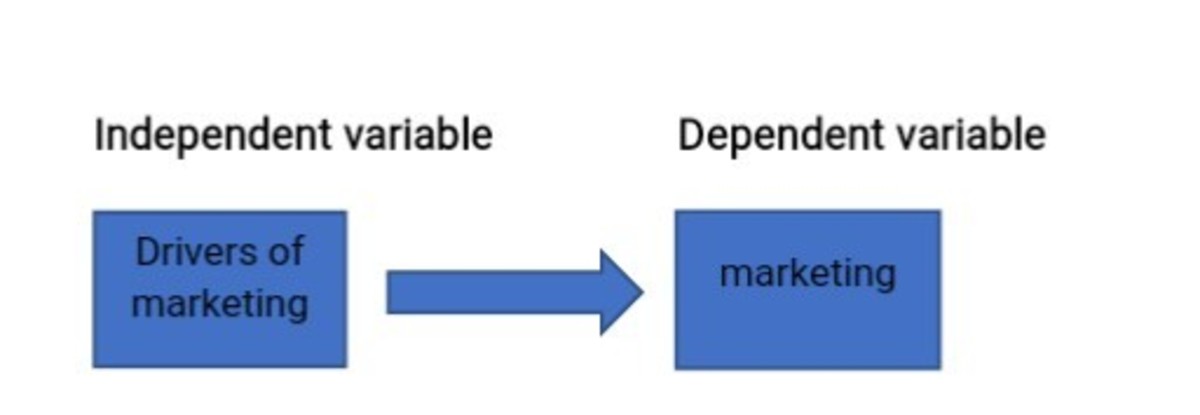
NB this is just an illustration you are not supposed to draw a diagram in this section unless otherwise. Your focus is to identify the drivers which are independent variables
Example
Entrepreneurial culture AS A DRIVER OF ENTREPRENEURIAL ECOSYSTEM
EE studies consider entrepreneurial culture as one of its important drivers (Acts, et al., 2014) Beinhocker, 2007. Brownson (2013) referred to the entrepreneurial culture as a society that promotes the exhibition of the attributes, values, beliefs, and behaviors that foster entrepreneurial spirit among members of such society. EE as a social system has its own cultural aspects underpinning its activities. It may include failure and success stories, trust and safety of the actors, role models, persistence, adaptability, openness, ability to track results, rewarding positive behaviors, corruption and bureaucratic societies, mindset, individual’s assumptions, adaptations, perceptions and learning, desire for business ownership, risky attitude, attitude towards entrepreneurs (see…Acs, et al., 2017, Ahmad & Hoffman, 2007; Kansheba, et al., 2020... for more).
The entrepreneurial culture can enable or constrain performance of individuals or SMEs. It enables the actors to internalize suitable entrepreneurial practices and norms (Spigel, 2015). Where the entrepreneurs have trust and feel safe with the neighbours within the EE (Audtretch & Balitsk, 2016), they are willing to work together. Bischoff (2018) concluded that sound entrepreneurial culture promotes actors’ collaboration within an ecosystem by inculcating trust and safety among stakeholders Social network/cluster theory posits that were members trust and see credibility in a person they may be willing to collaborate and support (Maskell, et al., 1998; Bell, et al., 2009). Successful entrepreneurs act as role models and provide useful information and skills for managing the business (Acs, et al., 2018). However, if the environment is bureaucratic, corrupt and not safe (Aidis, 2008), the entrepreneurs might choose to close or not to open businesses as a result the business is affected. Mack and Mayer (2015) found that a lack of supportive entrepreneurial culture was among the hindering factors toward the growth of an entrepreneurial ecosystem.
In sum, entrepreneurial culture has both positive and negative effects on EE. The nature of prevailing cultural conditions determines the degree of effectiveness to the EE. EO can leverage human capital to exploit the opportunities and overcome uncertainties from the business environment.
1.5 Consequences/results/effects/impacts/outcome/output/dependent variables of (..topic..)
- Provide the output or impact or positive and negative result of the (topic) e.g marketing.
- Example from marketing are increase/decrease in market share, profits, sales volume, customer satisfaction, brand loyalty
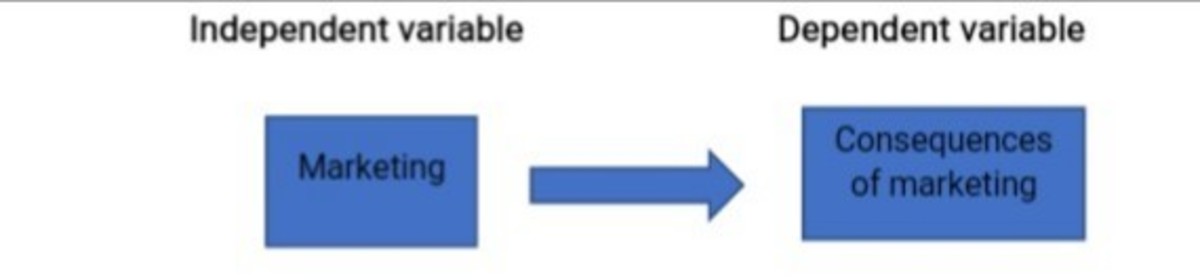
- NB this is just an illustration you are not supposed to draw a diagram in this section unless otherwise. Your focus is to identify the consequences/output which are dependent variables.
- You need to provide literature which agrees or disagrees that the driver affects the topic of your choice. E.g Mr Phiri (2018) found that marketing affects income positively. However, Mr Nambazo (2019) found that there is negative relationship between marketing and income.
- You need to collect many literature which supports or don’t support that there is relationship between technology and marketing. Don’t bring only literature which supports the relationship between the two terms. There must be both + and – literature. Then you must bring your opinion about the findings if there is a gap. What part of marketing and its effect has the literature left out. This might be the possible area for you to do your study
1.6 Process/dimensions/categories/classification of (…..selected topic)
- Provide the stages/steps /activities of the topic
- E.g if your topic is about technology adoption you need to describe the process of technology adoption.
- All these must have in-text citation. Don’t copy and past. Read, understand and paraphrase (write it in your own words) and include citations. Although you have paraphrased the sentence, the idea is not yours so you MUST provide citations. If you have copies a sentence you must indicate the page you got it… avoid copying and pasting paragraphs. Almost all sentences will have a citation in this chapter.
1.7 Theoretical framework
- Identify three theories which you can use to explain your problem statement or objectives or hypothesizes
- I.e you need to find a theory which can help you to solve your problem or achieve your objective
- What is the process/approach
-Identify the theory
-Indicate what it says/claims/suggests/argues
-Interpret it from your understanding
-Brief advantages and disadvantages
-Relate the theory with your study. ie how are you going to apply it in your study.
-You MUST PROVIDE citations
-E.g Theory of Reasoned Action and Planned Behavior
The study was based the typical theory of reasoned action and planned behavior. The theory is used to predict the individual’s intention to engage in certain behavior at specific time and place (citation). It states that behavioral achievement depends on motivation, subjective norms and ability (Behavioral control)(citations). Behavioral intentions are influenced by attitudes and subjective evaluation of risks and opportunities as well as costs and benefits of expected outcome(Ajzen, 1991). The study found this theory appropriate as it enables the sugarcane farmers visualize the risks and opportunities; costs and benefits before the sugarcane market is chosen. In marketing context, the theory assumes that the seller would only choose course of action (the market) which makes him or her to experience less risks and to incur less costs but with more financial and non-financial incentives (Ajzen, 1991). The theory is useful as it helps to explain how customers make decisions before buying a product (citation). It has a problem because human behavior is unpredictable. As such it is hard to anticipate how they might behave (citation). Nevertheless, it provides insight on how customers assess a product before buying it (citation).
- After writing three theories you draw a diagram like the one below.
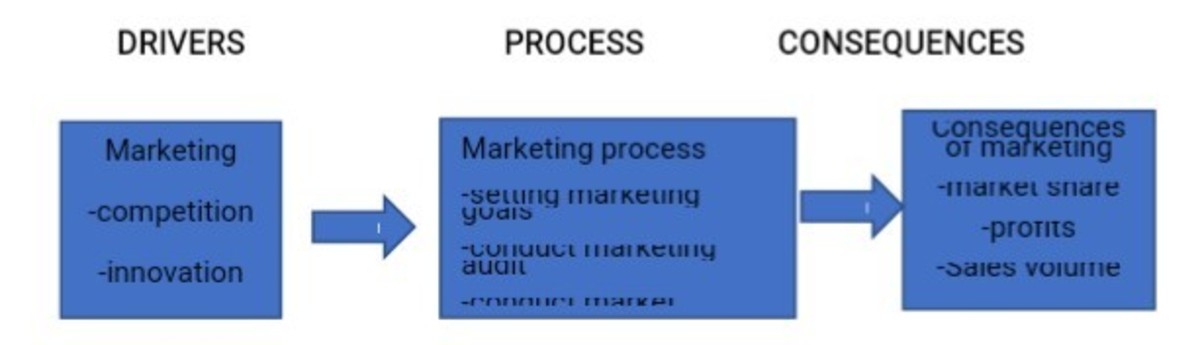
- You list all the drivers, stages and consequences of the topic you have identified through your literature review.
DRIVERS AND CONSEQUENCES OF POWER OUTAGES
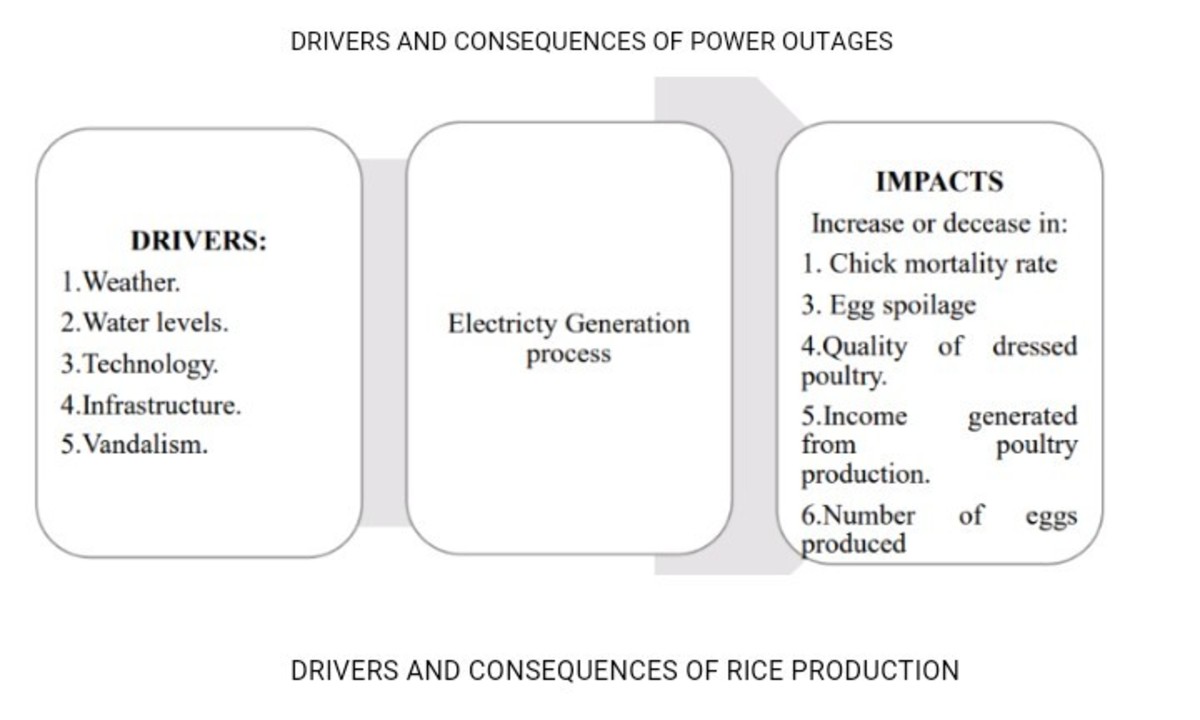
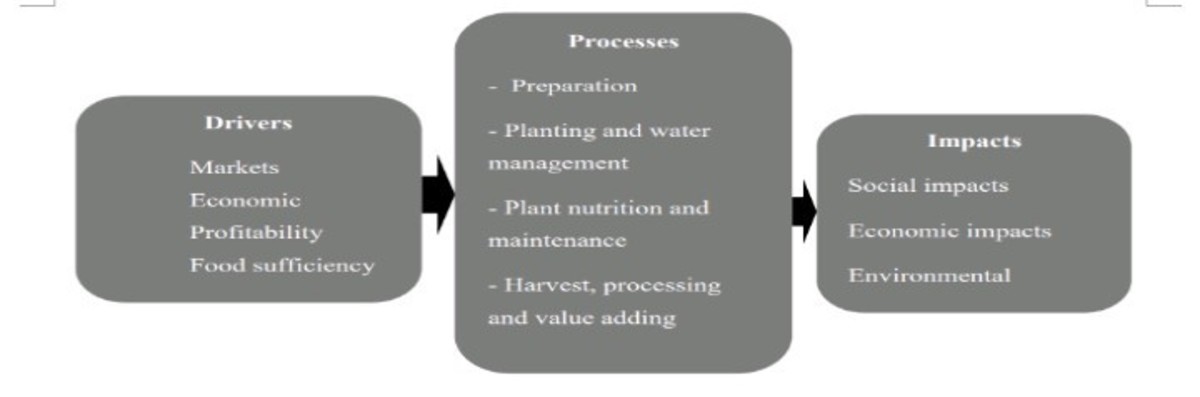
1.8 Conceptual framework
- You come up with the framework which indicates only the independent and dependent variables which you want to study.
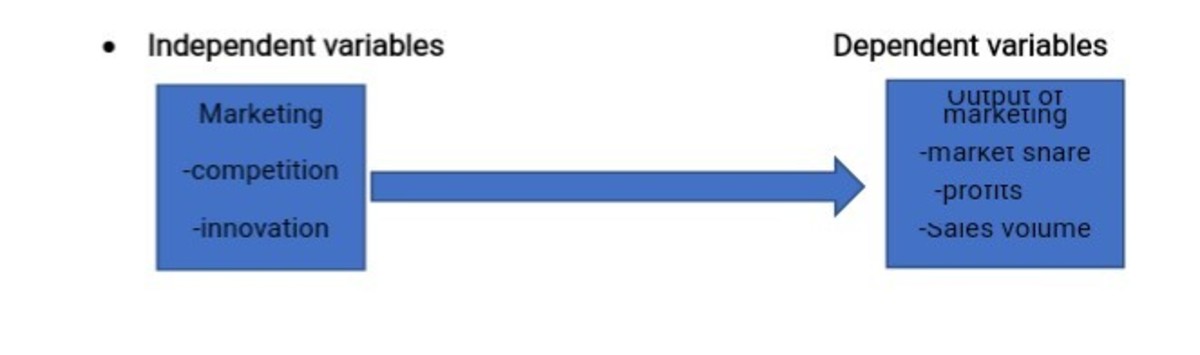
- Come up with paragraph (s) to explain why/how the independent variable affects the dependent variables. Ie how does technology or competition affects income/sales/market share/custom satisfaction. Remember to include citations. The no of paragraphs will depend on the no of independent variables. From the diagram above one can have two (NOT A MUST, it can be more than 2) paragraphs because there are two independent variables.
EXAMPLE: LINKING ENTREPRENEURIAL PERSISTENCE AND QUALITY ORIENTATION
While extant literature on performance implication of entrepreneurial persistence has been established from the entrepreneurship perspective (Cardon & Kirk, 2013; Patel & Thatcher, 2014), the study argues that there is dearth of information on effect of the entrepreneurial persistence on quality orientation of cotton smallholder farmers from developing nations. Gimeno et al., (1997) described persistence as the “continuation of effortful action despite failures, impediments, or threats, either real or imagined” (Cardon and Kirk, 2013 p.3). This implies that persistence demands continuous effort and active engagement with an activity over time; despite facing challenges, setbacks, counterforces, or attractive alternatives (Caliendo, et al., 2019; Gimeno et al., 1997). Using the RBT as a guiding framework, the study claims that entrepreneurial persistence is an intangible resource (Barney, 1991) that is critical for leveraging quality orientation during cotton farming from developing nations to produce high quality primary products. This can be realised through repeated efforts, activeness over time despite any impediments (Caliendo, et al., 2019). Thus the desire for quality orientation can be achieved through demonstrating actions associated with persistence. Besides, according to Theory of Planned Behavior by Ajzen (1991) the stronger the intention to engage in a behavior, the more likely should be its performance only if the behavior in question is under volitional control. The entrepreneurs with self-efficacy for quality orientation have motivation to persist when undertaking activities of the business despite adverse conditions.
From EO perspective an individual needs to persist when taking risks, pursuing innovativeness, seeking competitive aggressiveness. There are several reasons the aspects of entrepreneurial persistence can contribute to quality orientation. Entrepreneurial persistence is believed to ignite positive intense feelings and strong identification with the roles which bring those feelings (Cardon et al. 2009). An entrepreneur emphasising on quality control practices will put more effort and overcome set back over time. In agricultural context, high quality output may be realised in the face of challenges like lack of inputs, pests, weather conditions which the farmer must overcome over time. Besides the entrepreneurs will persist engaging themselves in functions identified by them despite lacking “high skills, abilities, or reasons to expect success” (Houser-Marko & Sheldon 2006). Thus they will persist in quality orientation despite having no capabilities and aversive experiences. Self-efficacy brings task-specific confidence to attain expected high-performance outcomes (Audia, Locke, & Smith, 2000). Thus, pursuing quality control practices ignites self-confidence in their abilities to undertake activities and persist any challenges over time to get the expected output (Cardon and Kirk, 2013). Quality orientation emerges as a condition to be fulfilled through entrepreneurial persistence. Entrepreneurs must provide effort and time to meet quality standards like timely purchase, and application of inputs, appropriate mixture of inputs, use of relevant inputs, timely delivery of output and good storage conditions of inputs and output. Persistence is critical in quality orientation as it demands huge investment of time, effort and money to sustain the business (Cardon and Kirk, 2013). Persistent entrepreneurs learn from the mistakes (Shepherd, Wiklund, & Haynie, 2009) and continue with effort. Entrepreneurs who pursue quality orientation learn from the mistake and recover from them.
In sum, these arguments portrays that persistence is critical in entrepreneurship (Cardon and Kirk, 2013) demands a psychological commitment which motivates an entrepreneur to continue with business endevours despite adverse experiences (Caliendo et al., 2019). In agricultural context, the entrepreneurs must survive agronomic challenges. In case of opportunities to be exploited through quality orientation, it may take some time (Shane and Venkataraman, 2000). Succeful entrepreneurs are characterised by goal-oriented in times of adversity (Wu et al., 2007). This study claims that entrepreneurial persistence can contribute to quality orientation in agriculture sector among the cotton farmers from developing nations.
1.9 Summary
Provide a conclusion of the chapter by give what has been covered and what is the next chapter. Plus what the next chapter will cover ie the subheadings of the next chapter.
Example
This chapter has reviewed some literature related to the study. It has also covered the meaning of marketing, drivers and antecedents of marketing, process of marketing, theoretical and conceptual framework for the study. The next chapter introduces the methodology of this study which covers the study area, data sources, research design, data collection methods, sampling size and techniques, analytical techniques, measurement tools, limitations. and ethics.
Entrepreneurship Theory

Perspectives on Entrepreneurship
Scholars from different disciplines have come up with agendas or ways of exploring the concept of entrepreneurship and entrepreneur. The perspective have emerged over many years and taken together they provide us with valuable insights into the role of the entrepreneur and the nature of entrepreneurship. The perspectives can be broadly categorized into three;
- economics
- psychological
- behavior/processual
Economics
Most of the extant theories of the entrepreneur were developed by scholars in the Austrian school of Economics which emphasized on the market processes or market dynamics and entrepreneurial discovery to understand the dynamic character of market and disapproves of the equilibrium models of markets.
The Austrian school of economics observe that the standard neoclassical micro-economics for which the general equilibrium model is the analytical core, fails to offer a satisfying theoretical framework for understanding what happens in the market economies.
Psychological
In the 1960s a rather different perspective on entrepreneurship emerged. There was a switch from the focus on the function of entrepreneur within an economic system to instead look at the individual.
This body of knowledge suggested that certain individuals had a particular aptitude for entrepreneurship by virtue of certain distinctive personality “traits’. Some of these traits are the need for high achievement, high internal locus of control etc.
The psychological perspective focuses on discovering and enumerating a set of stable characteristics describing this personality type i.e. locus of control, need for achievement, risk taking propensity While many successful entrepreneurs, especially those who come across as “heroic” figures do possess many of these characteristics, the place of personality within entrepreneurship has been the subject of extensive critical comments.
Behavioral or Processual
The criticism leveled against the psychological perspective which focuses on the individual has led some researchers to look at the broader context within which entrepreneurship takes place. The behavioral perspective is directed at exploring business behavior and business context. These have looked at factors such as ethnicity, gender, occupational background, culture and family structure related to entrepreneurial activity. The behavioural/processual perspective focuses on why some individuals are more likely than others to bear uncertainty , undertake the process of creating an organisation to pursue possible opportunities for profit irrespective of the resources they currently control.
Behavioural view focuses on the process of creating an organisation and an entrepreneur is viewed in terms of what activities or roles he/she undertakes to enable the organisations come into existence and exploit an opportunity.
Entrepreneurship Process
Entrepreneurship involves a number of activities to create and manage an enterprise profitably. An entrepreneurial process includes all activities and actions that an entrepreneur takes to identify and evaluate an opportunity, develop a business plan and mobilize resources to create and manage a new venture. There is need for you to know the activities which are part of the entrepreneurial process.
Activities are which are part of entrepreneurial process
- Identifying an opportunity
- Innovation & creativity
- Getting resources
- Creating & growing a venture
- Taking risks
- Being rewarded
- Managing the business
The entrepreneurial process is one through which a new venture is created by an entrepreneur. This process results from the actions of the entrepreneur in bringing the resources together to form the organization in order to pursue an opportunity. While some scholars have focused on activities, others have identified five phases in the entrepreneurial process:
Phases in entrepreneurial process
- Identify and evaluate an opportunity
- Develop a business plan
- Determine resources required
- Start and manage an enterprise
- Manage growth of the business
Another way of understanding the entrepreneurial process is to broadly categorize the various activities into two processes, namely discovery process of opportunity and exploitation process. The exploitation process is about how entrepreneurs actually organize and coordinate resources and activities to turn a business idea into an enterprise and get rewarded for it.
Motivational Factors for Becoming an Entrepreneur
Entrepreneurship is not always seen as a desirable career choice for many people in different countries. Many people are forced to become entrepreneurs due to a number of reasons.
Reasons for becoming an entrepreneur
- Loss or lack of employment as source of income. These individuals do business with expectation to get same or more money than the salary they used to get as an employee. They do not have patience and perseverance to allow business to grow before one starts to enjoy profits. They expect business to be profitable within the shortest period possible. They gradually eat the capital or may stop or reduce business activity once there is an offer of employment.
- Imitating or copying others who are doing well in a particular business and hoping they will succeed too. Imitating a business is easy, but what is difficult is imitation of the entrepreneurial skills to succeed in a particular business. “Me to” businesses do not last. It is important to align business opportunities with individual skills and interest for business to last and grow.
- To keep or increase money as they think business is a good means to easily generate money. These people often do not realize that business success does not only involve money, but also entrepreneurial skills, managerial skills, marketing and financial management skills as well. Money alone is not enough to do a successful business. When people have money, they need to identify and evaluate business opportunities, draw well researched business plan, and understand the market well.
- Just because they want money, some entrepreneurs do not care if the needs of the customers are met. Consequently, customers become dissatisfied and choose alternative providers of same or similar product or service.
Doing business with wrong reasons leads to business failure. The main reasons or forces that cause individuals to become entrepreneurs can be classified as either necessity (push factors) or opportunity (pull factors) of entrepreneurship. Before explaining these factors, it is key to discuss the concepts of opportunity and necessity entrepreneur.
Concept of Opportunity Entrepreneur
An opportunity entrepreneur is the one who take advantage of business opportunities and therefore start a business due to a gap spotted in the market. This type of an entrepreneur is normally pulled towards entrepreneurship. An opportunity entrepreneur is patient, determined and motivated by an opportunity to do successful business. They often do not lack sources of income.
Concept of Necessity Entrepreneur
People who start business because they do not have any options are usually pushed towards entrepreneurship. Some of the factors which push people into entrepreneurship include unemployment, job insecurity, and disagreement with management.
Individuals pushed into entrepreneurship are referred to as necessity entrepreneurs. They are motivated by necessity. It is common that necessity entrepreneurs stop their business or redirect their focus and effort once they get an alternative and relatively assured source of income (e.g. employment) or suffer from low tenacity or lack of persistence.
Layer Chicken Farming Management and Techniques

Layer Chicken Farming Management
A layer poultry farming is a profitable agribusiness. As the world is changing some people find it hard to buy meat which provides proteins due to its high cost and instead they are constantly shifting on eggs which are cheaper and are able to provide same proteins.
Eggs provide high quality vitamins and provides which are needed for the body to grow especially in the children. People are also shifting to this meat alternative because of the fact that the eggs does not take much of the time to prepare and is very easy to prepare an egg than meat yet these two are able to provide the same protein.
Breed
For commercial layer production, the following breeds are commonly used for best results; White Leghorn, Kalinga Brown, Cari Gold and Coloured Layer.
Dual purpose breed
For dual purposes the following breeds are recommended for best results; Kuroiler Dual, Rhode Island, Red and Vanaraja
Layer Production System
Four systems area available and these are; free range extensive, backyard extensive, semi-intensive and intensive. These systems, each has advantages and disadvantages.
Free range extensive systems
Under the free - range system, the chickens are left free and can scavenge for any food over a wide area. Temporary shelters may be provided. The system is common with a flock chickens of different species and different ages. When you use this system make sure you keep on checking or watching the birds from predators as they can easily be attacked.
Backyard extensive system of production
Poultry birds are left free in search for their feeds and they are taken to the house only at night. Grains may be provided to them in the morning as the temporary feeds on top of what they will scavenge.
Semi Intensive system
This system is a combination of extensive and intensive and allows the birds to be confined in a certain place which provides shelter. The system is common in urban and peri-urban areas. The system may also be used rural areas. Feed and water are provided in a house to avoid wastage by rain, wind and wild animals.
Intensive System
This system is common by medium to large-scale commercial poultry farmers. Under this system the chickens are fully confined either in a chicken house or cages. The system requires more capital. There are 3 types of intensive systems and these are; deep litter system, slatted floor system and Battery cage system.
1. Deep litter system
Under this system the chickens are fully confined with floor space allowance of 3 to 4 chickens per square meter within a house, but should be left to move around freely. The floor is covered with a deep litter which contains grain husks of maize or rice among others. The system is good as it protects the chickens from predators.
2. Slatted floor system
Under this system a wire or wooden slatted floors are used instead of deep litter, which allow stocking rates to be increased to 5 chickens per square meters of floor space. Under this system the chickens are less likely to be in contact with faeces and are allowed some freedom of movement.
3. Battery cage system
This system is commonly used for laying chickens, which are kept throughout their productive life in cages. The system is commonly used by large scale poultry farmers as it needs more capital investment.
Management in Layer Chicken Production
Housing
Make sure the house which will be used to keep layers is easy to clean and has enough space for better layer production. When constructing a layer chicken house make sure it is built away from residential or crowded areas and also it has to be in a place where clean water and electricity are available. Make sure also that the house is located closer to the good road and market for easy transportation. The chicken house needs to be well ventilated as well. Make sure the temperature inside the poultry layer production house range from 20 to 25 °C for better results.
Brooding
This is the caring of the layer chicks from the first day till they reach 88 weeks of age and this helps to reduce chicks mortality for good profits to be obtained.
Natural Brooding
Under natural brooding, the chicken hen is able to provide the chicks with the warmth of the body and looks after the thier feeding.
Artificial Brooding
Under this, a temperature controlled artificial brooder is used in place of a chicken hen.
Preparations for Chick Arrival
Day of chicks arrival
- Make sure all equipments are set and working and the house to keep the chickens has a temperature of 32 to 33 °C at chick level.
- Pre-heat the brooding area.
- Fumigate the chicken house.
- Make sure the chicks are not stressed when transporting them to a chicken house.
- Provide stress pack in water.
Management of grower chickens from 9 to 20 weeks
The layer chickens should be transferred to grower house at 9 weeks of age and waterer and feeders should be adjusted as per the need of the chickens. Make sure you provide a grower mash for feeding. Where necessary do de-beaking.
Management of layers from 21 to 72 weeks
Put the chickens on a layer mash and make sure you provide laying nesting boxes. Make sure you collect eggs about 3-4 times a day in the deep litter system. Always observe the chicken healthy conditions.
Climate
The optimal laying temperature is known to be between 11° to 26° C and when the temperature rises above 28° C the production and quality of eggs decrease.
Egg production cycle
Layer chickens mostly start laying at 20 to 21 weeks and continue to be laid for 52 weeks on average and a typical production cycle lasts around 72 weeks.
Sasso Chicken Farming ManagementSasso Chicken Farming Management

Sasso Chicken Farming Management
Sasso chicken is a dual purpose breed which is used for both meat and egg production. This Sasso chicken originated from France and is becoming common in small scale farmers in different countries.
Sasso chicken is being liked by many farmers because of its strong and disease resistant ability compared to other chicken breeds. The chicken requires less medication and vaccination compared to other chicken breeds.
The chickens can be kept on the free range system under low cost or can also be kept on the intensive system which makes it to give better results.
Reasons for keeping Sasso Chicken?
- Sasso chickens are strong efficient, scavengers.
- Sasso chicken requires less lighting and still achieve a better results and this makes it able to have more resting period and uses this time to digest eaten feeds and sleep.
- A simple homemade chicken feed can be given and still gives better results. Home wastes can also be given as supplements.
- Management in Sasso chicken is easy compared to that of other chicken breeds. The Sasso chicken is able to adapt on free range or intensive system of management and still performs well.
Some notable characteristics of Sasso chicken breeds
- Sasso requires feed to be available most of the time for it to give high performance. Home leafy vegetables like cabbages can be given as supplements. Make sure the house keeping the Sasso chickens has enough space and perchings. A free range may be the best way, but make sure the chickens are protected from predators.
- Sasso chicken weights a range of 2.2 to 2.5 kgs in just 7 to 8 weeks. The male Sasso has potential to reach 4.8 Kilograms in 13 weeks under a good management and for the females they can reach a weight of 3.6 Kilograms maintenance layer.
Before the Sasso chicks arrive
- Make sure the house which will be used for Keeping the chicks is clean, well ventilated and all equipments are set.
- Make sure you are able to pre-brood the brooder before the day old Sasso chicks arrives.
- Disinfect all the materials and equipments
What to do on the day of Sasso chicks arrival?
- Put the chicks quickly under the brooder house and make sure all equipments are set ready and observe the chicks more frequently. Observe the chicks frequently.
- Make sure all feed troughs and water drinkers are evenly distributed.
- Make sure the chicken house is well ventilated and clean
- Make sure the brooder is set at a right temperature.
- Make sure enough vitamins or supplements are added to the water.
From second week
More space should be given to the Sasso chicks starting from second week and the space should be increased depending on chicken size.Follow all vaccination schedules available.
Vaccinations
Sasso day old chicks are vaccinated at the hatchery therefore you should not worry. They are vaccinated against Bronchitis infections, Newcastle and Merek's diseases. All other vaccinations programs are similar to those for layers or kuroiler chickens.
Sasso Chicken Feeding
During the second and third week, Sasso chicks can be given starter feed mash and they feed 500 grams per bird and this means that 50 Kilograms can be used for 100 Sasso Chicks.
The Sasso chicks can be left on a free range from the third week. Sasso chicken farmers are advised to However provide about 80% of the feed inside the house in the morning and evening for better results if they want to obtain better results. Do not force the birds to grow fast by using high density finisher feeds. Grow the birds.
Diseases
The same diseases which attack local chickens, kuroiler chickens, Black Australorps e.t.c are also the same which attack the Sasso chickens and this means the same management system which aims at preventing diseases can be used.
Kuroiler Chicken Farming and Management

Kuroiler Chicken Farming
Kuroiler Chicken Farming and Management
Kuroiler Chicken is one of profitable poultry birds, which was successfully introduced by Keggfarms.
Keggfarm is a Private Limited successfully introduced a dual purpose Kuroiler chickens mainly to increase performances of local chickens due to its dual characteristics.
The Kuroiler chicken performs much better when it comes to egg and meat production and this is why a lot of farmers are shifting from other chickens breeds into profitable Kuroiler chickens.
The management system and feeds that are required are much easier and can operate at a low cost compared to other chickens breeds like broiler chickens, and at the same time Kuroiler chickens achieve a similar result.
This agribusiness article aims at giving more details about Kuroiler chickens breeds which among others, it talks more about its management practices for achieving a better results.
Characteristics of the Kuroiler Chicken
- The Kuroiler chicken is a dual purpose breed that produces both meat and eggs very well.
- It is multicolored in appearance and highly preferred by small holder farms. It is also useful as camouflage.
- Hens attain weight off up to 2.5 kg in 12 months, begin laying eggs at five to six months and then lay 150 to 200 eggs during their 12-16 months egg laying period, initially more than 20 eggs per month(Keggfarms).
- Cockerels reach 4kg in 12 months and weigh at least 1kg when they are about three months, at which point they could be sold for meat if the farmer chooses.
- The Kuroiler chicken breed thrives well on household waste, scraps and vegetation and thus does not compete with the poor for grain or require any special feeding.
- The colour of the egg is distinct shade of brown (tan) with bright yellow yolk.
Why the Kuroiler chicken?
- They are hardy birds that do well even with unsophisticated management and feed input.
- Their meat is distributed in an even manner on the breast area and legs.
- The birds have a traditional appearance.
- The quality of the meat is perceived as superior.
- The Kuroiler chicken, being multicolored fetch a premium of over 10% in most live bird meat markets.
- Traditional live bird customers prefer to purchase a whole live bird of 1kg weight and not a much bigger bird of almost 2kg.
- Kuroiler chickens attain 1kg weight between 5 to 6 weeks of age depending upon feed and management conditions with excellent live ability.
How to site a poultry house
- The poultry house should take advantage of topographical features which will favour air movement. East to West positioning of the house is the most ideal to take care of direct sun rays into the house at sunset and at sunrise.
- The poultry house should be constructed on well-drained soil (not on a swamp) and the floor should be cemented (subject to availability of funds) to ease cleaning and to control diseases. Poultry house structure for kuroiler chicken.
- The kuroiler chicken house should be of considerable height of not less than 6 feet for workers’ comfort and free air movement.
- The house should provide ventilation for all stages of growth. However, care should be taken to prevent and avoid draughts.
- Good ventilation aids in removing ammonia from the house and assists in drying litter which in return helps reduce risk of diseases.
- Having a wire mesh on at least two sides of the poultry house is a must for adequate ventilation.
- The front part of the house should have 1 meter and the back side 0.6 meters of wire mesh from the top. This can be adjusted to suit different regions. Just like human beings, to chicken hate a stuffy environment and this will even affect their growth and production.
Spacing
Provide adequate spacing for your chicken. Provide litter (wood shavings) and not sawdust for broiler chicken. These should be at least 12 inches of depth on the floor to absorb any moisture from water spillage and chicken droppings. Turn the litter using a fork spade once a week to facilitate absorption. Litter must remain dry at all times.
Nutrition
- Your kuroiler chicken need to be given the best nutrition for the best production.This includes quality feeds, water and supplements. When budgeting, one needs to know the prices for feeds, vitamins and water depending on the number of chicken that you want to have for your farm. You need to know how much these will cost up to the time you start production.
- You also need to have feeding and watering equipment for your flock. These include feeders, waterers. You can buy these from a local agro vet shop near you or you can make your own using available containers and other items in your home. The most important aspect is that they should be clean and that the chickens are able to feed and drink comfortably without having to reach out to the feeds and water. This equipment should also be able to keep the water and feeds clean at all times and prevent wastage and spilling.Other equipment that one needs to have include measuring caps, spoons.These come in handy when administering drugs and mineral supplements to your chicken.
Feeding Equipment
Feeders
Feeders are equipment where one puts feed for chicken. Good feeders should:
- Be easy to clean. Avoid feed wastage, Easy for birds to access feeds, Maintain clean feed at all times.Feeders are designed to either be long or round and can be made of plastic or metal. In each case, allow for 4cm per broiler feeding length for long feeders and 2 cm in round feeders.
- Feeders should be about 14 cm deep and should be filled not more than 2/3 full.
Drinkers
There are different types of chicken drinkers. They can be categorized into two:
- Manual chicken drinkers.
- Automatic chicken drinkers.
Manual drinkers
- These are drinkers where one needs to add water in order to fill them up for the chicken to drink.
- These can be made from locally available containers such as drums. There are manual drinkers which use gravity to access water to the chicken. These are called gravity drinkers/waterers. Most folks with just a few hens use gravity waterers. This is just a fancy way of saying you use a hanging chicken drinker.
- Gravity waterers are by far the simplest and most commonly used ones. You don’t have to worry about water pressure or other factors used in automatic drinkers.
- The major drawback to the gravity style is the need to refill them frequently.
- On average, a mature chicken will drink about one pint of water each day (around half a liter) in normal weather conditions. This number may increase to 2 pints in hot weather. As long as you know how many chicken you have (or are getting), you can buy a drinker to fit their needs.
- A caveat to this is it’s actually better to have a couple of them just in case you get a bully hen ‘guarding’ the food and water.
Good manual drinkers should
- Be easy to clean
- Avoid water spillage
- Easy for birds to access water
Maintain clean water
Drinkers are usually round and mostly plastic. Other drinkers include automatic nipples and cups and also handmade ones. Allow 2 cm drinking space per bird in round drinkers and 10 birds per
drinking nipple. Drinkers should be washed daily with a disinfectant or soap and water and then filled with fresh clean water. It is recommended that birds be allowed free access to water. However provide water at the rate of three times feed intake per bird per day. This will depend on weather conditions.
Automatic Chicken Drinkers
These are chicken drinkers that refill themselves by virtue of being connected to a water source, such as a hosepipe, water tank, drum etc. virtually anything that can hold water. There are various types of automatic drinkers for poultry. This is new technology is rapidly becoming widespread.
Automatic chicken drinkers include:
- Chicken nipple drinkers
- Water cups
- Automatic bell drinkers.
What are chicken nipples drinkers?
Chicken nipples are a handy little device designed to give water to chickens with minimal mess. They are small devices that look a bit like a spark plug. They screw into a bucket or similar water holder. When pecked at, the device releases a few drops of water to the chicken.
It is designed to cut down on water wastage which usually dampens the litter in the chicken house or makes puddles on the floor. This is a great advantage over regular drinkers which pour water all over the place when bumped or jostled by the chicken. Wet or damp litter or chicken house floor, is a conducive environment for bacteria, protozoa, viruses and other disease causing organisms to grow in, so anything that cuts down the potential for their growth is a most welcome improvement.
Chicken nipple drinkers are suitable for both small and large flocks of chicken. For smaller flocks on can be able to install without the help of an expert. They are even actually cheaper than the manual drinkers that are common in many poultry farms.
Chicken nipple drinkers occupy very little space as compared to the manual drinkers. This advantage allows chicken to have more space to feed and move around. This is especially advantageous for chicken flocks that have cockerels as it helps create a conducive environment for fertilization of eggs.
Chicken water nipples come in a few different types that you need to choose from. Here’s a brief rundown on the two types most commonly used:
How to Feed Kuroiler Chicken
Kuroiler chicken are feed on different types of feeds at different ages.
Here is a simple feeding guide to feed your chicken.

Kuroiler Chicken Feeding Program
Recommended Vaccination Program
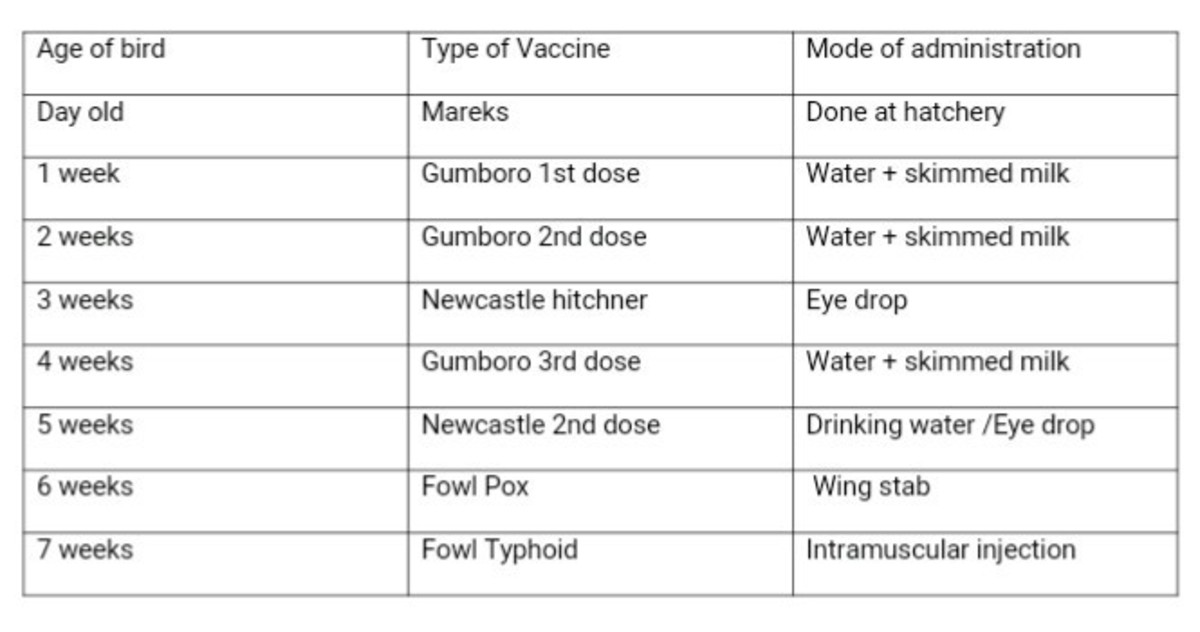
Kuroiler Chicken Vaccination Program
Find a good location to set up your chicken farm
A good location for your farm is important. You need to check for availability of water, feed, market for your chicken products, and availability of veterinary services, good security, transport and communication network, electricity or other sources of energy. When starting a broiler chicken farm, there are special considerations that one needs to put in mind in terms of looking for a good location.
These include the following:
- Distance to the market for the finished product for kuroiler meat or live birds and eggs. This is important because transport costs money.
- Availability of quality feeds. Feeds alone account for 70% of the production cost in a kuroiler enterprise hence the need to ensure quality at an affordable price.
- Availability of information on basic management practices and animal health services especially for vaccines and drugs. Determine the market for your products. Before you start your kuroiler chicken farm, do determine where you will sell your products. One way of doing this is looking around your neighbourhood. Are there other kuroiler chicken farmers nearby? If there are, where do they sell their chicken and eggs?
The Kuroiler chickens offer a significant improvement in virtually all areas of breeding. While indigenous chickens lay just 30-40 eggs per year, the Kuroilers can easily produce five times that number or around 150-200. Kuroilers also grow to about double the body weight of their native counterparts, providing much more edible meat.