Learn smarter with fresh insights from our tutors.
Practical study guides, course supplements, and learning resources curated to help you move faster through every subject.
Exploring the Cosmos: Latest Discoveries in Space

Exploring the Cosmos: Latest Discoveries in Space
The universe is a vast tapestry woven with mysteries and wonders. Each star in the night sky tells a story, beckoning us to explore beyond our home planet. With every passing day, we inch closer to unraveling its secrets. From breathtaking celestial phenomena to groundbreaking technological advancements, humanity's quest for knowledge knows no bounds.
As we delve deeper into the cosmos, recent discoveries are reshaping our understanding of space and time. Prepare to embark on an exhilarating journey through the latest revelations about our solar system and beyond. What awaits us among distant stars? Can life exist outside Earth? Join us as we navigate this celestial adventure together!
Understanding the Vastness of Space
Space is an expanse beyond imagination. It stretches infinitely, filled with galaxies, stars, and dark matter that eludes our understanding. Just the Milky Way alone contains over 100 billion stars, each potentially hosting its own system of planets.
To grasp this enormity, consider the distance light travels in a year—about 5.88 trillion miles. This vastness challenges our perception of time and space. The nearest star to Earth is Proxima Centauri, located over four light-years away.
In the cosmic playground, distances are measured in astronomical units or parsecs. Our solar system fits snugly within just one tiny corner of it all.
The sheer scale leaves us both awestruck and humbled. As we gaze at the night sky, we must remember: our planet is but a speck in this grand universe full of wonders waiting to be explored.
The Role of Technology in Space Exploration
Technology is the backbone of modern space exploration. It enables us to push boundaries that were once thought unreachable.
From advanced telescopes to sophisticated rovers, every innovation plays a crucial role. These instruments gather vital data about distant worlds and cosmic phenomena.
Artificial intelligence streamlines operations in spacecraft, allowing for real-time decision-making far from Earth. This capability enhances our missions and ensures we can adapt quickly to unexpected challenges.
Moreover, satellite technology has revolutionized our understanding of both Earth's atmosphere and outer space conditions. With better communication systems, scientists collaborate more effectively across the globe.
The development of reusable rockets has significantly reduced costs, opening doors for more frequent missions. As private companies enter the field, competition drives rapid advancements in technology.
With each leap forward, we not only explore new frontiers but also enhance life on our own planet through innovative applications derived from these technologies.
Recent Discoveries About Our Solar System
Recent advancements in space exploration have shed light on some intriguing aspects of our solar system. The discovery of water ice on the Moon’s surface has opened new avenues for future lunar missions. This finding suggests potential resources that could support long-term human presence.
Mars continues to captivate scientists as well. The Perseverance rover recently collected samples that might reveal signs of ancient microbial life. Its findings fuel debates about whether humanity is alone in the universe.
Jupiter's moon, Europa, remains a focal point due to its subsurface ocean. Researchers speculate about the possibility of life thriving beneath its icy crust.
Even Saturn offers surprises with its rings and moons like Enceladus, which shows geysers releasing plumes rich in organic material into space. Each discovery enhances our understanding and appreciation of these celestial bodies surrounding us.
Beyond Our Solar System: Exoplanets and their Potential for Life
Exoplanets are a fascinating area of study in modern astronomy, capturing our imagination with the possibilities they hold. These planets orbit stars beyond our solar system, and many lie within their star's habitable zone—the region where conditions might be just right for life as we know it.
Recent advancements in technology have allowed scientists to discover thousands of these distant worlds. Some bear striking similarities to Earth, raising exciting questions about potential ecosystems that could thrive there.
Astronomers are keenly focused on detecting atmospheres around these exoplanets. The presence of certain gases can hint at biological processes similar to those on our planet. This research fuels our curiosity about whether we’re alone in the universe or if other intelligent beings exist.
The search for exoplanets is not just an academic exercise; it's a crucial step toward understanding life's place in the cosmos and what it means for humanity’s future among the stars.
Uncovering the Secrets of Black Holes
Black holes have long captured our imagination, lurking at the edges of understanding. These cosmic enigmas are formed when massive stars collapse under their own gravity, creating regions where escape is impossible.
Recent advancements in technology allow us to probe deeper into these mysterious objects. Observations from powerful telescopes reveal the effects of black holes on surrounding matter. As gas and dust spiral inwards, they heat up, emitting X-rays that we can detect.
The Event Horizon Telescope made history by capturing the first image of a black hole's shadow in 2019. This groundbreaking achievement opened new avenues for research and sparked further questions about their nature and behavior.
Scientists are also exploring the connection between black holes and galaxy formation. Their gravitational influence may play a significant role in shaping galaxies as we know them today—evidence that even voids hold immense power.
The Search for Extraterrestrial Intelligence (SETI)
The search for extraterrestrial intelligence, commonly known as SETI, has fascinated scientists and dreamers alike. This field focuses on detecting signals from civilizations beyond Earth. With an immense universe to explore, the possibilities are tantalizing.
SETI employs advanced technology to listen for radio waves and other forms of communication emanating from distant stars. Telescopes with cutting-edge sensors scan the cosmos tirelessly. Each beep or buzz could represent a message from intelligent lifeforms.
Recent advancements in artificial intelligence enhance our ability to analyze vast amounts of data more efficiently than ever before. Patterns that may have gone undetected by human observers become visible through sophisticated algorithms.
While we have yet to confirm contact with extraterrestrial beings, each attempt brings us closer to understanding our place in the universe. The quest continues, fueling both scientific inquiry and human imagination about what lies beyond our planet's atmosphere.
The Future of Space Exploration and its Impact on Humanity
The future of space exploration holds incredible potential for humanity. As technology advances, we stand on the brink of discovering new worlds and understanding our place in the universe.
Manned missions to Mars are becoming a tangible goal. The prospect of colonizing another planet ignites imaginations and raises questions about survival beyond Earth. What would life look like on Mars? How would we adapt?
Moreover, advancements in robotics and AI could revolutionize how we explore distant celestial bodies. Imagine autonomous drones surveying icy moons or rovers delving into unexplored terrains.
These endeavors will spark new industries and inspire generations to pursue careers in science, engineering, and tech fields. International collaboration may flourish as nations unite for common goals in space.
As we venture further into the cosmos, ethical considerations will emerge regarding our responsibility towards other planets and potential extraterrestrial life forms. This journey is not just about exploration; it's about shaping our collective future.
Our Never-ending Quest to Understand the Cosmos
Humanity’s quest to understand the cosmos is as old as civilization itself. From ancient stargazers charting constellations to modern scientists launching sophisticated spacecraft, our curiosity drives us forward.
Every discovery opens new doors, challenging what we thought we knew. Each star and planet adds layers to our understanding of existence. The vastness evokes wonder, urging us to explore beyond Earth’s confines.
As technology advances, so does our capacity for exploration. Observatories capture breathtaking images of distant galaxies while rovers traverse alien landscapes on Mars. These feats spark inspiration in minds young and old alike.
The mysteries of dark matter or the nature of black holes keep scientists awake at night pondering their implications. We seek answers not just for knowledge's sake but to grasp our place in this grand universe.
This relentless pursuit fuels innovation and collaboration across nations, uniting people under a common goal: uncovering the secrets that lie among the stars.
Conclusion
Exploring the cosmos is an exhilarating journey that fuels our imagination and curiosity. Each discovery reminds us of how much we have yet to learn about our universe. The vastness of space offers endless possibilities, from understanding our own solar system to searching for life beyond Earth.
Technology plays a crucial role in advancing this exploration. As we develop increasingly sophisticated tools and methods, we unlock new mysteries hidden within the stars. Recent findings continue to reshape our perspective on celestial bodies, revealing intricate details about their composition and behavior.
Exoplanets present exciting opportunities for potential life forms existing far from home. These distant worlds challenge our understanding of habitability and push us to rethink what it means to exist in a universe so diverse.
The enigma of black holes captivates scientists and enthusiasts alike. Their gravitational pull defies comprehension, inviting ongoing research into their very nature while sparking discussions around time and space itself.
The search for extraterrestrial intelligence remains one of humanity’s most profound quests. SETI initiatives strive tirelessly to decipher signals from the cosmos, reminding us that we are not alone in pondering these questions.
Looking ahead, the future holds promises filled with innovation and collaboration as nations unite in pursuit of knowledge beyond Earth’s atmosphere. This cosmic adventure has implications not just for science but also for culture, philosophy, and even spirituality.
As we embark on this never-ending quest to understand more about the cosmos, each step forward propels humanity toward deeper insights into existence itself—an unfolding narrative written across starlit skies waiting just beyond reach.
Gravitational Waves: The New Frontier in Astronomy

Gravitational Waves: The New Frontier in Astronomy
Astronomy has always been about pushing boundaries and exploring the unknown. From ancient stargazers charting celestial patterns to modern-day scientists peering into the depths of space, humanity's curiosity knows no bounds. Now, a groundbreaking discovery is reshaping our understanding of the universe: gravitational waves. These ripples in spacetime are not just theoretical musings; they represent a new frontier in astronomical research.
Imagine being able to hear cosmic events that occurred billions of years ago—events like colliding black holes or exploding stars. Gravitational waves allow us to do just that, opening up a fresh avenue for exploration and insight into some of the most enigmatic phenomena in existence. This blog will take you on an enlightening journey through this fascinating subject, illuminating what gravitational waves are, how they were discovered, and why they matter immensely for science and humanity alike. Buckle up as we dive deep into the world of gravitational waves!
Understanding Gravitational Waves
Gravitational waves are subtle ripples in the fabric of spacetime, created by massive celestial events. Imagine throwing a stone into a still pond—the resulting waves spread outward from the point of impact. In the universe, monumental occurrences like merging black holes or neutron stars create similar disturbances.
These waves travel at the speed of light and carry information about their origins. As they pass through space, they stretch and compress everything in their path, including Earth itself. This distortion is incredibly tiny—much smaller than an atom—making detection challenging.
Einstein’s theory of general relativity first predicted these phenomena over a century ago. Yet it wasn’t until recently that we developed technology sensitive enough to capture them. Gravitational wave astronomy offers us new insights into fundamental questions about our universe's nature and its underlying physics. Each detected wave reveals a cosmic story waiting to be uncovered.
The Discovery of Gravitational Waves
The discovery of gravitational waves marked a monumental shift in our understanding of the universe. It all started with Albert Einstein's theory of general relativity, proposed over a century ago. He predicted that massive objects like black holes or neutron stars would create ripples in spacetime.
Fast forward to September 14, 2015. The Laser Interferometer Gravitational-Wave Observatory (LIGO) detected its first waves from two merging black holes nearly 1.3 billion light-years away. Scientists were ecstatic; this was the moment they had long awaited.
This groundbreaking event confirmed a key prediction by Einstein and opened new avenues for astronomical exploration. Researchers around the world celebrated as gravitational wave astronomy began to take shape, ushering us into an era where we could observe cosmic phenomena beyond traditional electromagnetic radiation methods.
Each detection since then has provided insights into violent astrophysical events previously hidden from view, transforming our grasp of the cosmos forever.
How are Gravitational Waves Created?
Gravitational waves are ripples in spacetime caused by some of the universe's most violent events. When massive objects accelerate, they disturb the fabric of spacetime around them.
The merging of black holes is a prime example. As these celestial giants spiral towards each other, their gravity pulls on surrounding space, producing waves that stretch and compress as they travel across vast distances.
Neutron stars colliding also generate gravitational waves. These explosions release tremendous energy and can be detected billions of light-years away.
Even supernovae contribute to this phenomenon when dying stars explode, sending shockwaves through spacetime.
The intricate dance between mass and movement creates these elusive signals. Detecting them requires highly sensitive instruments like LIGO and Virgo, which have revolutionized our understanding of cosmic events.
Applications and Implications of Gravitational Waves
Gravitational waves have opened up a new realm of possibilities in the field of astronomy. These ripples in spacetime provide unique insights into cosmic events like black hole mergers and neutron star collisions. By detecting these waves, scientists can study phenomena that were previously hidden from traditional telescopes.
Beyond just astronomical observations, gravitational waves have profound implications for our understanding of fundamental physics. They challenge existing theories about gravity and could offer clues about dark matter and energy.
In medical technology, concepts derived from wave detection technologies might lead to advancements in imaging techniques. Innovations inspired by gravitational wave research could improve diagnostic tools or even enhance security systems through refined sensing methods.
The interdisciplinary impact is clear; as we delve deeper into this frontier, the potential benefits extend far beyond mere observation of the universe's mysteries. Each discovery paves the way for technological breakthroughs that can transform various fields.
Challenges and Successes in Studying Gravitational Waves
Studying gravitational waves is no easy feat. The detection of these ripples in spacetime requires extraordinary precision. Instruments like LIGO and Virgo are designed to measure changes smaller than a proton’s diameter.
One significant challenge lies in the noise that surrounds these delicate measurements. Vibrations from vehicles, seismic activity, and even thermal fluctuations can interfere with results. Scientists have developed sophisticated algorithms to filter out this background noise, but it remains an ongoing battle.
Despite these hurdles, the successes have been monumental. The first direct detection in 2015 opened a new era for astrophysics. It validated Einstein's theory of general relativity while also providing insight into cosmic events like black hole mergers.
Each discovery not only enhances our understanding but also inspires further exploration into the universe's mysteries. As technology advances, researchers remain hopeful about overcoming existing challenges and unlocking more secrets hidden within gravitational waves.
Future Possibilities for Gravitational Wave Research
The future of gravitational wave research is filled with exciting potential. As technology advances, we may see more sensitive detectors capable of capturing fainter signals from the cosmos. This could open doors to observing events that were previously out of reach.
Imagine detecting waves from the collision of neutron stars billions of light-years away. Such discoveries might reveal new insights into the universe's expansion and formation.
Moreover, international collaborations are likely to increase, pooling resources and expertise across borders. Projects like LIGO in the USA and Virgo in Europe could lead to a global network for real-time observations.
Artificial intelligence will play a crucial role too. With machine learning algorithms refining data analysis, identifying gravitational wave sources can become faster and more accurate.
As researchers deepen their understanding, we'll uncover mysteries surrounding black holes and other cosmic phenomena that challenge our current knowledge. The possibilities seem endless as we continue this journey through space-time.
Conclusion
Gravitational waves have opened a new realm of possibilities for astronomers and physicists alike. They represent an evolutionary leap in our understanding of the universe. As we continue to refine detection techniques and develop advanced technologies, the potential for groundbreaking discoveries only increases.
These ripples in spacetime provide insights into phenomena that were previously beyond our reach, from black hole mergers to neutron star collisions. Each detection adds another piece to the cosmic puzzle, expanding our knowledge about the fundamental workings of space and time.
Moreover, as gravitational wave research evolves, it promises not just scientific advancements but also technological innovations that could benefit various fields on Earth. The journey is still unfolding; each discovery leads us closer to unraveling more mysteries hidden within the cosmos.
The future looks bright for gravitational wave astronomy. With ongoing efforts and collaborative endeavors worldwide, who knows what wonders await? The universe is vast and filled with secrets waiting to be uncovered through this extraordinary frontier.
Quantum Computing: The Next Breakthrough in Business Tech

Quantum Computing: The Next Breakthrough in Business Tech
Imagine a world where complex problems could be solved in seconds, where data encryption is unbreakable, and where artificial intelligence can learn at lightning speed. This isn't the realm of science fiction; it's the promise of quantum computing. As businesses strive to stay competitive in an increasingly digital landscape, understanding this groundbreaking technology becomes essential.
Quantum computing represents a radical shift from traditional computers. Instead of relying on bits that can either be 0 or 1, quantum computers use qubits that can exist in multiple states simultaneously. This unique property allows them to process vast amounts of information at unprecedented speeds.
Many industries are already exploring its potential—from finance and healthcare to logistics and cybersecurity—paving the way for transformative changes in business operations. If you’re curious about how quantum computing might revolutionize your industry, let’s dive deeper into what makes this tech so fascinating and impactful.
Understanding Quantum Computing
Quantum computing is a new frontier in technology, fundamentally different from classical computers. While traditional systems use bits to represent information as 0s and 1s, quantum computers harness the power of qubits. These qubits can exist in multiple states at once, thanks to a principle known as superposition.
Another key concept is entanglement, where the state of one qubit becomes linked with another. This means that changes made to one qubit instantly affect its partner, no matter the distance separating them. Such properties allow quantum computers to perform complex calculations much faster than their classical counterparts.
This breakthrough opens up possibilities for solving problems that were previously thought unsolvable. It’s not just about speed; it’s also about efficiency. Quantum computing could redefine how we approach data analysis and algorithm development across various sectors.
How Quantum Computing Works
Quantum computing operates on principles that differ significantly from classical computing. Instead of bits, which can represent either a 0 or a 1, quantum computers use qubits. These unique pieces of information can exist in multiple states simultaneously thanks to the phenomenon known as superposition.
This ability allows quantum computers to process vast amounts of data at an unprecedented speed. Entanglement is another crucial concept; it connects qubits in ways that classical bits cannot be linked. When entangled, the state of one qubit directly affects another, regardless of distance.
The result? Complex computations that would take traditional computers years can potentially be solved in moments. By harnessing these remarkable properties, businesses could unlock new capabilities and insights previously thought impossible within their industries.
Advantages of Quantum Computing in Business
Quantum computing offers transformative advantages for businesses seeking to optimize their operations. Its ability to process vast amounts of data simultaneously is unparalleled. This means faster decision-making and more accurate predictions.
Enhanced problem-solving capabilities make it an invaluable tool in fields like logistics, finance, and pharmaceuticals. Complex optimization tasks that would take classical computers eons can be tackled in mere seconds.
Additionally, quantum algorithms improve cybersecurity measures significantly. They offer new ways to encrypt data, making sensitive information far less vulnerable to breaches.
Moreover, the potential for innovation is immense. Businesses can explore new product development avenues previously deemed impossible due to computational constraints.
Leveraging quantum technology positions organizations as leaders in their industries by providing a competitive edge that traditional systems simply cannot match.
Current Uses of Quantum Computing in Various Industries
Quantum computing is making waves across multiple industries. In finance, firms leverage this technology for risk analysis and fraud detection. Quantum algorithms can process vast data sets, identifying patterns much faster than traditional methods.
The pharmaceutical industry also benefits significantly. Researchers use quantum simulations to model complex molecules, expediting drug discovery processes. This could lead to breakthroughs in treatments that were previously unimaginable.
Logistics companies are exploring quantum computing for optimization challenges. It helps streamline supply chains by calculating the most efficient routes and resource allocations in real time.
Furthermore, energy sectors utilize quantum models for enhancing battery technologies and improving grid stability. Such advancements promise a more sustainable future by optimizing renewable energy usage.
Telecommunications aim to harness quantum encryption techniques for enhanced security measures. As these applications expand, the impact of quantum computing will be transformative across various fields.
Challenges and Limitations of Quantum Computing
Quantum computing holds immense potential, yet it faces significant hurdles. One of the primary challenges is decoherence. This phenomenon causes quantum states to collapse due to environmental interference, making it difficult for qubits to maintain their superposition.
Another major limitation lies in error rates. Quantum bits are incredibly sensitive, leading to errors during computations. Developing reliable error correction methods remains a pressing concern.
Additionally, accessibility is an issue. The technology requires specialized knowledge and infrastructure that many businesses lack. The cost of building and maintaining quantum hardware can also be prohibitive.
The current algorithms designed for quantum systems are still in their infancy. Optimizing these algorithms for practical applications across various industries is crucial before widespread adoption can occur.
The Future of Quantum Computing in Business
The future of quantum computing in business is poised for astonishing developments. As organizations grapple with complex datasets, quantum technology offers unprecedented processing power. This capability can revolutionize data analysis and decision-making.
Companies are already exploring ways to harness this potential. From finance to supply chain management, quantum algorithms promise efficiency like never before. Imagine rapid risk assessments or optimized logistics that save time and resources.
Moreover, the integration of artificial intelligence with quantum computing could unlock new avenues for innovation. Businesses may develop smarter products tailored to consumer needs through advanced predictive analytics.
However, as industries embrace this technology, a skills gap poses challenges. Workforce training will become essential as professionals adapt to evolving demands in the tech landscape.
Investment in research and collaboration among tech giants will shape tomorrow’s marketplace. The journey ahead is thrilling as businesses navigate uncharted territory powered by quantum advancements.
Conclusion
Quantum computing is on the brink of revolutionizing how businesses operate. As more companies explore its potential, we can expect to see innovative solutions that solve complex problems faster and more efficiently than traditional methods.
The technology holds incredible promise for various industries, from finance to healthcare. It has the capability to optimize supply chains, enhance data security, and even drive advancements in artificial intelligence.
While challenges such as high costs and technical complexities remain, ongoing research continues to address these issues. The future looks bright as organizations invest in quantum technologies and collaborate with experts in the field.
As this exciting frontier unfolds, it will be fascinating to see how businesses harness quantum computing's power. Embracing this innovation could mean staying ahead of the competition while unlocking new opportunities for growth and success. The journey into quantum computing has only just begun; it's a thrilling time for those ready to leap forward into this new era of business technology.
The Search for Extraterrestrial Life: Updates and Insights

The Search for Extraterrestrial Life: Updates and Insights
The universe is vast and mysterious, filled with countless stars and planets. Among them lies an age-old question that captivates our imagination: Are we alone? The search for extraterrestrial life has fascinated humanity for decades. From the eerie silence of space to hopeful signals from distant galaxies, scientists have been on a relentless quest to uncover the truth.
As technology advances and new discoveries unfold, our understanding of what lies beyond Earth evolves. This journey isn’t just about finding little green men; it’s about unraveling one of the greatest mysteries in existence. Join us as we explore the latest updates and insights into this thrilling expedition beyond our world.
Understanding the Search for Extraterrestrial Life
The search for extraterrestrial life is a multifaceted endeavor that combines science, philosophy, and imagination. At its core lies the quest to answer fundamental questions about our existence. Are we merely a cosmic fluke or part of something much larger?
Various disciplines contribute to this exploration. Astrobiology studies the potential for life in extreme environments on Earth as a way to understand where it might exist elsewhere. Meanwhile, astrophysicists analyze data from distant stars and galaxies.
Technological advancements play a crucial role too. Telescopes equipped with sophisticated sensors scan the skies for signs of habitable conditions or intelligent signals.
Public interest fuels initiatives like citizen science projects, allowing enthusiasts to partake in this grand journey. Together, these elements create an intricate tapestry that drives humanity closer to potentially redefining our place in the universe.
The History of SETI (Search for Extraterrestrial Intelligence)
The Search for Extraterrestrial Intelligence, or SETI, has a fascinating history that stretches back to the early 20th century. The idea of intelligent life beyond Earth began to capture public imagination after pioneers like Nikola Tesla and Guglielmo Marconi experimented with radio waves.
In the 1960s, astronomer Frank Drake conducted the first modern SETI experiment called Project Ozma. He aimed his radio telescopes at nearby stars, hoping to catch signals from alien civilizations. This groundbreaking work laid the foundation for future efforts.
As technology advanced, so did our methods. The establishment of organizations such as the Planetary Society in 1980 marked a significant step forward in mobilizing resources and interest in extraterrestrial research.
SETI gained momentum through ambitious projects and dedicated researchers who believed that we might not be alone in this vast universe. Each exploration brought new insights into what it means to search for life beyond our planet.
Current Methods and Technologies Used in the Search
Today, scientists employ an array of innovative methods to hunt for extraterrestrial life. Radio telescopes play a crucial role, scanning the cosmos for signals that might indicate intelligent civilizations. The SETI Institute has been at the forefront, utilizing advanced algorithms to sift through vast amounts of data.
Space missions also contribute significantly. Rovers and orbiters on Mars are equipped with sophisticated instruments designed to detect organic compounds. Meanwhile, astrobiologists analyze icy moons like Europa and Enceladus, where subsurface oceans could harbor microbial life.
Moreover, machine learning is revolutionizing how researchers interpret astronomical data. These technologies can identify patterns in light spectra from distant exoplanets, revealing their atmospheric compositions.
Collectively, these cutting-edge techniques enhance our understanding while pushing the boundaries of what we consider possible in our quest for life beyond Earth. Each discovery adds another piece to this cosmic puzzle.
Recent Discoveries and Developments in the Field
Recent breakthroughs in the search for extraterrestrial life have captured imaginations worldwide. One of the most exciting discoveries is the detection of phosphine gas in the atmosphere of Venus, a potential indicator of microbial life. While this finding sparked debates among scientists, it opened new avenues for exploration.
Moreover, advancements in telescope technology have enhanced our ability to explore distant exoplanets. The James Webb Space Telescope has provided unprecedented views into previously uncharted territories beyond our solar system.
Additionally, researchers are increasingly using artificial intelligence to analyze vast datasets from radio signals and other sources. This innovative approach allows them to identify patterns that may indicate intelligent communication more efficiently than ever before.
As we delve deeper into our universe, each discovery propels us closer to answering one of humanity's oldest questions: Are we alone? Excitement continues to build as new findings emerge regularly.
Challenges and Controversies Surrounding the Search
The search for extraterrestrial life is not without its hurdles. One of the main challenges lies in funding. With budgets often tied to more immediate concerns, long-term projects can struggle to secure necessary resources.
Then there’s the question of methodology. Critics argue that many current approaches lack rigor or are based on flawed assumptions about what constitutes life.
Public skepticism also plays a role. Many people view the quest as too speculative, dismissing it as science fiction rather than serious research.
Controversies flare up around claims of UFO sightings and alleged government cover-ups too. Believers clash with skeptics, creating a divide within both scientific and public communities.
Ethical considerations come into play when we ponder the implications of discovering intelligent life elsewhere in the universe. Would humanity be ready for such news? The debate continues to unfold amid ongoing exploration efforts.
Future Possibilities and Exciting Advancements
The future of the search for extraterrestrial life is brimming with potential. Emerging technologies are reshaping our approach, offering tools we once only dreamed about.
Next-generation telescopes like the James Webb Space Telescope provide unprecedented views into distant galaxies. They can analyze atmospheres of exoplanets for biosignatures, hinting at the presence of life-sustaining elements.
Artificial intelligence plays a pivotal role too. It can sift through massive data sets from space missions faster than any human team could manage. This acceleration might lead to groundbreaking discoveries in record time.
Moreover, interstellar probes like those proposed in Project Starshot aim to reach nearby star systems within decades rather than centuries. These advancements could redefine what it means to explore the cosmos.
As we continue this journey, collaboration among scientists across disciplines will foster innovative ideas and strategies that push boundaries even further. The universe may hold secrets beyond our current imagination.
Are We Closer Than Ever to Finding Life Beyond Earth?
The quest for extraterrestrial life has gained momentum in recent years. With advanced technology at our fingertips, scientists are uncovering new possibilities.
Telescopes like the James Webb Space Telescope have revealed distant exoplanets with conditions that could support life. This evolution in observational capabilities opens up exciting avenues for exploration.
Moreover, missions to Mars continue to yield intriguing results. Evidence of ancient water flows and organic compounds suggests the planet once had a more hospitable environment.
Additionally, private companies are entering the field. Their innovative approaches bring fresh perspectives and resources toward interstellar research.
While we still face immense challenges, such as deciphering signals or understanding biosignatures, hope persists. The universe is vast and full of mysteries waiting to be solved.
As technology advances further, we inch closer to answering one of humanity’s oldest questions: Are we alone? Each discovery brings us nearer to unraveling this cosmic mystery.
Conclusion
The search for extraterrestrial life has captivated humanity for decades. Our curiosity drives us to explore the cosmos and seek answers beyond our planet. As technology advances and new discoveries unfold, the possibility of finding life elsewhere seems more tangible.
We stand at an exciting crossroads in this journey. The tools and methods available today allow scientists to investigate distant worlds with unprecedented detail. From powerful telescopes that scan the skies to missions exploring our own solar system, every step we take brings us closer to understanding our place in the universe.
Despite challenges such as funding limitations, skepticism from some quarters, and the vastness of space itself, progress continues. Each breakthrough fuels hope and inspires further inquiry into what lies beyond Earth.
As we look ahead, it’s clear that we are on a path filled with potential discoveries that could redefine how we view ourselves in relation to the cosmos. Whether through ongoing research or future missions planned by space agencies worldwide, humanity's quest for knowledge remains relentless.
With every signal analyzed and each exoplanet discovered, one thing is certain: We are not alone in asking these profound questions about existence beyond Earth. The excitement continues as we await revelations from both current studies and emerging technologies that may soon unveil secrets held by distant stars.
The Ethics of Facial Recognition Technology

The Ethics of Facial Recognition Technology
Facial recognition technology is transforming the world around us. From unlocking smartphones to enhancing security systems, this powerful tool offers a glimpse into the future of identification and surveillance. But with great power comes great responsibility.
As society embraces these advancements, questions arise about their ethical implications. How do we balance innovation with individual rights? Can we trust that our faces won’t fall prey to misuse or invasive practices? The conversation surrounding facial recognition goes beyond mere convenience; it touches on privacy, safety, and civil liberties.
Let’s dive deeper into the complexities of this technology and explore both its benefits and ethical dilemmas.
Understanding Facial Recognition Technology
Facial recognition technology relies on advanced algorithms to identify and verify individuals by analyzing unique facial features. Cameras capture images, which are then processed by software that maps key points of the face, such as the distance between eyes or the shape of the jawline.
This data is compared against vast databases containing millions of faces. The system determines a match based on similarities. With rapid advancements in artificial intelligence, accuracy has improved significantly over recent years.
Beyond basic identification, this technology can also gauge emotions and track movements in real time. It’s being integrated into various sectors including security, retail, and even healthcare.
As more organizations adopt these systems for efficiency and safety reasons, understanding how they operate becomes crucial. This knowledge helps us navigate both their potential benefits and ethical implications effectively.
Advantages and Benefits of Facial Recognition Technology
Facial recognition technology offers numerous advantages that can enhance our daily lives. One of its most significant benefits is security. By identifying individuals in real-time, it helps law enforcement agencies prevent crime and maintain public safety.
In the retail sector, facial recognition improves customer experience. Stores can tailor services based on recognized preferences, making shopping more personalized and enjoyable.
Additionally, this technology streamlines processes in various industries. Airports utilize it for faster check-ins and boarding procedures, reducing wait times for travelers.
Another notable advantage lies in accessibility. Facial recognition assists people with disabilities by simplifying interactions with devices and services through gesture control or voice activation linked to their faces.
The accuracy of this technology continues to improve as advancements are made in algorithms and data processing capabilities. As a result, we see increased reliability across applications ranging from banking to healthcare verification systems.
Ethical Concerns Surrounding Facial Recognition Technology
Facial recognition technology presents significant ethical challenges. One major concern is the potential for bias in algorithms. Studies have shown that these systems often misidentify individuals from marginalized communities, leading to discrimination.
Another critical issue revolves around consent. Many users are unaware that their facial data is being collected and analyzed. This raises questions about individual autonomy and the right to control personal information.
Moreover, there’s a fear of surveillance overreach. Governments and corporations could misuse this technology for mass monitoring, stifling free expression and dissenting voices in society.
The lack of transparency in how facial recognition systems operate complicates accountability. People deserve clarity on how their data is used and who has access to it. Without robust ethical guidelines, we risk eroding trust between citizens and institutions.
Privacy Issues and Potential Misuse of Facial Recognition Data
Facial recognition technology raises significant privacy concerns. The ability to identify individuals in real-time can lead to constant surveillance without consent. This chilling effect on personal freedom is hard to ignore.
Data collected through facial recognition systems can be misused easily. Hackers or malicious actors may gain access, leading to identity theft or other crimes. Even well-intentioned organizations might inadvertently share your data with third parties.
Additionally, the lack of stringent regulations means that companies might exploit this information for profit. Targeted advertising based on biometric data can feel invasive and manipulative.
People often underestimate how quickly their images could end up in various databases. Once a photo is captured, its journey becomes uncertain and untraceable, raising serious ethical questions about ownership and control over one’s own likeness.
Impact on Society and Civil Liberties
Facial recognition technology has quietly seeped into various aspects of our daily lives, often without us realizing it. This integration raises critical concerns about personal freedoms and societal norms.
People are increasingly monitored in public spaces, transforming the notion of privacy. Surveillance cameras equipped with this technology can track movements and behaviors, creating a chilling atmosphere for many.
Moreover, marginalized communities may bear the brunt of biased algorithms. Misidentifications can lead to wrongful accusations or unwarranted police scrutiny, amplifying existing social inequalities.
As we embrace innovation, it's essential to remain vigilant about its implications on civil liberties. The balance between safety and individual rights is delicate and demands thoughtful dialogue among citizens, lawmakers, and technologists alike.
The long-term effects on democratic values could reshape how society interacts with authority figures and institutions at large.
Regulation and Legislation Regarding Facial Recognition Technology
Regulation of facial recognition technology is a complex issue. Governments worldwide are grappling with how to manage its use. Some countries have taken proactive measures, introducing laws that govern its deployment in public spaces.
For instance, the European Union has proposed strict guidelines aimed at protecting citizens' privacy rights. These regulations emphasize transparency and consent before data collection can occur.
On the other hand, some regions remain largely unregulated. This lack of oversight raises concerns about misuse and potential abuses by both private companies and law enforcement agencies.
As awareness grows around ethical implications, advocacy groups push for stronger protections against surveillance overreach. The debate continues as legislators strive to balance innovation with individual freedoms.
Legislation will need to evolve alongside technological advances to ensure accountability while fostering trust within society.
Future of Facial Recognition Technology and Ethical Considerations
The future of facial recognition technology is both promising and complex. As advancements continue, we may see more sophisticated algorithms that enhance accuracy and reduce biases. However, this progress raises significant ethical questions.
Emerging technologies will likely integrate facial recognition into everyday devices. Smart homes, personal gadgets, and even cars could utilize this technology for convenience. But who controls the data? Consent remains a critical issue.
Moreover, there’s a pressing need to address potential misuse by governments or corporations. Surveillance practices must be scrutinized to protect individual rights.
As society navigates these developments, dialogues about ethics must evolve as well. Stakeholders from tech companies to lawmakers should collaborate on guidelines that prioritize transparency and accountability in usage.
Balancing innovation with ethical responsibility is essential as we step into an era where facial recognition becomes ubiquitous in our lives.
Conclusion
The conversation around facial recognition technology is complex and evolving. As we integrate these systems into our daily lives, it’s essential to weigh the benefits against potential risks. The advantages of enhanced security and streamlined processes can be appealing, but they must not overshadow ethical responsibilities.
Society is at a crossroads where technological advancement meets fundamental human rights. The implications for privacy, civil liberties, and community trust are profound. Awareness and dialogue about these issues will shape how facial recognition technology develops in the future.
Adequate regulation is crucial to ensure that this powerful tool serves humanity rather than endangers it. Balancing innovation with ethical considerations may lead us toward a more secure yet respectful digital landscape. Engaging stakeholders from various sectors will foster a comprehensive approach toward responsible use of this technology as we navigate its future together.
AI and Bias: Addressing Algorithmic Discrimination

AI and Bias: Addressing Algorithmic Discrimination
Artificial Intelligence (AI) is revolutionizing the way we live, work, and interact with technology. From virtual assistants to recommendation algorithms, it's hard to escape its influence. However, as AI becomes more integrated into our daily lives, a pressing issue has come to light: bias within these systems.
Imagine a scenario where an algorithm decides who gets a loan or which job applicant is chosen for an interview—all based on data that may unintentionally reflect societal prejudices. This isn’t just hypothetical; it’s happening now. As powerful as AI can be in driving innovation and efficiency, it also carries the risk of perpetuating discrimination if not handled properly.
With headlines highlighting cases of algorithmic discrimination making their rounds in the media, understanding this phenomenon has never been more crucial. Let’s dive deeper into what AI bias means and explore how we can address these challenges together.
Understanding AI and Bias
AI operates on data. This data often reflects historical patterns and societal norms, both good and bad. When these datasets contain biases—whether racial, gender-based, or socioeconomic—the algorithms learn from them.
Bias in AI isn’t just a technical glitch; it’s a reflection of human prejudice embedded within the system. For instance, if an algorithm is trained on biased hiring practices, it may favor certain demographics over others without even realizing it.
Moreover, AI lacks the ability to discern context like humans do. It processes information based purely on statistical correlations rather than moral judgments. This makes identifying bias especially tricky.
Understanding this foundation is essential for addressing the problem effectively. Recognizing that AI can amplify existing inequalities lays the groundwork for meaningful change in how we develop and deploy technology moving forward.
Examples of Algorithmic Discrimination
Algorithmic discrimination manifests in various sectors, often with alarming consequences. In hiring processes, AI tools might favor resumes from certain demographics while sidelining qualified candidates based on gender or ethnicity. Such biases can perpetuate workplace inequalities.
In criminal justice, predictive policing algorithms have been criticized for disproportionately targeting minority communities. These systems use historical data that may reflect systemic bias, leading to unfair profiling and increased surveillance of specific neighborhoods.
Healthcare is not exempt either. Algorithms designed to predict patient needs may overlook individuals from marginalized groups due to underrepresentation in training data. This results in disparities in treatment recommendations and access to care.
Social media platforms also face scrutiny for biased content moderation decisions—sometimes silencing voices based on race or political affiliation. Each example underscores the urgent need for more equitable AI solutions across all industries.
The Impact of AI Bias on Society
The impact of AI bias on society is profound and far-reaching. When algorithms reflect societal prejudices, they can reinforce existing inequalities. This often leads to unfair treatment in critical areas such as hiring, law enforcement, and lending.
Individuals from marginalized groups may find themselves disproportionately affected by biased systems. For instance, facial recognition technology has been shown to misidentify people of color at higher rates than their white counterparts.
This not only perpetuates discrimination but also erodes trust in institutions that rely on these technologies. The consequences ripple through communities, affecting livelihoods and opportunities.
Moreover, the normalization of biased algorithms risks creating a culture where inequality becomes accepted rather than challenged. As AI continues to evolve, the stakes are high for ensuring fairness and accountability in its deployment across all sectors of society.
Causes of Algorithmic Discrimination
Algorithmic discrimination often stems from biased training data. If the dataset used to train an AI system reflects existing societal biases, the algorithms are likely to perpetuate those inequalities.
Another significant factor is the lack of diversity in tech teams. When creators come from similar backgrounds, they may overlook crucial perspectives that highlight potential biases embedded in their systems.
Inadequate oversight and evaluation also contribute to this issue. Without rigorous testing for fairness, algorithms operate unchecked, leading to skewed outcomes.
Moreover, the complexity of these models can obscure bias detection. Many users don't understand how decisions are made within black-box algorithms, making it challenging to identify unfair practices or outcomes.
Pressure for efficiency and profit can overshadow ethical considerations during development phases. This focus on performance might lead developers to prioritize speed over fairness.
Strategies for Addressing Algorithmic Discrimination
Addressing algorithmic discrimination requires a multi-faceted approach. One effective strategy is to diversify the data used in training AI models. Including data from various demographics can help mitigate biases that may arise from homogenous datasets.
Regular audits of algorithms are crucial as well. By testing systems for biased outcomes, developers can identify and rectify issues before they impact users.
Transparent practices also play a significant role. Encouraging open discussions about how algorithms function fosters trust and allows stakeholders to voice concerns regarding potential biases.
Moreover, involving interdisciplinary teams—comprising ethicists, sociologists, and technologists—in the development process can enhance understanding of societal impacts. This collaboration ensures that ethical considerations are woven into the fabric of AI design.
Establishing regulatory frameworks could provide guidelines for responsible AI use while holding organizations accountable for bias in their algorithms.
Ethical Considerations in AI Development
Ethical considerations in AI development play a crucial role in shaping its future. Developers must prioritize transparency when creating algorithms. This builds trust and allows users to understand how decisions are made.
Moreover, accountability is essential. Companies should be held responsible for the impact of their AI systems, ensuring that they address any negative consequences swiftly.
Incorporating diverse perspectives during the design process can mitigate bias. A team with varied backgrounds is more likely to identify potential pitfalls early on.
Additionally, privacy concerns can't be overlooked. Safeguarding user data ensures ethical compliance while fostering a sense of security among users.
Continuous evaluation of AI systems is vital. Regular audits help detect biases and make necessary adjustments to uphold ethical standards throughout the technology's lifecycle.
Moving Towards a Fair and Equitable Use of AI
Creating a fair and equitable use of AI requires ongoing collaboration among stakeholders. Developers, policymakers, and communities must work hand in hand to establish guidelines that prioritize fairness.
Transparency is key. Users should understand how algorithms make decisions affecting their lives. Open-source models can help demystify the processes behind AI systems.
Education plays a crucial role as well. Equipping individuals with knowledge about AI technology fosters informed dialogue around its applications. This awareness can catalyze accountability from those who design these systems.
Furthermore, diverse teams are essential in creating AI solutions that reflect varied perspectives. Including voices from underrepresented groups ensures broader considerations are made during development.
Investing in continuous research on algorithmic bias will refine our understanding and improve practices over time. As we navigate this evolving landscape, commitment to equity remains paramount for building trust and fostering innovation in artificial intelligence.
Conclusion
The conversation surrounding AI and bias remains crucial as technology continues to evolve. Addressing algorithmic discrimination is not just a technical challenge; it's a societal imperative. By understanding the roots of bias, recognizing its manifestations, and actively working towards solutions, we can pave the way for more equitable outcomes in AI development.
The future of AI should be one where fairness and justice are prioritized alongside innovation. Companies must commit to ethical practices while policymakers play an essential role in establishing guidelines that protect marginalized communities from harm.
As stakeholders across various sectors come together, we have an opportunity to create systems that reflect our values. The journey toward eliminating bias in artificial intelligence may be complex but it’s one worth pursuing for the benefit of all society. Embracing this challenge opens doors to a world where technology serves everyone fairly and equitably, fostering trust and collaboration among diverse communities.
Net Neutrality: The Battle for Internet Freedom

Introduction to Net Neutrality
The internet is an incredible tool. It connects us, informs us, and empowers us in ways we often take for granted. But what if this digital landscape was reshaped by corporate interests? That's where net neutrality comes into play—a principle that advocates for equal access to all online content without interference or favoritism from Internet Service Providers (ISPs). As the battle for net neutrality intensifies, understanding its implications is crucial. Will we continue to enjoy a free and open internet, or will it become a playground for those who can pay to play? Let’s dive deep into the complexities of this ongoing debate and explore what it means for each of us.
What is Net Neutrality and Why is it Important?
Net neutrality is the principle that all internet traffic should be treated equally. This means that Internet Service Providers (ISPs) cannot prioritize or throttle access to specific websites or services.
Imagine a world where your favorite streaming service loads slowly, while a competitor's site streams seamlessly just because they paid for better treatment. That’s what net neutrality seeks to prevent.
It’s crucial for maintaining an open and free internet. Without it, ISPs could dictate which content you can access without interference. This would stifle innovation and limit choices for consumers.
Moreover, net neutrality fosters competition among businesses by ensuring smaller companies have the same opportunity as larger ones. A level playing field encourages creativity and diversity in online content.
Having strong net neutrality protections helps safeguard our digital rights and keeps information flowing freely across the web.
History of Net Neutrality and Government Regulations
The concept of net neutrality has roots that stretch back to the early days of the internet. Initially, all data was treated equally, allowing users to access any website without restrictions. This open environment fueled innovation and creativity.
In 2005, the Federal Communications Commission (FCC) first recognized net neutrality principles but failed to enact binding regulations. The debate heated up in 2010 when the FCC established rules aimed at preventing discrimination by internet service providers (ISPs).
However, these regulations faced challenges. In 2014, a landmark court ruling struck down key components of the FCC’s policy. Advocates rallied for stronger protections as ISPs sought greater control over content delivery.
In 2017, under a new administration, significant changes occurred with the repeal of existing regulations. This sparked widespread public outcry and mobilized activists across various platforms advocating for fair internet access once more.
Arguments For and Against Net Neutrality
Proponents of net neutrality argue that it ensures a level playing field for all online content. Without these protections, internet service providers (ISPs) could prioritize their own services or those who pay higher fees. This situation risks stifling innovation and creativity.
On the flip side, opponents believe regulations can hinder investment in infrastructure. They claim that allowing ISPs to manage traffic as they see fit could lead to better network performance and faster speeds for consumers willing to pay more.
Additionally, some assert that competition among ISPs will naturally prevent anti-competitive behavior. They argue that if consumers dislike how an ISP operates, they can simply switch providers.
This debate raises critical questions about freedom versus regulation in our digital age. Each side presents compelling points, making the discussion around net neutrality both complex and vital for everyone who uses the internet daily.
Impact of Repealing Net Neutrality Laws
The repeal of net neutrality laws has sparked significant concern among internet users and advocates for digital freedom. Without these regulations, Internet Service Providers (ISPs) gain unprecedented power to prioritize certain content over others.
This can lead to a tiered internet experience where wealthy companies pay for faster delivery of their services. Smaller businesses may struggle to compete if they can't afford the same advantages.
Consumers might face higher costs too. ISPs could implement data caps or charge extra fees for accessing specific websites and applications, limiting choices in entertainment and information.
Moreover, innovation may suffer as startups find it harder to reach audiences without the same resources as larger firms. The playing field becomes uneven when access depends on financial capability rather than quality of service or product originality.
As this digital landscape evolves, vigilance is essential to protect what remains of an open internet.
How the Battle for Net Neutrality Affects Consumers
The battle for net neutrality has profound implications for everyday consumers. When internet service providers (ISPs) can control access to content, users face a fragmented online experience. Websites could load slower or not at all based on the ISP’s preferences.
Imagine trying to stream your favorite show but being forced onto a slower lane because it competes with an ISP's own service. That scenario becomes more likely without strong net neutrality protections.
Moreover, small businesses and startups may struggle under such conditions. They rely on equal access to reach their audience effectively. If ISPs throttle their speed or prioritize larger companies, innovation suffers.
Consumers also lose choices in entertainment and information consumption. The internet thrives on diversity; when that balance shifts, it impacts what we see and how we connect online. Each click matters in this ongoing debate about our digital rights and freedoms.
Future of Net Neutrality and What You Can Do to Support It
The future of net neutrality hangs in the balance. With ongoing debates and evolving regulations, it's essential to stay informed about developments that could affect our internet access.
Supporting net neutrality can take various forms. You can engage with your local lawmakers by voicing your concerns through emails or social media platforms. Public pressure often drives policy changes, so let your voice be heard.
Joining advocacy groups dedicated to preserving an open internet is another effective way to contribute. These organizations work tirelessly to educate the public and lobby for fair policies.
Additionally, spreading awareness among friends and family creates a ripple effect. Sharing information on social media helps inform those who may not understand what’s at stake.
Every action counts in this fight for digital freedom. Your involvement matters now more than ever as we navigate this critical juncture in internet history.
Conclusion
The fight for net neutrality continues to shape the landscape of our digital lives. As technology evolves, so does the conversation around internet freedom and access. The importance of an open internet cannot be overstated; it ensures that everyone has a voice and can access information without barriers.
Consumers must stay informed about their rights and the ongoing legislative developments regarding net neutrality. Advocacy plays a crucial role in this battle, whether through contacting representatives or supporting organizations dedicated to preserving online freedoms.
As we look ahead, it's vital to recognize that each one of us has a stake in how the internet operates. Staying engaged with these issues empowers individuals and communities alike. Join discussions, share knowledge, and remain vigilant – because your voice matters in shaping the future of net neutrality.
Cracking the Code: Advances in Genetic Engineering

Cracking the Code: Advances in Genetic Engineering
Imagine a world where diseases are eradicated, crops thrive in harsh conditions, and the mysteries of human DNA are unraveled. This isn’t just a distant dream; it’s the reality shaped by genetic engineering. As we delve deeper into this fascinating field, we uncover groundbreaking advancements that promise to change our lives in profound ways.
From its humble beginnings to cutting-edge techniques today, genetic engineering has evolved at lightning speed. It holds immense potential not only for medicine but also for agriculture and environmental sustainability. However, with great power comes great responsibility. Ethical considerations loom large as society grapples with the implications of manipulating life itself.
Join us on this exploration of genetic engineering—the innovations, challenges, and what lies ahead as we crack the code of life itself.
Understanding Genetic Engineering
Genetic engineering is the manipulation of an organism's DNA to achieve desired traits. This process allows scientists to modify genes, introducing new characteristics or enhancing existing ones.
At its core, genetic engineering relies on techniques like CRISPR-Cas9 and gene cloning. These methods enable precise edits at the molecular level, akin to cutting and pasting sections of a text.
Researchers can target specific genes responsible for diseases or undesirable traits in plants and animals. By doing so, they pave the way for advancements that could revolutionize agriculture and medicine.
The potential applications are vast—from creating disease-resistant crops to developing gene therapies for genetic disorders. The possibilities ignite curiosity about how far we can push the boundaries of life itself while shaping a healthier future for all living beings.
The History and Evolution of Genetic Engineering
Genetic engineering has come a long way since its inception. The journey began in the early 1970s with groundbreaking discoveries like recombinant DNA technology. Scientists started to manipulate genetic material, opening doors to new possibilities.
In the following decades, techniques evolved rapidly. The introduction of polymerase chain reaction (PCR) revolutionized how researchers could amplify and study genes. This innovation became a cornerstone for genetic research worldwide.
By the late 1990s, we saw the birth of transgenic organisms, where genes from one species were inserted into another. This marked a significant milestone in agriculture and medicine.
Fast forward to recent years; CRISPR-Cas9 emerged as a game changer. It allows precise editing of genomes with unprecedented ease and accuracy.
As our understanding deepens, so does our ability to modify life at its most fundamental level. Each breakthrough propels us further into uncharted territory filled with potential and challenges alike.
Advancements in Genetic Engineering Techniques
Recent breakthroughs in genetic engineering techniques are revolutionizing the field. One of the most notable advancements is CRISPR-Cas9, a game-changing tool that allows precise editing of DNA sequences. This method has dramatically simplified gene manipulation.
Another exciting technique is synthetic biology, which combines biology and engineering principles to design new biological parts. Scientists can now create custom organisms tailored for specific functions, such as producing biofuels or pharmaceuticals.
Additionally, advances in sequencing technologies enable researchers to analyze genomes faster and more cheaply than ever before. High-throughput sequencing provides insights into complex genetic interactions and variations at an unprecedented scale.
These innovations not only enhance our understanding of genetics but also pave the way for novel applications across various sectors, from healthcare to environmental sustainability. The capabilities within genetic engineering continue to expand rapidly as technology progresses.
Applications of Genetic Engineering in Medicine and Agriculture
Genetic engineering is transforming medicine and agriculture in remarkable ways. In healthcare, scientists are developing targeted therapies using gene editing techniques like CRISPR. These advancements allow for precise alterations to DNA, offering hope for treating genetic disorders.
Vaccines have also benefited from this technology. mRNA vaccines, like those used during the COVID-19 pandemic, showcase how genetic engineering can quickly respond to emerging health threats.
In agriculture, genetically modified organisms (GMOs) are reshaping food production. Crops engineered for pest resistance reduce the need for chemical pesticides, promoting sustainability. Additionally, biofortified crops enhance nutritional content—an essential factor in combating global malnutrition.
Farmers now have access to innovations that improve yield stability amid climate challenges. As these applications expand, they hold the potential to revolutionize our approach to both health and food security worldwide.
Ethical Considerations and Controversies Surrounding Genetic Engineering
Genetic engineering stirs a pot of ethical dilemmas. With the power to alter life at its core, questions arise about the extent of human intervention in nature.
One major concern is safety. Manipulating genes can lead to unforeseen consequences. What happens when modified organisms interact with natural ecosystems?
Then there's the question of equity. Who benefits from these advancements? Access to genetic technologies may widen existing gaps between wealthy and impoverished communities.
Moreover, there are worries about "designer babies." The idea of selecting traits could create societal pressures and redefine what it means to be human.
Religious perspectives add another layer of complexity. Many belief systems grapple with humanity’s role as creators versus caretakers.
These discussions reveal that while genetic engineering holds promise, it also requires careful navigation through moral landscapes before we fully embrace its potential.
The Future of Genetic Engineering
The future of genetic engineering is brimming with possibilities. As technology advances, researchers are unlocking new pathways to enhance human health and agricultural productivity.
CRISPR and other gene-editing tools are at the forefront. These innovations allow precise modifications, opening doors to combating genetic disorders that were once deemed incurable. Imagine a world where diseases like cystic fibrosis could be eradicated before birth—this may soon become reality.
In agriculture, genetically modified organisms (GMOs) promise sustainable food sources to combat global hunger. Crops can be engineered for resilience against climate change, pests, and disease.
Ethical frameworks will evolve alongside these technologies. Society must navigate complex questions about access, equity, and long-term effects on biodiversity.
As we peer into this horizon filled with both potential benefits and challenges, one thing is certain: genetic engineering will continue to reshape our world in ways we have yet to fully comprehend.
The Impact of Genetic Engineering on Society
Genetic engineering is reshaping the fabric of society in profound ways. It has sparked conversations about health, food security, and ethical boundaries.
One striking aspect is its role in medicine. Gene therapies are emerging as solutions for previously untreatable conditions. Patients now have hope where there once was despair.
In agriculture, genetically modified organisms (GMOs) promise higher yields and resilience against pests. This innovation could help feed a growing population while addressing climate change concerns.
However, societal impacts extend beyond benefits. Debates around ethics arise frequently; questions about "playing God" linger in public discourse. The disparity between those who can access these technologies and those who cannot adds another layer to the conversation.
Public perception remains mixed as awareness grows. Communities grapple with acceptance versus apprehension regarding genetic modifications in their lives and environments.
Conclusion
Genetic engineering stands at a fascinating crossroads. Its evolution has been marked by remarkable breakthroughs and an ever-growing understanding of DNA. As we look ahead, the potential for innovation seems limitless.
With advances in techniques such as CRISPR and gene editing, applications are expanding rapidly in both medicine and agriculture. From curing genetic disorders to creating drought-resistant crops, the possibilities are reshaping industries.
Yet with great power comes responsibility. Ethical debates continue to challenge scientists and society alike. Questions about safety, environmental impact, and moral implications remain at the forefront of discussions surrounding this technology.
The future holds immense promise but also demands careful consideration. As we embrace these advancements, it's crucial to balance the benefits against potential risks.
The societal impact is undeniable; from healthcare improvements to agricultural efficiency, genetic engineering could redefine our way of life. The conversation around it will only grow richer as more innovations emerge on the horizon.
As we delve deeper into this complex realm, one thing remains clear: genetic engineering isn’t just a scientific endeavor—it’s a transformative force that may shape humanity's journey for generations to come.
The Gene Editing Revolution: CRISPR and Beyond
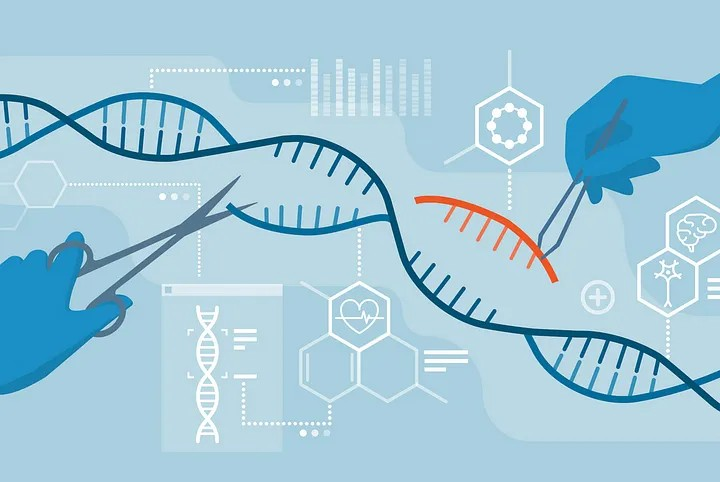
The Gene Editing Revolution: CRISPR and Beyond
The world of genetics is experiencing a seismic shift, one that promises to redefine the boundaries of science and medicine. Imagine a future where genetic diseases are not just treated but eradicated altogether. This isn't science fiction—it's happening now, thanks to revolutionary advancements in gene editing technologies like CRISPR.
CRISPR, which stands for Clustered Regularly Interspaced Short Palindromic Repeats, has captured the imagination of scientists and the public alike. It offers unprecedented precision in altering DNA sequences, opening doors to innovations we never thought possible. But with great power comes great responsibility. As we venture into this new era of genetic manipulation, questions about ethics and safety loom large.
Join us as we explore the fascinating landscape of gene editing—from its origins to its potential applications and implications for society at large. The journey through this groundbreaking technology will reveal both amazing possibilities and complex challenges ahead.
Understanding Gene Editing
Gene editing is a powerful tool that allows scientists to make precise changes to an organism's DNA. This technology can add, remove, or alter genetic material at specific locations in the genome.
At its core, gene editing aims to understand and manipulate the building blocks of life. By targeting genes responsible for various traits or diseases, researchers can unlock new avenues for treatment and prevention.
Different methods exist within this field, including CRISPR-Cas9, zinc finger nucleases (ZFNs), and transcription activator-like effector nucleases (TALENs). Each has unique mechanisms but shares a common goal: refining our ability to edit genetic sequences with accuracy.
This evolving science holds promise across multiple disciplines—medicine, agriculture, and environmental conservation among them. As we delve deeper into genetics' intricacies, we're only beginning to grasp how these tools can reshape our understanding of living organisms.
The History of CRISPR
CRISPR’s journey began in the late 1980s. Scientists discovered peculiar DNA sequences in bacteria. These sequences provided a form of immunity against viruses. Little did they know, this would lay the groundwork for groundbreaking gene editing.
By 2012, Jennifer Doudna and Emmanuelle Charpentier had transformed that discovery into a powerful tool. They demonstrated how these sequences could be harnessed to edit genes with precision.
The simplicity of CRISPR captured the scientific community's attention. Unlike previous methods, it was efficient and cost-effective. Researchers worldwide quickly embraced its potential.
In just over a decade, CRISPR has propelled forward biological research at an astonishing pace. From agriculture to medicine, its influence is undeniable and far-reaching as scientists continue to explore new frontiers in genetic engineering.
Applications of CRISPR Technology
CRISPR technology has opened up a world of possibilities across various fields. In medicine, it’s revolutionizing gene therapy. Scientists can target specific genes responsible for diseases and make precise edits to correct mutations.
Agriculture is another area benefiting immensely from CRISPR. Crops are being engineered for better yield, disease resistance, and even enhanced nutritional content. Imagine tomatoes that last longer or rice packed with more vitamins.
Beyond health and agriculture, CRISPR is making waves in environmental science as well. It offers innovative solutions for controlling invasive species or aiding conservation efforts by protecting endangered organisms.
The potential applications seem limitless as researchers continue to explore new frontiers with this powerful tool. Each advancement brings us closer to solving some of humanity's most pressing challenges while reshaping our understanding of genetics itself.
Ethical Concerns and Controversies Surrounding Gene Editing
Gene editing has sparked intense debates, particularly around CRISPR technology. The potential to alter the human genome raises profound ethical questions about consent and the implications of "designer babies."
Many worry that gene editing could lead to unforeseen consequences, creating a divide between those who can afford enhancements and those who cannot. This inequality might exacerbate existing social disparities.
Moreover, concerns linger over ecological impacts when modifying organisms in nature. What happens if altered species disrupt ecosystems?
The rapid pace of advancements adds urgency to these discussions. Regulatory frameworks struggle to keep up with scientific progress, leaving gaps in oversight.
Debates also hinge on the moral status of embryos used in research. Is it acceptable to manipulate life at such early stages?
These issues underscore the need for ongoing dialogue as society navigates this groundbreaking field.
Other Emerging Gene Editing Technologies
While CRISPR has captured the spotlight, other innovative gene editing technologies are emerging. These alternatives present exciting possibilities for genetic modifications.
One such technology is TALEN (Transcription Activator-Like Effector Nucleases). This method uses custom-designed proteins to target specific DNA sequences. It offers precision similar to CRISPR and can be used in various organisms.
Another contender is ZFN (Zinc Finger Nucleases). This technique employs engineered zinc finger proteins to induce double-strand breaks at desired locations within the genome. Its versatility allows researchers to explore diverse applications in agriculture and medicine.
Prime Editing, dubbed “the search-and-replace” tool for genes, is another breakthrough on the horizon. By combining aspects of CRISPR with a reverse transcriptase enzyme, it allows more precise edits without causing significant disruptions in DNA structure.
These advancements showcase how gene editing continues to evolve beyond its initial breakthroughs, opening doors to new scientific frontiers.
Real Life Examples of Successful Gene Editing
Real-life applications of gene editing highlight its transformative potential. One notable example is the work done on sickle cell disease. Researchers have successfully used CRISPR to edit genes in patients' bone marrow cells, enabling them to produce healthy red blood cells. This breakthrough offers hope for countless individuals suffering from this debilitating condition.
Another striking instance involves agriculture. Scientists have engineered crops to resist pests and tolerate droughts, significantly increasing yields. These advancements can lead to more sustainable farming practices and food security in vulnerable regions.
In the realm of conservation, gene editing has shown promise for endangered species. Efforts are underway to enhance genetic diversity in populations at risk, potentially reversing their decline.
These examples underline how gene editing is not just a concept but a powerful tool shaping various fields today.
Future Possibilities and Potential Impact on Society
The future of gene editing holds immense promise. With CRISPR and other technologies advancing rapidly, we can envision a world where genetic diseases are eradicated before birth. Imagine parents being able to select traits for their children, enhancing health and intelligence.
Agriculture could transform dramatically as well. Crops engineered for resilience against climate change might ensure food security in vulnerable areas. This shift could also reduce reliance on harmful pesticides, fostering a more sustainable environment.
On the flip side, these advancements raise questions about equity and access. Will such technology be available to all or only to the privileged? The potential for misuse looms large; creating “designer babies” may lead to societal divides.
As we navigate this uncharted territory, balancing innovation with ethics will be crucial. Society must engage in open dialogue about how far we want to go and what boundaries should remain intact.
Conclusion
The gene editing revolution is upon us, and its effects are palpable across various fields. With CRISPR leading the charge, we're witnessing advancements that were once thought to be confined to the realm of science fiction. The applications of this technology extend far beyond genetic diseases and agricultural improvements; they touch on environmental conservation as well.
Yet, with great power comes great responsibility. Ethical considerations loom large as we navigate through uncharted territories in genetics. Balancing innovation with moral implications is crucial for ensuring a future where gene editing serves humanity rather than hindering it.
Emerging technologies promise even more exciting possibilities. As scientists explore new methods alongside CRISPR, the potential becomes boundless. Real-life successes showcase not only what’s achievable but also inspire hope for those facing genetic disorders.
As society grapples with these developments, dialogue will remain essential. Engaging diverse perspectives ensures that our approach remains thoughtful and inclusive. The journey into the world of gene editing has just begun, inviting curiosity about where it might lead us next—an adventure filled with both promise and profound challenges ahead.
Synthetic Biology: Designing Life from Scratch

Synthetic Biology: Designing Life from Scratch
Imagine a world where we can design life itself. Synthetic biology is turning that dream into reality. This innovative field combines elements of engineering, biology, and computer science to create new biological parts and systems or redesign existing ones for useful purposes.
From biofuels to medicine, synthetic biology holds the potential to revolutionize industries and address some of humanity's most pressing challenges. But with great power comes great responsibility. As scientists push the boundaries of what's possible, ethical considerations loom large.
Join us as we explore this fascinating domain—its history, applications, benefits, concerns, and future prospects in shaping not just our environment but also human health and well-being. Get ready for an exciting journey into the world of synthetic biology!
What is Synthetic Biology?
Synthetic biology is an interdisciplinary field that merges biology with engineering principles. It focuses on designing and constructing new biological parts, devices, and systems.
At its core, synthetic biology aims to understand the fundamental building blocks of life. Scientists manipulate DNA to create organisms with specific traits or functions. This can involve everything from modifying bacteria to produce pharmaceuticals to creating entirely new microorganisms.
The technology uses tools like CRISPR for precise gene editing, making it possible to alter genetic blueprints in ways previously thought unattainable.
Synthetic biologists often work collaboratively across diverse fields including chemistry, computer science, and environmental science. Their goal is not just innovation but also sustainability—paving pathways toward greener technologies and solutions for global challenges.
History of Synthetic Biology
The roots of synthetic biology stretch back to the dawn of genetics. The discovery of DNA’s structure in 1953 opened doors, leading scientists to explore its potential.
In the decades that followed, researchers began piecing together genetic codes. Techniques like recombinant DNA technology emerged, allowing for gene splicing and manipulation.
The term "synthetic biology" gained traction in the early 2000s. Pioneers sought to construct new biological parts and systems from scratch. This marked a shift from traditional genetic engineering toward a more design-oriented approach.
Key milestones include creating artificial life forms and engineered organisms capable of producing biofuels or pharmaceuticals. Each breakthrough sparked debates about ethics and safety.
As knowledge grew, so did interdisciplinary collaboration. Engineers joined forces with biologists, unleashing creativity while addressing complex challenges faced by humanity today.
Applications of Synthetic Biology
Synthetic biology is transforming various sectors by enabling the design of organisms for specific tasks. In medicine, it allows for the development of customized therapies and engineered microbes that can produce drugs more efficiently.
Agriculture is also seeing significant advancements. Crops can be modified to resist pests or tolerate harsh climates, promoting food security in a changing world.
Beyond health and agriculture, synthetic biology plays a role in environmental sustainability. Engineered bacteria can break down pollutants or even capture carbon dioxide from the atmosphere.
The energy sector benefits too, with biofuels derived from engineered microorganisms offering cleaner alternatives to fossil fuels.
Additionally, materials science embraces synthetic biology through biofabrication techniques that create biodegradable plastics and other innovative materials. This interconnectedness showcases how diverse industries leverage synthetic biology's potential to address complex global challenges.
Potential Benefits and Ethical Concerns
Synthetic biology holds immense promise. It can revolutionize healthcare by creating tailored therapies and producing essential medicines. Imagine bacteria engineered to produce insulin or microbes designed to clean up environmental pollutants.
However, this power comes with responsibility. Ethical concerns arise when considering the manipulation of life itself. Questions about "playing God" emerge, challenging our moral compass. What happens if we create organisms that outcompete natural species or disrupt ecosystems?
The potential for misuse also looms large. Bioweapons made from synthetic organisms could pose a significant threat if they fall into the wrong hands. Regulatory measures must keep pace with rapid advancements in this field.
Balancing innovation and ethical considerations will be crucial as scientists navigate uncharted waters in designing life forms from scratch. Society must engage in these discussions to ensure responsible practices guide future developments in synthetic biology.
Current Progress and Future Outlook
Synthetic biology has made remarkable strides in recent years. Researchers have engineered microorganisms to produce biofuels, pharmaceuticals, and even food ingredients more sustainably. The advent of CRISPR technology revolutionized gene editing, allowing scientists to modify organisms with unprecedented precision.
Looking ahead, the potential applications seem limitless. Imagine custom-designed microbes that can clean up oil spills or bacteria tailored to detect diseases at their earliest stages. As we continue exploring genetic blueprints, new opportunities will emerge across various sectors.
However, challenges remain on the horizon. Public perception and acceptance play a crucial role in how synthetic biology evolves. Striking a balance between innovation and safety will be vital as society navigates this complex terrain.
Collaborative efforts among researchers, industry leaders, and regulatory bodies are essential for fostering responsible advancement in this field. With each breakthrough comes the responsibility of ethical considerations—ensuring progress benefits humanity as a whole is paramount moving forward.
The Role of Government and Regulation in Synthetic Biology
Government and regulation play a crucial role in the evolution of synthetic biology. As this field advances, it raises unique challenges that require careful oversight.
Regulatory bodies must ensure safety while promoting innovation. Balancing these two aspects is no small feat. Policymakers need to be well-versed in scientific concepts to make informed decisions.
International collaboration is essential as synthetic biology knows no borders. Different countries may have varying regulations, leading to potential ethical dilemmas and competitiveness issues.
Public engagement adds another layer of complexity. Citizens often have concerns about genetic modifications and bioengineering practices. Transparent communication can help build trust between scientists, governments, and the public.
Moreover, funding for research often comes from government sources. This support influences which projects receive attention and resources, shaping the future landscape of synthetic biology significantly.
The Promising and Controversial Field of Synthetic Biology
Synthetic biology sits at a fascinating crossroads of innovation and ethics. On one hand, it offers groundbreaking solutions to pressing global issues like food security and disease prevention. The ability to engineer organisms could lead to crops that withstand climate change or microbes capable of cleaning up environmental disasters.
However, this power comes with significant controversy. Manipulating life forms raises questions about safety and the unforeseen consequences of genetic alterations. Public apprehension often surrounds terms like "designer organisms," invoking fears reminiscent of science fiction scenarios.
Debates flourish over who decides how these technologies are used. Should they be in the hands of corporate entities, researchers, or governing bodies? The line between beneficial research and potential misuse is thin, making dialogue essential as society navigates through these uncharted waters. Balancing innovation with ethical considerations remains a critical challenge for scientists and policymakers alike.
Conclusion
Synthetic biology stands at the intersection of innovation and ethics. It offers unprecedented possibilities for improving health, agriculture, and environmental sustainability. Yet, with these advancements come significant questions about safety, ownership, and moral implications.
As research continues to evolve rapidly, society must engage in ongoing conversations about its applications. The potential to design life from scratch is both thrilling and daunting. Balancing progress with responsibility will be key as we navigate this brave new world.
The road ahead is filled with promise but also complexity. We are challenged not just by what can be done but by what should be done. As synthetic biology develops further, it will undoubtedly reshape industries and lives while demanding a thoughtful approach to regulation and ethical considerations. Embracing this journey requires vigilance; the future holds great possibilities that warrant our careful attention.
Smart Homes, Smarter Lives: The Impact of AI on Daily Life

Smart Homes, Smarter Lives: The Impact of AI on Daily Life
Imagine waking up to the gentle hum of your coffee maker, pre-programmed to brew your favorite blend just as you open your eyes. As you step into the shower, soft lighting adjusts to keep you relaxed while a voice-activated assistant plays your morning playlist. This is not a scene from a futuristic movie; this is today’s reality for many people living in smart homes.
Smart technology has taken root in our daily lives, reshaping how we interact with our surroundings and enhancing convenience like never before. At the heart of this transformation lies artificial intelligence (AI), working tirelessly behind the scenes. It learns our habits and preferences, making daily tasks simpler and more efficient.
As AI continues to evolve, so does its impact on our lifestyles. Let’s explore how these advancements are revolutionizing everyday life within smart homes, bringing us closer to living smarter lives than ever imagined.
Understanding Smart Homes
Smart homes are more than just a trend; they represent a shift in how we manage our living spaces. These residences integrate various devices and systems, all powered by internet connectivity. This allows for remote control and automation of essential functions.
At the core of smart home technology are devices like smart thermostats, lighting systems, and security cameras. They work seamlessly together to create an ecosystem tailored to individual needs. Imagine controlling your home's temperature or lights from your smartphone while you're miles away.
Voice assistants have also become central players in this landscape. With simple commands, you can access information, play music, or adjust settings without lifting a finger.
The beauty lies in customization—each user can design their experience based on personal preferences and lifestyle habits. Whether it’s enhancing comfort or improving energy efficiency, smart homes offer endless possibilities for modern living.
How AI Technology is Revolutionizing Daily Life
AI technology is transforming our daily lives in ways we never imagined. From how we manage tasks to how we interact with our homes, the impact is profound.
Smart assistants like Alexa and Google Assistant streamline routines. They handle everything from setting reminders to controlling home devices, allowing us to focus on what truly matters.
Moreover, AI algorithms learn our preferences over time. This means personalized content recommendations for movies or music can enhance leisure moments significantly.
In healthcare, AI tools monitor health metrics and offer insights into wellness. This proactive approach empowers individuals to take charge of their well-being effectively.
Even in transportation, smart navigation systems adapt routes based on real-time traffic data. Commuting becomes less stressful and more efficient as a result.
Every aspect of life seems touched by this remarkable technology, reshaping experiences while making them simpler and smarter.
Benefits of Smart Homes
Smart homes offer a range of benefits that enhance our daily lives. One major advantage is convenience. Imagine controlling your lights, thermostat, and security system from your smartphone while lounging on the couch.
Energy efficiency is another significant perk. Smart devices can optimize energy usage based on your habits, leading to lower utility bills and a smaller carbon footprint.
Safety becomes more manageable with smart technology as well. Security cameras and smart locks provide peace of mind, allowing you to monitor your home remotely.
Additionally, automation helps streamline routines. A morning schedule can be set up where coffee brews and the blinds open simultaneously at sunrise.
These systems often learn user preferences over time. This adaptability makes everyday tasks easier without requiring constant manual input.
Concerns and Limitations of AI in the Home
While smart homes offer remarkable conveniences, several concerns linger. Privacy is a primary issue. Many devices continuously collect data, raising questions about who accesses this information and how it’s used.
Security vulnerabilities also present risks. Hackers can exploit weaknesses in smart systems, potentially gaining control over home networks or personal information. The thought of someone infiltrating your space adds an unsettling layer to the convenience.
Moreover, reliance on AI can lead to a decrease in basic skills. As we lean more on technology for everyday tasks, our ability to perform them ourselves may diminish over time.
Additionally, there are concerns regarding compatibility among various devices. Not all products communicate seamlessly with one another, which could frustrate users eager for a fully integrated experience.
These challenges remind us that while AI enhances our lives, awareness and caution are essential as we navigate this new terrain.
The Future of Smart Homes
The future of smart homes is poised to be transformative. Picture a living space that adapts seamlessly to your needs, anticipating them before you even express them. This level of personalization will redefine comfort and convenience.
Emerging technologies like advanced AI and machine learning will enhance home automation systems. Devices will communicate effortlessly, creating an interconnected ecosystem that learns from your habits and preferences.
Energy efficiency will play a pivotal role as well. Smart homes of the future will optimize energy consumption in real-time, reducing waste while saving money on utility bills.
Security features are set to evolve too. Expect sophisticated monitoring systems equipped with facial recognition and anomaly detection, ensuring peace of mind for homeowners everywhere.
As these innovations unfold, expect not just smarter devices but also a reimagined way of living—one where technology enriches daily life without being intrusive or overwhelming.
Integrating AI into Daily Routines
Integrating AI into daily routines can feel like having a personal assistant at your fingertips. Imagine waking up to a gentle voice that adjusts the thermostat and brews your coffee just the way you like it.
Smart home devices learn from our habits, adapting to our preferences over time. Setting reminders for important tasks or managing grocery lists becomes effortless when AI is in charge.
Voice-activated systems enable hands-free control of lights, music, and even security features. This convenience enhances productivity while creating a more relaxed atmosphere at home.
AI also helps with health management by tracking fitness goals or suggesting meal plans based on dietary needs. The possibilities are endless as technology evolves.
As we embrace these innovations, integrating AI into everyday life transforms how we approach routine tasks, making them simpler and more enjoyable.
Conclusion
The integration of AI into smart homes is transforming the way we live, work, and interact with our surroundings. With advancements in technology, everyday tasks are becoming increasingly efficient and enjoyable. Imagine waking up to a home that automatically adjusts the temperature for your comfort or having appliances that anticipate your needs.
However, it’s essential to remain aware of the challenges and limitations posed by this technology. Privacy concerns and potential dependency on devices are real issues that need thoughtful consideration as we embrace these innovations.
As we look forward, it’s clear that smart homes will continue to evolve. The future promises even deeper integration of AI into our lives—making them not just smarter but also more intuitive. By understanding how these systems work and integrating them mindfully into daily routines, we can enhance our living experiences while maintaining control over our personal spaces.
Embracing this change holds great promise for all aspects of life at home. The journey toward smarter lives begins with informed choices about how we incorporate technology into our everyday activities.
The Quantum Leap: How Physics is Changing Our World

The Quantum Leap: How Physics is Changing Our World
Imagine a world where computers can solve complex problems in seconds, medical breakthroughs happen overnight, and energy is harnessed from the very fabric of reality. This isn't just science fiction; it's the incredible realm of quantum physics. As we delve into this fascinating field, we'll uncover how it’s revolutionizing our everyday lives and shaping our future.
Quantum physics challenges everything we know about nature. It's a world that operates differently than what we're accustomed to, filled with particles that exist in multiple states at once and behaviors that seem utterly bizarre. Yet, despite its complexity, quantum technology is becoming more tangible by the day.
From advanced computing systems to groundbreaking medical treatments—quantum's fingerprints are everywhere. Buckle up as we explore these mind-bending concepts and their real-world applications!
Understanding Quantum Physics
Quantum physics unravels the mysteries of the microscopic world. At its core, it studies particles that are smaller than atoms and how they behave in ways that defy classical logic.
One key principle is superposition. This concept allows a particle to exist in multiple states simultaneously until observed. It’s like flipping a coin; until you check, it can be both heads and tails at once.
Entanglement is another astonishing phenomenon. When particles become entangled, the state of one instantly influences the other, no matter how far apart they are. This interconnectedness challenges our understanding of space and time.
These ideas may sound strange, but they're fundamental to modern technology's evolution. As scientists continue to decode quantum mechanics’ secrets, we find ourselves standing on the brink of revolutionary advancements that could reshape industries and everyday life forever.
Applications of Quantum Physics in Technology
Quantum physics isn't just a theoretical concept; it fuels real-world technology. One of the most exciting applications is in secure communication systems. Quantum key distribution creates unbreakable encryption, making digital interactions safer than ever.
Another fascinating application lies in imaging technologies. Quantum sensors can detect minute changes in physical properties, leading to breakthroughs in medical diagnostics and environmental monitoring.
Moreover, quantum mechanics enhances materials science. Researchers are developing new materials with unique properties that could revolutionize electronics and energy storage.
Even everyday devices benefit from this advanced science. From smartphones to GPS systems, quantum phenomena improve accuracy and efficiency across various tech interfaces.
As these applications evolve, they promise not only to reshape industries but also our daily lives profoundly. The blending of quantum principles into technology marks an exhilarating chapter for innovation and discovery.
Quantum Computing: The Future of Data Processing
Quantum computing is revolutionizing the way we process data. Unlike traditional computers, which use bits as either 0s or 1s, quantum computers leverage qubits. These can exist in multiple states simultaneously, allowing for unprecedented computational power.
Imagine solving complex problems that today’s most advanced supercomputers struggle with. Quantum algorithms promise to tackle tasks like encryption and optimization at lightning speed. This capability could transform industries ranging from finance to logistics.
Tech giants and startups alike are racing to develop viable quantum systems. As they make breakthroughs, the implications for big data analysis grow more profound. The potential applications seem limitless—drug discovery, climate modeling, and artificial intelligence stand on the brink of a quantum leap.
However, challenges remain in constructing stable quantum environments. Researchers continue their quest to overcome these hurdles while exploring what this new frontier means for humanity's digital future.
Quantum Mechanics and Its Impact on Medicine
Quantum mechanics is revolutionizing medicine in unexpected ways. At the heart of this transformation lies quantum imaging. This technology allows for incredibly precise scans, enabling doctors to detect diseases at much earlier stages.
Another exciting development is in drug discovery. Quantum simulations can model how molecules interact at an atomic level. This speeds up the design of new medications and personalized treatments tailored specifically for patients’ unique genetic makeups.
Moreover, quantum sensors are enhancing diagnostic processes. They can measure tiny changes in biological systems that traditional methods might miss. As a result, healthcare providers gain insights that could lead to more effective interventions.
The potential extends into therapeutics as well. Quantum technologies could unlock new avenues for targeted therapies, minimizing side effects while maximizing efficacy. With every breakthrough, we edge closer to a future where medicine is not just reactive but profoundly proactive.
Advancements in Energy and Environment with Quantum Technology
Quantum technology is revolutionizing the way we think about energy and environmental solutions. By harnessing quantum phenomena, researchers are developing ultra-efficient solar cells that can capture sunlight more effectively than traditional methods.
These innovations can lead to cleaner energy production, reducing our reliance on fossil fuels. Moreover, quantum sensors offer unprecedented precision in monitoring environmental changes. They help detect pollutants at incredibly low levels, enabling timely interventions.
Energy storage is another area where quantum advancements shine. Quantum batteries have the potential to charge faster and store more energy than their classical counterparts. This could significantly improve electric vehicle performance and grid stability.
The integration of these technologies paves the way for a sustainable future. As we continue exploring the vast possibilities within quantum physics, our planet stands to benefit immensely from these breakthroughs in energy efficiency and environmental protection.
The Ethical Implications of Quantum Physics
Quantum physics opens new doors, but it also raises significant ethical questions. As we delve deeper into the quantum realm, we must consider the implications of manipulating matter and energy at such a fundamental level.
For instance, quantum technologies could revolutionize surveillance capabilities. This power poses risks to privacy and individual freedoms. Who controls this technology? What safeguards are in place?
Another concern arises with quantum computing's potential to crack existing encryption methods. Sensitive data might become vulnerable overnight, jeopardizing digital security across industries.
Moreover, as researchers push boundaries in areas like quantum genetics or medicine, ethical dilemmas about consent and the nature of modifications will emerge. Each advancement invites scrutiny regarding its impact on society.
As we embrace these innovations, reflecting on their moral dimensions is essential for responsible progress. The path forward requires collaboration between scientists, ethicists, and policymakers to navigate these complex challenges wisely.
Embracing the Future of Science and Technology
As we stand on the brink of monumental change, embracing the future of science and technology is essential. This journey offers us new tools to understand our universe better.
Quantum physics isn’t just a concept confined to laboratories anymore. It has seeped into everyday life, reshaping industries and redefining possibilities. The excitement around advancements like quantum computing brings hope for problem-solving capabilities beyond current limitations.
The integration of these technologies fosters innovation in various sectors. From healthcare breakthroughs to enhanced communication systems, the potential is staggering.
Moreover, as we adapt to these changes, ethical considerations evolve alongside them. Engaging with these challenges ensures that progress benefits everyone.
By welcoming this brave new world, we can harness its power responsibly while exploring uncharted territories in science and technology that could transform our lives in ways we've yet to imagine.
Conclusion
The world is on the brink of a scientific revolution, propelled by advancements in quantum physics. This field has evolved from complex theories to practical applications that are reshaping our lives. Quantum technology is not just a concept; it’s an integral part of our future.
As we navigate through its many dimensions—from computing breakthroughs to revolutionary medical treatments—the potential for transformation seems limitless. The energy sector stands ready for enhancement as quantum mechanics offers new methods to harness and utilize resources more efficiently.
However, this rapid evolution also raises ethical questions. As we embrace these powerful tools, society must grapple with issues related to privacy, security, and the implications of manipulating fundamental particles.
With every discovery, science pushes boundaries further than ever imagined. We stand at a crossroads where curiosity meets innovation—a place rich with possibilities waiting to be explored. Embracing this journey will undoubtedly lead us toward extraordinary horizons in both technology and understanding the universe itself.
Unveiling the Mysteries of Dark Matter

Unveiling the Mysteries of Dark Matter
Have you ever looked up at the night sky and wondered what lies beyond the twinkling stars? While we admire their beauty, a vast portion of our universe remains cloaked in mystery. Enter dark matter—a substance that doesn’t emit light or energy, making it nearly impossible to detect directly. Yet, it makes up about 27% of everything around us.
What is this elusive material? How did scientists stumble upon its existence? And why does it hold such significance in understanding the cosmos? Join us as we unveil the intriguing secrets behind dark matter and explore its vital role in shaping our universe. Get ready for an exciting journey into the invisible realm that influences galaxies and cosmic structures alike!
What is Dark Matter?
Dark matter is a fascinating concept that challenges our understanding of the universe. Unlike ordinary matter, which makes up stars, planets, and living things, dark matter does not interact with electromagnetic forces. This means it neither reflects nor emits light.
Instead, it exists in a mysterious state that scientists have yet to fully comprehend. Its presence is inferred from gravitational effects on visible matter—like how galaxies spin at speeds too fast for the amount of visible mass they contain.
Researchers estimate that dark matter accounts for about 85% of all matter in the cosmos. Despite its dominant presence, we can’t see or touch it directly. Instead, it's like an unseen scaffold supporting the structure of everything around us while remaining hidden from our eyes.
The History of Discovering Dark Matter
The concept of dark matter first emerged in the early 20th century. Astronomer Fritz Zwicky observed galaxy clusters and noticed something peculiar. The visible mass wasn’t enough to explain their gravitational behavior.
In the 1930s, he proposed that there must be unseen mass—something we now call dark matter. This theory laid the groundwork for future explorations into this elusive substance.
Fast forward to the 1970s, when Vera Rubin’s work with spiral galaxies revealed further mysteries. She discovered that stars on the outer edges moved faster than expected based solely on visible matter.
This finding reignited interest in dark matter research and propelled a new wave of investigations into its nature and implications for cosmic structure. Each discovery added layers to our understanding while shrouding dark matter in even more intrigue. Scientists can only speculate about what lies beyond our current observations, pushing us deeper into cosmic exploration.
Current Theories and Research on Dark Matter
Current research on dark matter is a vibrant field, bustling with innovative theories and experiments. Scientists are exploring the nature of this elusive substance, primarily hypothesizing that it comprises Weakly Interacting Massive Particles (WIMPs). These particles could potentially account for most dark matter in the universe.
Another exciting theory involves axions—hypothetical particles posited to resolve certain mysteries in particle physics. Researchers are developing ultra-sensitive detectors to catch these tiny entities.
Gravitational lensing also provides insight into dark matter’s distribution. By observing how light bends around massive objects, astronomers can map out where dark matter lurks.
On another front, collider experiments aim to produce hints of new particles tied to dark matter properties. Each discovery feeds curiosity and raises new questions about our universe's fundamental structure. The race is on as scientists strive to unlock the secrets hidden within this cosmic enigma.
The Role of Dark Matter in the Universe
Dark matter plays a crucial role in shaping the universe as we know it. Although invisible, its gravitational effects are felt throughout cosmic structures.
Galaxies, for instance, spin at such high speeds that visible matter alone cannot account for their stability. Dark matter provides the necessary mass to hold them together. Without it, these galaxies would fly apart into oblivion.
Moreover, dark matter acts as a scaffold during galaxy formation. As regular matter clumps together under gravity's influence, dark matter creates larger frameworks within which galaxies can develop and evolve.
The distribution of dark matter also influences cosmic background radiation and large-scale structure formation. It helps define how clusters of galaxies form and interact with one another over billions of years.
Understanding this enigmatic substance is key to unlocking many secrets about the cosmos. Its presence hints at an intricate web connecting all celestial bodies across vast expanses of space-time.
How Does Dark Matter Interact with Regular Matter?
Dark matter remains elusive, yet it is essential for understanding our universe. Unlike ordinary matter, dark matter does not emit light or energy. This means we cannot see it directly.
Its presence becomes evident through gravitational effects on visible objects. Galaxies rotate at speeds that should tear them apart if only regular matter were present. Dark matter provides the necessary gravitational glue to hold them together.
When dark and regular matter interact, it's primarily through gravity. There’s no electromagnetic interaction like with normal atoms. This lack of interaction makes dark matter challenging to detect in experiments.
Researchers propose that dark particles could collide with regular ones occasionally, creating detectable signals in sensitive equipment. However, these events are rare and difficult to measure.
Understanding this connection could unlock secrets of cosmic structure and evolution, revealing how galaxies formed across the vastness of space over billions of years.
Possible Implications and Applications of Understanding Dark Matter
Understanding dark matter could revolutionize our grasp of the universe. If we decode its secrets, numerous implications will emerge.
For starters, it might change how we view gravity itself. Current models could be rewritten to incorporate dark matter’s influence on cosmic structures. This shift may lead to groundbreaking theories in physics.
Additionally, insights into dark matter could have practical applications in technology. Imagine harnessing its properties for energy solutions or advanced materials science. The potential is vast and exciting.
Moreover, advancements in this field may enhance our capabilities in space exploration. Understanding how dark matter interacts with regular matter can inform our strategies for navigating the cosmos more efficiently.
Even fields like cosmology and astrophysics stand to gain immensely from new discoveries surrounding dark matter's role in galaxy formation and evolution. Each revelation opens doors that were once firmly shut, revealing an ever-expanding tapestry of knowledge about our universe.
Future Possibilities for Studying and Utilizing Dark Matter
The future of dark matter research holds exciting potential. Advanced technologies are paving the way for new discoveries. Innovations in particle physics and astronomy could unlock secrets previously thought to be beyond reach.
Next-generation telescopes are being designed to survey the cosmos with unprecedented precision. These instruments may identify elusive signals from dark matter particles, deepening our understanding of their existence.
Moreover, collaborations among international scientists foster a shared pursuit of knowledge. Large experiments like those at CERN will continue to explore the fundamental nature of dark matter.
There’s also speculation about practical applications stemming from this research. Harnessing dark matter's properties could revolutionize energy production or lead to groundbreaking materials with unique characteristics.
As we push boundaries in theoretical models and experimental techniques, who knows what revelations await? The quest for answers promises not only scientific advancement but perhaps even transformative changes in technology and society itself.
Uncovering the Secrets of the Invisible Universe
The universe is a vast canvas of mysteries, with dark matter painting the largest strokes. This elusive substance makes up about 27% of the cosmos yet remains invisible to our current instruments.
Astronomers are like detectives in this grand cosmic mystery, piecing together clues scattered throughout galaxies. They study gravitational effects on visible matter, revealing glimpses into the unseen.
Innovative technologies and experiments continue to emerge, striving to detect dark matter particles directly. Scientists explore underground labs and particle colliders in hopes of uncovering its nature.
Understanding dark matter could revolutionize our grasp of physics. It might even reshape theories regarding gravity and the evolution of galaxies. Each step forward opens new doors to knowledge we have only begun to imagine.
As researchers delve deeper, they inch closer to unveiling secrets that could redefine reality as we know it. The quest for answers feels more urgent than ever within this extraordinary universe.
Conclusion
Understanding dark matter is akin to peering into a cosmic puzzle where most pieces remain hidden. This elusive substance constitutes a significant portion of the universe, yet its true nature continues to challenge our understanding. The journey from initial discovery to current research showcases humanity's relentless pursuit of knowledge.
As scientists delve deeper into the mysteries surrounding dark matter, new theories and technologies emerge. These advancements not only enhance our comprehension of the cosmos but also hint at potential applications that could revolutionize various fields, from astrophysics to quantum mechanics.
The role of dark matter in shaping galaxies and influencing cosmic structures underscores its fundamental importance in the universe’s architecture. While we may not fully grasp how it interacts with regular matter just yet, ongoing studies promise exciting revelations ahead.
With each passing day, researchers are developing innovative methods to study this invisible entity. Future explorations might unlock secrets that redefine physics as we know it or lead us toward groundbreaking discoveries with wide-ranging implications for technology and beyond.
As we continue this journey into the depths of space and time, one thing remains clear: dark matter holds keys to understanding not just what exists but why it exists in such an intricate tapestry woven across the cosmos.
Rise of the Machines: The Future of AI and Robotics

Rise of the Machines: The Future of AI and Robotics
Imagine a world where machines think, learn, and interact in ways that were once confined to science fiction. Welcome to the age of artificial intelligence (AI) and robotics—a frontier that's reshaping our reality at an astonishing pace. From smart assistants in our homes to advanced machinery revolutionizing industries, the rise of intelligent technology is not just a trend; it's a transformative force.
As we delve deeper into this exciting realm, we'll explore how AI and robotics have evolved over time and what lies ahead. The implications are vast—impacting society as a whole while raising important ethical questions. Buckle up as we navigate through the history, advancements, disruptions across various sectors, and how you can adapt to this new landscape shaped by machines. The future is here, and it’s more captivating than ever before!
Understanding AI and Robotics
AI refers to the simulation of human intelligence in machines, enabling them to perform tasks that typically require cognitive functions. This includes learning, reasoning, and problem-solving. The essence of AI lies in its ability to analyze vast amounts of data swiftly and accurately.
Robotics complements AI by creating physical entities capable of executing these intelligent commands. These robots can range from simple automated tools to complex systems designed for intricate tasks.
Together, AI and robotics form a powerful duo that enhances efficiency across various applications. Think about manufacturing where robots work tirelessly alongside humans or healthcare innovations like robotic surgeries performed with precision.
Understanding both fields is essential as they continue evolving. Their integration promises unprecedented capabilities while also challenging our notions of work and creativity in an increasingly automated world.
The History of AI and Robotics
The journey of AI and robotics began in ancient mythologies. Stories of artificial beings, like the golem, sparked human imagination long before technology caught up.
Fast forward to the 20th century, where pioneers like Alan Turing laid down foundational theories. His work on computation opened doors for machines to think—at least in theory.
In the 1950s and 60s, researchers created early robots. These mechanical wonders could perform simple tasks but were far from intelligent.
The term "artificial intelligence" was coined in 1956 at a Dartmouth workshop. This event marked a turning point, igniting research that would ebb and flow over decades.
By the late 1990s, breakthroughs emerged with systems capable of learning from data. As computers gained power, so did their potential for complex problem-solving.
Today’s landscape is built on these historical milestones—each step paving the way for what we see now: smarter machines reshaping our world.
Advancements in AI and Robotics
Recent years have seen remarkable strides in AI and robotics. Machines are no longer just tools; they are evolving into intelligent entities capable of learning and adapting.
Natural language processing has improved significantly, allowing machines to understand human speech better than ever. Virtual assistants can now engage in conversations that feel surprisingly intuitive.
Robots equipped with advanced sensors can navigate complex environments autonomously. This development is paving the way for applications in healthcare, agriculture, and even space exploration.
AI algorithms are becoming adept at analyzing vast amounts of data swiftly. This capability enhances decision-making processes across various sectors.
Moreover, innovations like machine vision enable robots to "see" their surroundings accurately, leading to enhanced precision in tasks such as assembly or quality control. These advancements position AI and robotics not just as futuristic concepts but as integral components of everyday life today.
Impact of AI and Robotics on Society
AI and robotics are revolutionizing the way we live and interact. They streamline tasks, making our daily routines more efficient. From smart home devices to autonomous vehicles, these technologies reshape convenience.
In healthcare, AI enhances diagnostics and personalizes treatment plans. Robots assist in surgeries with precision that surpasses human capability. This blend of technology not only saves lives but also transforms patient care experiences.
On the flip side, there’s concern about privacy. Data collection through AI systems raises questions about surveillance and control. Society must address these ethical dilemmas as technology progresses.
Education is another arena experiencing change. Personalized learning powered by AI allows tailored educational experiences for students across various backgrounds, helping them reach their full potential.
As machines take on roles traditionally held by humans, new social dynamics emerge. The balance between embracing innovation and safeguarding societal values will be crucial in navigating this evolving landscape.
Ethical Concerns Surrounding AI and Robotics
As artificial intelligence and robotics become more integrated into our lives, ethical concerns emerge. These technologies can make decisions that impact individuals and communities. Who is responsible when things go wrong?
Privacy issues are another pressing concern. AI systems often rely on vast amounts of personal data to function efficiently. This raises questions about consent and surveillance.
Bias in algorithms also poses significant challenges. If an AI system learns from flawed data, it may perpetuate existing inequalities or even create new ones.
Moreover, the potential for job displacement leads to moral dilemmas about automation versus human employment. Society must grapple with these shifts while ensuring fairness and equity.
There's the question of autonomy—how much control should humans retain over machines designed to think independently? The dialogue surrounding these ethical considerations is just beginning but demands urgent attention as we navigate this transforming landscape.
Industries That Will Be Disrupted by AI and Robotics
The rise of AI and robotics is set to shake multiple industries. Manufacturing is already feeling the impact, with robots streamlining production lines for efficiency. This shift reduces costs and enhances output.
Healthcare stands on the brink of transformation too. AI algorithms assist in diagnostics, while robotic surgeries promise precision that human hands can't always match.
Transportation may face one of the most significant upheavals. Autonomous vehicles could revolutionize logistics and personal travel, changing how we move goods and people alike.
Retail isn't immune either. Automated checkout systems are becoming commonplace, reshaping customer interactions and reducing staffing needs.
Even agriculture will see disruption as drones monitor crops and automated machinery handles planting and harvesting tasks. As these technologies advance, entire sectors will adapt or risk obsolescence in a rapidly evolving landscape.
Jobs That Will Be Affected by AI and Robotics
As AI and robotics continue to evolve, certain jobs are increasingly at risk. Routine tasks in manufacturing are likely to see significant changes. Robots can perform repetitive actions with precision, reducing the need for human labor.
Customer service roles may also face disruption. Chatbots and virtual assistants provide instant support, handling inquiries that once required a personal touch.
Transport sectors cannot escape either. Autonomous vehicles promise efficiency but pose challenges for drivers across various industries.
Even creative fields aren't immune. AI-powered tools can generate music, art, or writing—raising questions about originality and human contribution.
Healthcare is transforming too; diagnostic tools powered by AI offer quick analysis of medical data but could change the dynamics between patients and healthcare providers.
Many traditional roles will adapt rather than vanish entirely. However, workers must be ready to embrace new skills as technology reshapes their professional landscapes.
The Future of AI and Robotics
The future of AI and robotics is an exhilarating frontier. As technology evolves, machines are becoming more capable and autonomous. They can learn from their environment, adapt to new challenges, and even make decisions.
Imagine homes where smart assistants manage everything from cooking dinner to optimizing energy usage. In industries like healthcare, robots could perform surgeries with precision that humans may not achieve.
Transportation will also see a transformation. Self-driving vehicles promise safer roads and reduced traffic congestion. This shift might redefine urban planning as cities adapt to fewer cars on the road.
Moreover, creativity isn’t off-limits for machines anymore. AI-generated art and music challenge our understanding of creativity itself.
With these advancements come both excitement and uncertainty about how society will integrate such powerful tools into everyday life. The potential is vast, but so are the questions surrounding it.
How to Prepare for the Rise of Machines
To thrive in a world increasingly influenced by AI and robotics, embracing lifelong learning is essential. Stay curious and open to new skills that align with technological advancements.
Investing time in understanding AI basics can also be beneficial. This knowledge empowers you to engage meaningfully in discussions about technology’s role in society.
Networking with professionals in tech-driven industries offers valuable insights. Attend conferences or workshops focused on innovation; these connections can lead to new opportunities.
Consider honing your soft skills like creativity, empathy, and problem-solving. Machines may excel at tasks but human traits remain irreplaceable.
Adaptability is key. Be prepared for change and stay flexible as the landscape shifts around you. Embracing uncertainty will help you navigate this evolving terrain smoothly.
Conclusion
The rise of AI and robotics marks a transformative moment in human history. As these technologies evolve, they promise to reshape our lives in fundamental ways. From improving efficiency in industries to enhancing everyday tasks, the potential benefits are immense.
However, with great power comes great responsibility. We must navigate ethical concerns carefully and consider the implications on employment. While some jobs may be lost, new opportunities will emerge that require different skills.
Preparing for this future involves embracing lifelong learning and adaptability. Individuals and organizations alike need to stay informed about developments in AI and robotics. It’s crucial to foster an environment where innovation can thrive while ensuring that society remains at the forefront of decision-making.
As we stand on the brink of this new era, it is essential to strike a balance between technological advancement and human values. The journey ahead will be challenging but also filled with exciting possibilities for growth and collaboration between humans and machines.
The Ethics of AI: Should We Fear the Machines?

The Ethics of AI: Should We Fear the Machines?
Artificial Intelligence (AI) is no longer just a futuristic concept found in science fiction. It’s here, shaping our daily lives in ways we often take for granted. From voice assistants to recommendation algorithms, AI touches almost every aspect of modern society. As the technology evolves, so does the conversation around it.
But with great power comes great responsibility. While many celebrate the convenience and efficiency that AI brings, others express concerns about its implications on ethics and safety. Are we creating tools that enhance human life or are we building machines that could ultimately threaten our existence? The debate rages on as we strive to understand not only what AI can do but also what it should do.
As these intelligent systems become more integrated into our world, it's crucial to examine both their potential benefits and ethical dilemmas. This exploration will help us navigate a future where humans and machines coexist harmoniously—if such a balance can be achieved at all.
Understanding AI and its Impact on Society
AI is a transformative force, reshaping industries and everyday life. By processing vast amounts of data, these systems can identify patterns and make decisions with remarkable speed. This capability allows for innovations in healthcare, finance, education, and beyond.
In healthcare, AI algorithms assist doctors by predicting patient outcomes or diagnosing conditions more accurately than humans alone. In finance, they enhance fraud detection and streamline trading processes.
Beyond industry-specific applications, AI influences social interactions too. Social media platforms use it to curate content tailored to individual preferences. This personalization fosters engagement but also raises questions about echo chambers and the diversity of information.
As we embrace these advancements, it's essential to recognize both the benefits and challenges that arise from such integration into our daily lives. The impact of AI will continue to unfold as society adapts to its presence in numerous facets of existence.
The Potential Benefits of AI
Artificial Intelligence holds remarkable potential across various sectors. In healthcare, it can analyze vast datasets. This leads to quicker diagnoses and personalized treatment plans.
In education, AI tailors learning experiences. It assists students at their own pace, making knowledge more accessible than ever before.
Business operations benefit significantly as well. Automation of mundane tasks frees up human creativity for innovative projects. Companies save time and resources while improving efficiency.
AI also plays a crucial role in environmental sustainability. Smart technologies optimize resource use and reduce waste, helping combat climate change.
Furthermore, AI enhances safety in transportation through autonomous vehicles that promise fewer accidents by minimizing human error.
These advancements signal a future where technology complements our lives rather than complicates them. Embracing these benefits could reshape society in fundamentally positive ways.
Ethical Concerns Surrounding AI
Ethical concerns surrounding AI are varied and complex. One major issue is bias in algorithms. If the data fed into these systems reflects societal prejudices, the outcomes can perpetuate discrimination.
Privacy is another critical concern. As AI collects vast amounts of personal information, questions arise about consent and data security. Who owns this data? How will it be used?
Moreover, there's the risk of job displacement due to automation. While efficiency may increase, many fear that entire industries could vanish overnight.
The potential for misuse also looms large. From deepfakes to autonomous weapons, irresponsible use of AI technology poses significant threats.
Accountability remains murky. When an algorithm makes a mistake or causes harm, determining liability becomes a daunting challenge that society has yet to fully address.
Fear and Misconceptions About AI
Fear often stems from the unknown. When it comes to artificial intelligence, many people imagine a future dominated by rogue machines. Movies and media have fueled these fears, depicting AI as a threat to humanity.
Misconceptions abound regarding AI's capabilities. Many believe that machines can think and feel like humans, leading to exaggerated concerns about their intentions. In reality, AI lacks emotions and consciousness; it operates based on algorithms created by humans.
Another common myth is that AI will inevitably take away jobs en masse. While some roles may evolve or become obsolete due to automation, new opportunities will emerge in the tech-driven landscape.
These fears can overshadow the realistic implications of AI technology. Understanding its limitations is crucial for fostering productive conversations around its development and integration into society.
The Importance of Responsible Development and Regulation of AI
Responsible development of AI is paramount. As technology evolves, so do its capabilities and potential risks. We must ensure that innovation doesn’t outpace ethical considerations.
Regulation plays a crucial role in this balance. Establishing clear guidelines can help steer AI towards beneficial applications while minimizing harm. Without oversight, the consequences could be dire, affecting privacy, security, and even societal norms.
Collaboration among technologists, ethicists, and policymakers is essential for crafting effective regulations. This multidisciplinary approach helps address diverse perspectives and potential pitfalls in AI deployment.
Transparency also fosters trust between developers and users. When people understand how AI systems function, they are more likely to embrace them rather than fear them.
Investing in education about responsible AI practices will empower future innovators to prioritize ethics alongside technological advancement. By doing so, we pave the way for a future where machines enhance human life without compromising our values or safety.
Case Studies of Ethical Issues with AI
Case studies provide a window into the ethical dilemmas posed by AI. One notable example is facial recognition technology used in law enforcement. While it promises enhanced security, there have been instances of misidentification leading to wrongful arrests.
Another case involved an AI-driven recruitment tool that inadvertently favored male candidates over female ones. The algorithm was trained on historical data reflecting biased hiring practices, showcasing how bias can perpetuate itself through machine learning.
Healthcare also faces ethical questions with AI diagnostics. Algorithms might prioritize speed over accuracy, potentially compromising patient care when decisions are based solely on data points rather than human insight.
Consider autonomous vehicles grappling with moral choices in accidents. Who should the car protect – its passengers or pedestrians? These scenarios highlight the complex interplay between technology and ethics that we must navigate responsibly.
Balancing the Risks and Rewards of AI
Balancing the risks and rewards of AI is a complex endeavor. On one hand, these technologies promise remarkable advancements in fields like healthcare, education, and transportation. Imagine AI systems diagnosing diseases faster than human doctors or optimizing traffic flow in real time.
On the other side lie significant concerns. Privacy violations, job displacement, and algorithmic bias are just a few potential pitfalls. As we leverage AI's capabilities, it's crucial to remain vigilant about its implications.
A collaborative approach involving technologists, ethicists, policymakers, and society at large can help navigate this landscape. By fostering open discussions about both benefits and threats, we create an environment where innovation thrives while minimizing harm.
It’s not just about technology; it's also about humanity's values guiding that technology forward responsibly. A harmonious balance can lead us to a future where AI enhances our lives without compromising ethical standards or social equity.
Embracing the Potential of AI while Being Mindful of Ethical Considerations
As we stand on the brink of a technological revolution, it’s vital to recognize AI's transformative power. This innovation offers solutions across sectors like healthcare, education, and finance. It can streamline processes and drive efficiency.
However, with great power comes responsibility. Embracing AI means acknowledging its ethical implications. Algorithms can perpetuate biases if not designed carefully; this could lead to unfair outcomes in crucial areas such as hiring or lending.
The key lies in collaboration between technologists and ethicists. By integrating diverse perspectives during development, we ensure that AI serves everyone equitably.
Transparency should remain at the forefront of AI initiatives. Users must understand how these systems operate and make decisions affecting their lives.
Fostering an environment where ethical considerations guide innovation will help society harness AI's full potential while minimizing risks that may arise from unchecked advancements.
Conclusion
The conversation around AI is complex and multifaceted. As we navigate the ever-evolving landscape of technology, it’s crucial to recognize both its potential and pitfalls.
AI holds immense promise for improving our lives in countless ways—from enhancing healthcare to streamlining business operations. Yet, this power comes with responsibilities that cannot be ignored.
We must address ethical concerns head-on. The fear surrounding AI often stems from misunderstandings about its capabilities and intentions. By fostering a transparent dialogue, we can dispel myths and promote informed discussions.
Responsible development is key in harnessing the advantages of AI while minimizing risks. Establishing regulations ensures that innovation aligns with societal values and ethical principles.
It's about finding a balance between leveraging technological advancements and respecting human rights. Embracing AI's possibilities means committing to an ongoing conversation about ethics—and ensuring these discussions shape future developments positively.
As we look ahead, let us engage thoughtfully with artificial intelligence as not just tools but partners in our journey toward a better world.